
OpenAI API vs Google Cloud Model Garden: Which Fits Your AI Workflow?


Choose the direct OpenAI API when a working integration and straightforward provider access are your strongest advantages. Consider Google Cloud Model Garden when your organization already depends on Google Cloud identity, purchasing, and operational controls. Confirm model availability before treating the two routes as interchangeable.
For a NAS-backed workflow, either route can process selected exports while original files remain on your storage. The decisive questions are which data is transmitted, which features your client needs, and who operates the connection. Owning the source files does not determine the privacy terms of remote inference.
What is the main difference between the two access routes?
| Decision | Direct OpenAI API | Google Cloud Model Garden |
|---|---|---|
| Procurement | Provider account and billing relationship | Google Cloud purchasing; verify eligible commitments |
| Governance | Controls available for the OpenAI account | Google Cloud controls plus offering-specific terms |
| Availability | Verify the model in your account | Verify rollout, model, and location in your project |
| Migration | Often simplest for an existing direct client | Check authentication, identifiers, and API behavior |
| File storage | Your choice of storage layer | Your choice of storage layer |
This is an architectural comparison. It is not a claim of identical current pricing, model versions, or feature sets. The partnership announcement explained gives the rollout context.
Which route is easier for an existing personal agent?
Usually the route your client already supports has the lower switching cost. Authentication changes, streaming differences, tool schemas, retries, and observability can require work even when both services expose a familiar style of request. Check the client’s documented provider support instead of changing only a URL.
Before moving, inventory the harness using our agent harness preparation guide. The surrounding tool loop often matters as much as the model selection.
Which route gives better privacy and control?
There is no universal winner. Compare the actual service terms, processing locations, access policies, retention controls, and audit evidence offered to your account. Then trace the data path through your own app: prompts, retrieval chunks, tool outputs, and logs can all include document content.
The NAS document data-control guide explains why local originals and remote processing must be evaluated separately.
How should I compare real costs?
Use one accepted job as the unit. Add model usage, retries, tool services, network transfer where applicable, and operational time. Consolidated billing can be valuable without changing the raw cost of every request. Eligible cloud commitments are a commercial condition to verify, not a discount that applies to every customer.
Run the same small fixture through both eligible routes, hold the task requirements constant, and record the date. Do not compare a short failed response with a longer completed job.
What is a sensible choice for a ZimaSpace setup?
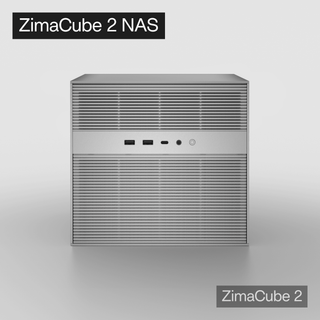
Keep the storage decision independent: a ZimaCube 2 can hold project copies and reviewed results regardless of provider. Start with your supported route, then move only when a concrete requirement—such as approved procurement or project-level governance—justifies the change.
Use the readiness checklist to make that switch reviewable. If local inference is also being considered, the API versus self-hosted model comparison addresses the additional hardware and maintenance responsibilities.
Frequently asked questions
Is Model Garden always cheaper?
No. Compare the offering’s current prices, commitment eligibility, usage, transfer, and operating costs for the same accepted task.
Are the models identical across both routes?
Do not assume that. Verify the exact versions, feature support, access status, and quotas shown for your account.
Can both routes use files stored on a NAS?
A client can submit selected file content to either supported route. That submission sends the selected content to a remote service.
Should home users adopt Google Cloud for governance alone?
Only if the available controls solve a concrete need and justify the additional configuration and operating effort.
Related reading
- OpenAI Models and Codex Are Coming to Google Cloud: What It Means for Hybrid AI Workflows
- How to Prepare Your AI Workflow for OpenAI Models on Google Cloud
Sources
Cover: OpenAI × Google Cloud official announcement image. Image source.

Recommended products
Product Comparisons
More to Read
LFM2.5-24B-A2B vs DeepSeek API: Which Fits Your Home Server Agent Workflow?
Compare LFM2.5-24B-A2B local inference with the DeepSeek API for home-server agents: privacy boundaries, hardware, maintenance, quality, and costs.
Granite Speech 5.0 vs Cloud Transcription: Privacy, Hardware, and Accuracy Compared
Compare local Granite Speech 5.0 with cloud transcription for audio privacy, setup, hardware, accuracy, maintenance, and NAS archive workflows.

Claude Duet vs ChatGPT Dots: Ongoing Work, File Access, and Approvals Compared
Compare Claude Duet and ChatGPT Dots for ongoing tasks, connected apps, computer access, file boundaries, and review controls in personal-cloud workflows.


