
OpenAI Models and Codex Are Coming to Google Cloud: What It Means for Hybrid AI Workflows


OpenAI’s Google Cloud announcement adds another route to its models and Codex workflows. For a team already buying cloud services through Google, the practical opportunity is simpler procurement and familiar governance. The announcement describes a rollout planned for the coming weeks; it does not mean every model is already available in every account or region.
For ZimaSpace users, the useful architecture is hybrid: retain project originals and recoverable copies on personal storage, and send selected task inputs to the approved cloud endpoint. This partnership changes where you can obtain inference. It does not turn a NAS into a Google Cloud service or keep remotely processed documents entirely local.
What did OpenAI and Google Cloud actually announce?
The October 21 announcement brings OpenAI frontier models and Codex workflows toward Google Cloud Model Garden. It also describes Marketplace procurement and eligible Google Cloud commitments. Availability, supported models, and commercial terms still need to be checked for your own account when access opens.
The news matters most when purchasing and identity systems already shape your AI choices. An individual experimenting with one API may see less immediate benefit than an organization consolidating cloud spending.
How does a hybrid AI workflow use a home NAS?
A simple workflow keeps a source repository or document collection on storage, stages a small task folder, calls the model from a client, and saves reviewed results back. The client may run on a workstation or a separate execution host. Credentials belong in that client’s secret management, outside shared folders.
Our guide to preparing NAS files for agents explains how to choose inputs without exposing an entire archive.
Which responsibilities stay with the user?
| Layer | Responsibility to verify |
|---|---|
| Storage | Permissions, recoverable originals, and a separate backup |
| Inference | Provider terms, data handling, region, and model access |
| Tools | Which repositories, terminals, and accounts can be used |
| Outputs | Accuracy, file integrity, and approval before release |
Cloud access controls govern cloud resources. They do not automatically constrain an agent’s separate local filesystem mounts or connected applications. Use the files and accounts permission checklist for that boundary.
Will the partnership lower costs or improve model quality?
Neither outcome follows automatically. Marketplace terms can help some organizations use committed spending, but network transfer, tool calls, storage, retries, and review remain part of the total. A familiar model name also does not prove identical versions, quotas, or feature support across access routes.
Compare a complete accepted task using the cost-per-accepted-result approach, rather than treating a headline token price as the whole bill.
What should ZimaSpace users prepare first?
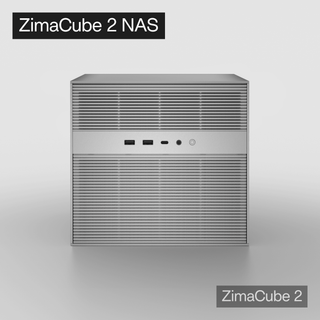
Choose one low-risk job, such as drafting release notes from a small repository export. Record which files leave storage, who can run the job, and where the final draft is saved. A ZimaCube 2 can provide the project storage layer; inference capacity and cloud integration remain separate choices.
Use our Google Cloud readiness guide before configuring access, then consult the direct API versus Model Garden comparison when procurement and governance become deciding factors.
Frequently asked questions
Are OpenAI models already generally available in Model Garden?
The announcement describes a forthcoming rollout. Check the official access page and your Google Cloud account for current model and region availability.
Does using Google Cloud keep NAS files local?
No. Any content sent for remote inference leaves the NAS boundary. Limit the files and excerpts submitted.
Does ZimaCube 2 run these cloud models?
ZimaCube 2 can store inputs and outputs. Google Cloud model execution takes place in the cloud.
Should I migrate an existing integration immediately?
Only after confirming model access, feature compatibility, data handling, and the result of a small representative task.
Related reading
- How to Prepare Your AI Workflow for OpenAI Models on Google Cloud
- OpenAI API vs Google Cloud Model Garden: Which Fits Your AI Workflow?
Sources
Cover: OpenAI × Google Cloud official announcement image. Image source.

Recommended products
Tech & AI HUB
More to Read
LFM2.5-24B-A2B Explained: What Total and Active Parameters Mean for Local AI Agents
LFM2.5-24B-A2B combines 24B total and 2B active parameters. Understand memory, agent tooling, local execution, and how a NAS fits the workflow.
IBM Granite Speech 5.0 Explained: What Compact ASR Means for Private Audio Archives
Granite Speech 5.0 TurboCTC is a compact ASR model with a multilingual update. Learn how local transcription can fit a NAS-backed audio archive.

Claude Duet Explained: Proactive Tasks, Connected Apps, and Personal Files
Claude Duet is a proactive-agent research preview. Learn about background tasks, connected accounts, review boundaries, and NAS-backed personal files.


