
Patch the Planet Explained: How AI Findings Become Fixes for Self-Hosted Software


An AI-discovered vulnerability only protects your server after a compatible fix reaches the software you actually run. OpenAI’s October 21 Patch the Planet update describes coordinated work around critical PHP flaws. For self-hosters, the immediate lesson is to connect security news to an inventory, a vendor advisory, and a verified deployment.
The discovery is important, but your next action depends on the application package or container image supplying PHP. Keep backups and a rollback path, apply the appropriate supported update, and verify the running service. A scanner report or a downloaded image alone is not evidence that the exposed application has been patched.
What does Patch the Planet add to the PHP response?
OpenAI describes AI-assisted research, coordination with independent researchers and maintainers, and support for defensive work. The October update is part of an existing initiative rather than the first announcement of the program. PHP maintainers remain central to producing and communicating upstream fixes.
For the home-server owner, this illustrates a chain of responsibility: discovery, coordinated disclosure, upstream correction, downstream packaging, and deployment. Each step has a different owner and a different kind of evidence.
Why does an upstream fix not update my server automatically?
| Stage | Evidence you should look for |
|---|---|
| Research | A disclosed issue and affected conditions |
| Upstream fix | Maintainer advisory and supported release |
| App or image update | Vendor confirmation or package changelog |
| Deployment | The replacement process is actually running |
| Verification | The affected service works and the vendor fix is present |
A container bundles its own runtime. Updating the host’s PHP executable may leave the application container unchanged. Our home-server software stack explanation maps these hidden dependencies.
How should I interpret PHP version numbers?
Match the exact branch and packaging source to the relevant advisory. Some distributions backport fixes while retaining an older-looking upstream version string. Conversely, a newer CLI executable says little about a different PHP-FPM process or container serving web requests.
Use the guide to checking the PHP version used by an app to inspect the right environment. Avoid posting a public diagnostic page that exposes configuration details.
What should I update first?
Prioritize affected internet-facing services, then other affected deployments, using the vendor’s mitigation advice and your own exposure. Temporary access restrictions can reduce exposure while a supported update is prepared, but they do not establish that the underlying flaw is fixed.
For container deployments, follow the safe PHP Docker update workflow. Keep application data, configuration, and database recovery together rather than relying on the image as a backup.
What role does personal storage play in the response?
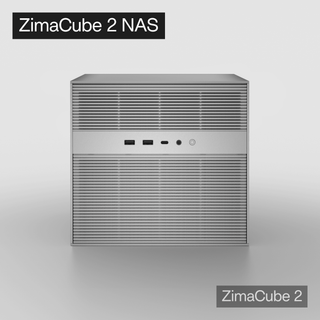
Storage can hold an app inventory, update notes, configuration exports, and recoverable data copies. A ZimaCube 2 can be part of that operational workspace, but no NAS product automatically patches every installed application or validates a third-party image.
Build the lightweight inventory in our advisory tracking guide, and use the discovery versus patching comparison to avoid expecting one security tool to complete the entire response.
Frequently asked questions
Does an AI finding mean my server was exploited?
No. A vulnerability report establishes a flaw under specified conditions. Investigating exploitation requires separate evidence from the affected environment.
Does Patch the Planet automatically patch home servers?
Do not assume that. Follow your application, image, distribution, or runtime vendor’s supported update process.
Can a backported PHP package already be fixed?
Yes. Check the distribution advisory and package revision rather than judging only the upstream version number.
Is limiting remote access enough?
It may reduce exposure while an update is arranged. It does not prove that a vulnerable runtime has been repaired.
Related reading
- How to Track Security Advisories and Verify Patches Across Your Home Server Apps
- AI Vulnerability Discovery vs Automated Patching: What Does Each Solve?
Sources
- Official announcement and model documentation — openai.com
- Technical documentation and reference — www.php.net
- Technical documentation and reference — cert.europa.eu
Cover: Patch the Planet official announcement image. Image source.

Recommended products
Tech & AI HUB
More to Read
LFM2.5-24B-A2B Explained: What Total and Active Parameters Mean for Local AI Agents
LFM2.5-24B-A2B combines 24B total and 2B active parameters. Understand memory, agent tooling, local execution, and how a NAS fits the workflow.
IBM Granite Speech 5.0 Explained: What Compact ASR Means for Private Audio Archives
Granite Speech 5.0 TurboCTC is a compact ASR model with a multilingual update. Learn how local transcription can fit a NAS-backed audio archive.

Claude Duet Explained: Proactive Tasks, Connected Apps, and Personal Files
Claude Duet is a proactive-agent research preview. Learn about background tasks, connected accounts, review boundaries, and NAS-backed personal files.


