
What the PHP Security Crisis Reveals About Your Home Server’s Software Stack


A home server can look like a short list of apps while containing several independently maintained software layers. The October 2026 PHP emergency makes that distinction practical: the application version shown in a dashboard may not tell you which PHP runtime handles web traffic.
Start by identifying the runtime inside each application or container, then match it to the vendor advisory and supported update. Check the actual process serving requests; the PHP version installed on the host can differ from the one used by the exposed application.
Follow one request through the system
Consider a browser reaching a self-hosted file application. The request may pass through a router, tunnel, or reverse proxy, reach a web server, and then execute PHP in a separate worker or container. The application may query a database and read or write mounted folders.
Each boundary answers a different question. Routing determines who can connect. The runtime determines which executable processes the request. Storage permissions determine what that executable can access. Backups determine whether you can recover from loss or an unwanted change.
Create a compact dependency record
| Layer | Record | Evidence to keep |
|---|---|---|
| Public entry | Domain, proxy, tunnel, IPv4 and IPv6 paths | Access rules and tested routes |
| Application | Release and supported upgrade path | Maintainer release notes |
| Runtime | PHP branch, package source or image digest | Vendor advisory and local version check |
| Persistent state | Database and writable mounts | Backup and restore instructions |
| Operations | Owner and maintenance window | Last verified update |
Keep the record small enough to update whenever you install an app. A perfect diagram that nobody maintains is less useful than a short current table.
Why updates can miss a layer
A host package update may leave an application image unchanged. Pulling a new image may leave an existing container running. Replacing the web service may leave a separate queue worker on its previous image. A command-line PHP binary may differ from the web-facing PHP-FPM service.
Use the dependency record to choose the update unit. In a maintained appliance package, that may be the vendor package. In a custom Compose deployment, it may be several service images. Verify each relevant executable instead of declaring the whole device patched after one command.
Limit the consequences of an application failure
Review whether a web app can write to your complete media collection, backup destination, or unrelated project folders. Mount only the directories it requires and use read-only access where the workflow supports it. Keep administrative credentials and container-engine control away from ordinary web workloads.
Isolation is a configuration property, not a guarantee supplied by a container icon. Docker documents several security boundaries, including daemon access and container configuration. A broad privileged setup can undermine the separation you intended.
Apply the map to ZimaCube 2
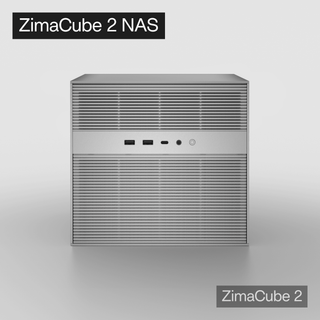
When using ZimaCube 2 for storage and self-hosted apps, maintain an inventory alongside your storage plan. Name the application volumes clearly, identify the update channel, and test an independent recovery copy. Adding capacity does not remove the need to track dependencies.
The next actionable step is simple: choose one important app and document its request path, runtime source, and recovery procedure. Repeat until every exposed service has an owner. No product-specific PHP exposure is asserted here.
Explore ZimaCube 2 Personal Cloud Home NAS for your private storage and self-hosted application setup. Software security depends on the installed services, their configuration, and verified updates.
Continue the PHP security series
Sources and scope
Checked October 22, 2026. Deployment advice must be matched to your application and vendor documentation; these articles do not establish product-specific exposure.

Recommended products
Tech & AI HUB
More to Read
LFM2.5-24B-A2B Explained: What Total and Active Parameters Mean for Local AI Agents
LFM2.5-24B-A2B combines 24B total and 2B active parameters. Understand memory, agent tooling, local execution, and how a NAS fits the workflow.
IBM Granite Speech 5.0 Explained: What Compact ASR Means for Private Audio Archives
Granite Speech 5.0 TurboCTC is a compact ASR model with a multilingual update. Learn how local transcription can fit a NAS-backed audio archive.

Claude Duet Explained: Proactive Tasks, Connected Apps, and Personal Files
Claude Duet is a proactive-agent research preview. Learn about background tasks, connected accounts, review boundaries, and NAS-backed personal files.


