
AI Helped Find Critical PHP Flaws. What Does That Mean for Self-Hosting?


The October 2026 PHP incident illustrates a gap every self-hoster should recognize: identifying a vulnerability and fixing a running service are different jobs. Google Cloud reports that Wiz used multiple AI models in the research and remediation process. That is evidence of AI contributing to security work, not evidence that an autonomous system can secure an entire personal cloud.
For self-hosters, AI-assisted discovery makes the maintenance chain more visible: researchers find a flaw, maintainers publish a fix, and operators must deploy it. Keep an application inventory and a supported update path so a public advisory becomes a verified change to the running service.
Where human responsibility remains
A research finding must be assessed, reproduced, corrected, and shipped. An application maintainer may then need to package the corrected runtime, and the operator must deploy it. Each handoff can introduce delay. An available upstream patch does not mean an old container has changed on your NAS.
This division matters in a small homelab because one person often occupies several roles. You may be the application owner, the administrator, and the person responsible for restoring family files. Write down those responsibilities before an emergency compresses them into one evening.
A useful role for AI in your own maintenance
An assistant can help turn a public advisory into an inventory checklist, explain package naming, or draft a change plan. Give it non-sensitive version information and the relevant vendor documentation. Ask it to separate confirmed facts from assumptions.
Keep credentials, private logs, and recovery secrets out of prompts unless you have an appropriate approved environment. Review suggested commands before execution, especially commands that remove volumes, replace configuration, or alter access controls. An answer that sounds confident is not a package provenance check.
Build a response loop that survives the next incident
- Inventory: record the application, runtime source, network route, and update owner.
- Prioritize: identify publicly reachable services and the data they can modify.
- Recover: confirm a consistent backup and a documented restore path.
- Deploy: obtain the fix through the maintained package or image source.
- Verify: check running workers and normal application behavior.
- Record: save the version, change time, and unresolved exceptions.
Automate reminders and low-risk inventory collection first. Automating a destructive change before you can restore the application merely makes mistakes faster.
What this means for a ZimaSpace personal cloud
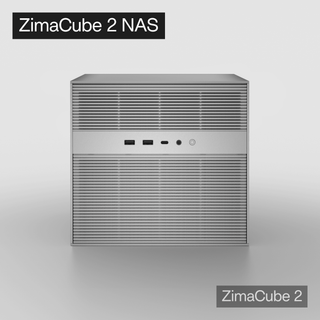
On a ZimaCube 2, you can organize a private storage and application environment around your needs. That control includes choosing which services to expose and which data each app may access. It also includes maintaining the software you install.
Keep the management interface private where practical, separate application data from recovery copies, and give every important app an update owner. These practices remain useful regardless of which model helped discover the next vulnerability. This article does not identify a vulnerability in ZimaOS or ZimaCube 2 itself.
Does AI discovery make self-hosting a bad idea?
It changes neither the need for maintenance nor the value of control. Self-hosting fits users willing to operate their services or arrange help. If you cannot respond to a critical notice, reduce public exposure, simplify the stack, or choose managed support with explicit responsibilities. The decision should follow your operating capacity.
Explore ZimaCube 2 Personal Cloud Home NAS for your private storage and self-hosted application setup. Software security depends on the installed services, their configuration, and verified updates.
Continue the PHP security series
Sources and scope
Checked October 22, 2026. Deployment advice must be matched to your application and vendor documentation; these articles do not establish product-specific exposure.

Recommended products
Tech & AI HUB
More to Read
LFM2.5-24B-A2B Explained: What Total and Active Parameters Mean for Local AI Agents
LFM2.5-24B-A2B combines 24B total and 2B active parameters. Understand memory, agent tooling, local execution, and how a NAS fits the workflow.
IBM Granite Speech 5.0 Explained: What Compact ASR Means for Private Audio Archives
Granite Speech 5.0 TurboCTC is a compact ASR model with a multilingual update. Learn how local transcription can fit a NAS-backed audio archive.

Claude Duet Explained: Proactive Tasks, Connected Apps, and Personal Files
Claude Duet is a proactive-agent research preview. Learn about background tasks, connected accounts, review boundaries, and NAS-backed personal files.


