
Why Shorter AI Outputs Matter: DeepSeek 1017 and the Cost of Getting Work Done


Shorter model output can lower one part of an AI workflow’s cost, but savings matter only when the result still passes review. For DeepSeek 1017, compare total spending across all attempts, tool use, and corrections against the number of accepted outcomes. Keep quality and operating conditions visible.
For a home-server setup, keep original files and recoverable copies on your own storage, send only task-relevant content to a remote model, and verify the result before widening access. A faster model does not change which files a workflow should be allowed to read or modify.
Why does output length affect agent efficiency?
Generated output consumes model work and, under token-based pricing, contributes to usage charges. Long answers can also create more material for a person or subsequent agent step to inspect. DeepSeek’s 1017 release reports shorter outputs alongside task improvements.
The practical question is whether the shorter response removes redundant work or leaves a gap. Our Flash-1017 release explainer separates the vendor’s update claims from the tests a home operator should run.
Does half the output mean half the total bill?
No. The output portion is only one component. Consider this deliberately simplified illustration, not an observed DeepSeek test or price quote:
| Component | Run A | Run B | Interpretation |
|---|---|---|---|
| Input usage | 25,000 tokens | 25,000 tokens | No input reduction in this example |
| Output usage | 4,000 tokens | 2,000 tokens | Output tokens fall by half |
| Extra attempts | None | One possible retry | A retry can add both input and output usage |
| Acceptance | Must be checked | Must be checked | Shorter does not establish correctness |
Use the current provider tariff and actual reported usage for a bill calculation. Do not infer the invoice from visible word count.
Which costs belong in cost per accepted task?
Define cost per accepted task = total cost of all evaluated attempts / accepted tasks. Keep failed attempts in the numerator. Report a zero-acceptance test as unresolved or failed rather than assigning it an attractive unit cost.
| Cost or effort | Evidence to preserve |
|---|---|
| Model input and output | Returned usage and applicable rates |
| Cache effects | Reported hit or miss usage when available |
| Tool activity | Successful requests and relevant tool billing |
| Infrastructure | Hosting or local operating cost for the compared period |
| Human intervention | Time spent correcting, checking, or rerunning work |
Keep financial totals and human time as separate measures unless you have chosen and disclosed a conversion for labor. The DeepSeek workflow test plan provides a consistent comparison procedure.
How should caching and repeated context be handled?
Repeated workloads can have different cache conditions. DeepSeek documents prefix-based caching behavior, so a warm run and a cold run need not have the same usage profile. Record the condition instead of crediting every difference to the new model.
Keep prompts and source packs stable during a comparison. If you change the retrieval strategy, model, and prompt together, the experiment cannot isolate which change produced the result.
How do you stop concise outputs from hiding mistakes?
Request a defined artifact, source references, and explicit unresolved items. For code, run the relevant tests. For extracted records, compare required fields against the input. Preserve a failure example rather than summarizing only successful runs.
Use the before-and-after model comparison framework to hold acceptance rules constant. A concise answer that needs several repairs can be less efficient than a longer correct result.
What should be stored on a personal cloud?
Save the input manifest, prompt version, final artifact, test result, usage export, and review notes. A ZimaCube 2 project archive can keep that evidence reusable without serving the model itself.
For source boundaries, read where agent inputs and personal files should live. Protect important records with the file recovery and version-history guide before introducing automated edits.
Frequently asked questions
Does shorter output always mean a cheaper task?
No. Input usage, caching, retries, tool calls, and acceptance quality also affect the total. Compare spending across all attempts for results that meet the same criteria.
Should I measure words or tokens?
Use the provider’s returned token usage for billing analysis. Visible word count is only a rough presentation measure and does not reliably reconstruct all charged usage.
How should failed attempts be counted?
Include their usage and relevant tool costs in the test total. Count only accepted results in the denominator, and report a test with no accepted result as a failure or unresolved outcome.
Can I compare API spending with local inference costs?
Yes, if you disclose the workload and accounting assumptions. Include local hardware allocation, power, hosting, and operating effort separately rather than treating a local deployment as free.
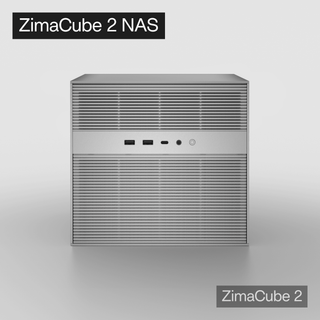
Explore ZimaCube 2 Personal Cloud Home NAS for private storage and compatible self-hosted services. Model-serving requirements and remote data processing should be assessed for the chosen workflow.
Continue the DeepSeek 1017 series
- DeepSeek V4.1-Flash-1017 Explained: What Changed for Coding and AI Agents?
- How to Test Your AI Agent Workflow After the DeepSeek 1017 Update
- DeepSeek V4.1-Flash-1017 vs V4.1-Flash: What Should You Compare Beyond Benchmarks?
- DeepSeek API vs Self-Hosted Models: Which Fits Your Personal AI Workflow?
- DeepSeek’s Search and Fetch API: What It Means for Personal AI Workflows
Cover image: Photo by Rohan on Unsplash. Editorial illustration; no integration or endorsement is implied.
Sources and scope
Official sources checked October 23, 2026. Performance statements attributed to DeepSeek are vendor reports; ZimaSpace has not independently benchmarked these models. Procedures and decision tables are editorial guidance and should be matched to your actual software and access policies.

Recommended products
Tech & AI HUB
More to Read
LFM2.5-24B-A2B Explained: What Total and Active Parameters Mean for Local AI Agents
LFM2.5-24B-A2B combines 24B total and 2B active parameters. Understand memory, agent tooling, local execution, and how a NAS fits the workflow.
IBM Granite Speech 5.0 Explained: What Compact ASR Means for Private Audio Archives
Granite Speech 5.0 TurboCTC is a compact ASR model with a multilingual update. Learn how local transcription can fit a NAS-backed audio archive.

Claude Duet Explained: Proactive Tasks, Connected Apps, and Personal Files
Claude Duet is a proactive-agent research preview. Learn about background tasks, connected accounts, review boundaries, and NAS-backed personal files.


