
LFM2.5-24B-A2B vs DeepSeek API: Which Fits Your Home Server Agent Workflow?


Choose locally operated LFM2.5-24B-A2B when keeping inference on your own suitable compute is a real requirement and the model meets your task. Choose the DeepSeek API when remote processing is acceptable and its results and integrations justify using a managed service. These are deployment and model choices together, so do not infer a universal quality winner.
Keep NAS storage independent of either route. Both can use a small working copy while original files remain recoverable. Local inference avoids a model-provider upload only when the rest of the agent also respects that boundary; a remote API still processes the task content you submit.
How do the two approaches differ?
| Decision | Local LFM2.5-24B-A2B | DeepSeek API |
|---|---|---|
| Inference host | Your compatible compute | Remote provider service |
| Capacity | You provision memory and runtime | You operate within service limits |
| Operations | Checkpoint, runtime, monitoring, and upgrades | Client, credentials, quotas, and service changes |
| Data transfer | Local inference can remain within your boundary | Submitted task content leaves local storage |
| Quality | Evaluate your artifact and configuration | Evaluate the actual API model and settings |
| Costs | Hardware, energy, maintenance, and review | Usage, tools, retries, and review |
The LFM2.5 overview and DeepSeek release explanation describe the individual model context.
Which option gives better privacy?
Start with the data path. A truly local workflow can keep model inputs on your own compute, but external tools, remote logs, or fallback inference can break that property. An API workflow requires reviewing provider terms and minimizing submitted content.
The NAS document data-control guide helps identify those transfers. Owning a NAS does not itself make the remote API local, and owning model weights does not constrain every connected tool.
Which is easier to maintain on a home-server setup?
An API removes much of the model-serving capacity work but introduces provider dependencies and account controls. Local serving adds runtime compatibility, memory planning, resource competition, and upgrades. Keep the inference worker separate from critical storage services where that makes operation easier.
Use the LFM2.5 runtime and memory checklist before committing hardware. A checkpoint that fits a disk still needs a practical serving environment.
How should I compare quality and cost?
Give both routes the same small task and acceptance criterion. For document work, verify the extracted facts; for coding, review the diff and relevant behavior. Record context, settings, tool use, final artifact, duration, and manual corrections. Hardware amortization and operating work belong beside API usage in a realistic comparison.
The cost-per-accepted-result method avoids equating a free download or a low token price with a free completed task.
Can I use a mixed local and cloud workflow?
Yes, if routing is explicit. Mark which tasks may use a remote service and which files must remain local. Avoid silently falling back to an API after a local failure when the task’s data rules forbid that transfer. Keep a clear record of the route used for each result.
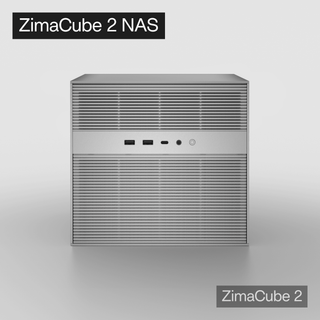
Our cloud versus self-hosted agent comparison covers these responsibilities. ZimaCube 2 can retain authoritative inputs and accepted outputs while the inference route remains a deliberate per-task choice.
Frequently asked questions
Is a local model always cheaper?
No. Include hardware, energy, runtime maintenance, output quality, and review effort alongside any API costs.
Can the DeepSeek API read NAS files without a client?
No. A client or harness must submit selected content or provide supported tools. File storage alone does not grant access.
Does this comparison claim LFM2.5 matches DeepSeek on every task?
No. Evaluate the specific models, configurations, and task outputs rather than assuming capability parity.
What is the main risk in a local-to-cloud fallback?
Private inputs may be transmitted unexpectedly. Make routing consistent with each task’s data policy and record the route used.
Related reading
- LFM2.5-24B-A2B Explained: What Total and Active Parameters Mean for Local AI Agents
- How to Check Memory and Runtime Requirements Before Running LFM2.5-24B-A2B
Sources
- Official announcement and model documentation — www.liquid.ai
- Technical documentation and reference — docs.liquid.ai
- Technical documentation and reference — api-docs.deepseek.com
Cover: Liquid AI LFM2.5-24B-A2B official announcement image. Image source.

Recommended products
Product Comparisons
More to Read

Granite Speech 5.0 vs Cloud Transcription: Privacy, Hardware, and Accuracy Compared
Compare local Granite Speech 5.0 with cloud transcription for audio privacy, setup, hardware, accuracy, maintenance, and NAS archive workflows.

Claude Duet vs ChatGPT Dots: Ongoing Work, File Access, and Approvals Compared
Compare Claude Duet and ChatGPT Dots for ongoing tasks, connected apps, computer access, file boundaries, and review controls in personal-cloud workflows.
GitHub AI Scan vs Agentic Autofix: Detection and Remediation Compared
GitHub AI Scan and Agentic Autofix address different stages: PR security detection and candidate remediation. Compare scope, evidence, controls, and deployment.


