
Web Search vs Private Document RAG: What Does Your AI Agent Actually Need?


Use web search for current public information and authorized private retrieval for your own documents. A workflow can combine both, but it should identify which source supports each claim. Choose retrieval from the information need, then control access, freshness, inference destination, and evidence quality.
For a home-server setup, keep original files and recoverable copies on your own storage, send only task-relevant content to a remote model, and verify the result before widening access. A faster model does not change which files a workflow should be allowed to read or modify.
Which questions need web search and which need private RAG?
The distinction starts with the source. Public release details belong to public sources; your household records, internal project decisions, or private manuals collection may belong to an authorized private repository.
| Question | Likely evidence source | Check before answering |
|---|---|---|
| What changed in a public model release? | Official public documentation | Publication date and current version |
| Which equipment did we buy? | Private purchase records | Correct owner and current document |
| Does our configuration match current guidance? | Both public guidance and private configuration | Keep the two evidence sets identifiable |
| What information is absent? | The available authorized collection | Report the gap rather than inventing a source |
The DeepSeek Search and Fetch guide explains the public discovery and page-inspection steps.
What does private document RAG add?
Retrieval-augmented generation supplies relevant external material to the model at question time. A private implementation needs authorized sources, a retrieval method, and a way to preserve provenance. It does not have to mean uploading an entire NAS archive or rebuilding every existing information system.
For a maintained document collection, check ingestion, updates, access rules, and the model destination. Use the private NAS document workflow to make those boundaries explicit.
How do freshness and permissions differ?
Neither approach guarantees that a selected source is current or appropriate for a user. Public pages can become outdated, while a private index can lag behind changed source files.
| Dimension | Web search | Private retrieval |
|---|---|---|
| Source access | Public or otherwise permitted reachable pages | Authorized internal collection |
| Freshness work | Inspect dates and primary-source updates | Refresh and version the indexed collection |
| Permission work | Respect site and tool access policies | Preserve user and document access boundaries |
| Evidence trail | Source URL and retrieval context | Filename, revision, and selected passage |
| Failure case | Missing, blocked, or low-quality page | Missing, stale, or unauthorized document |
Use the agent file and account checklist before introducing a retrieval tool that can expose unrelated records.
Should an agent use both sources in one answer?
Yes when the task requires it and the access is authorized. Keep public claims and private facts separately attributed. For example, official support guidance can explain a required setting while your private configuration record establishes the installed value.
A helpful output table includes the claim, supporting source, date or revision, and any uncertainty. Do not treat a web article as evidence that a private device actually has a particular configuration.
How can retrieval quality be tested?
Create a few known-answer questions, a deliberately missing-answer question, and an access-boundary case. Check that the workflow selects the correct source version, cites relevant evidence, and reports missing information.
Use the DeepSeek workflow evaluation procedure to record errors and corrections. For cost tracking, include retrieval and tool activity in the accepted-task cost record.
Where should sources and reviewed answers be stored?
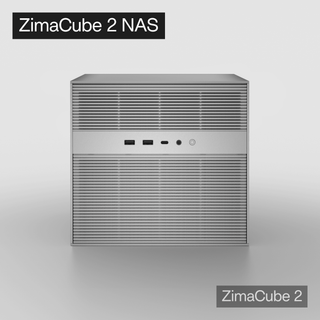
Keep authoritative sources and accepted outputs in a location you can manage and recover. A ZimaCube 2 archive can preserve a private collection and project record while search or inference runs elsewhere through a defined route.
The cloud storage versus NAS comparison helps choose that file arrangement. Track the processing path separately: keeping the original local does not establish that retrieved passages stayed local.
Frequently asked questions
Does a large context window remove the need for retrieval?
No. Context capacity alone does not select the right files, enforce access, establish freshness, or provide source provenance. Choose a method that supplies the relevant authorized evidence.
Does RAG require a new vector database?
Not always. Relevant evidence can come from an existing searchable collection or another retrieval method. Choose based on source structure, access control, and the questions you need to answer.
Can web search replace a private knowledge base?
Only for questions answerable from permitted public evidence. It does not establish access to private records or prove facts about an internal configuration.
Is a locally stored index enough to make the workflow local?
No. Retrieval, embedding, inference, tools, and logging can use different services. Trace each step before making a claim about the complete processing boundary.
Explore ZimaCube 2 Personal Cloud Home NAS for private storage and compatible self-hosted services. Model-serving requirements and remote data processing should be assessed for the chosen workflow.
Continue the DeepSeek 1017 series
- DeepSeek API vs Self-Hosted Models: Which Fits Your Personal AI Workflow?
- DeepSeek’s Search and Fetch API: What It Means for Personal AI Workflows
- How to Use DeepSeek with Private NAS Documents While Controlling What Leaves Your Network
- How to Test Your AI Agent Workflow After the DeepSeek 1017 Update
Cover image: ZimaSpace product media. Editorial illustration; no integration or endorsement is implied.
Sources and scope
Official sources checked October 23, 2026. Performance statements attributed to DeepSeek are vendor reports; ZimaSpace has not independently benchmarked these models. Procedures and decision tables are editorial guidance and should be matched to your actual software and access policies.

Recommended products
Product Comparisons
More to Read
LFM2.5-24B-A2B vs DeepSeek API: Which Fits Your Home Server Agent Workflow?
Compare LFM2.5-24B-A2B local inference with the DeepSeek API for home-server agents: privacy boundaries, hardware, maintenance, quality, and costs.
Granite Speech 5.0 vs Cloud Transcription: Privacy, Hardware, and Accuracy Compared
Compare local Granite Speech 5.0 with cloud transcription for audio privacy, setup, hardware, accuracy, maintenance, and NAS archive workflows.

Claude Duet vs ChatGPT Dots: Ongoing Work, File Access, and Approvals Compared
Compare Claude Duet and ChatGPT Dots for ongoing tasks, connected apps, computer access, file boundaries, and review controls in personal-cloud workflows.


