
Google Genie 4 Explained: Interactive Worlds, Native Audio, and Creator Workflows


Genie 4 is Google DeepMind’s October 27 research preview of an interactive world model with native audio. It is a way to explore evolving simulated scenes, not merely request a fixed video clip. Access and simulation limits matter more to a practical workflow than assuming a preview announcement is a downloadable local application.
This guide separates the published event from practical implementation. It explains what the source establishes, where the evidence stops, and how a private-file workflow can be evaluated without assuming that an impressive model or a newer server removes the need for bounded access and review.
| Decision | Verified fact or practical boundary |
|---|---|
| Status | Research preview for trusted testers, with broader access described as a future rollout. |
| Interaction | Users can steer an evolving scene rather than only accept a fixed generated clip. |
| Audio | The announcement includes sound generated together with the simulated world. |
| Local deployment | No home-NAS serving recipe follows from the preview announcement. |

How Is a World Model Different From a Video Generator?
A conventional video request typically describes a clip and returns a bounded sequence. An interactive world model must respond as the scene evolves and the user intervenes. Actions alter future observations, while earlier objects and relationships should remain coherent. This adds a state-management problem to image quality: a beautiful frame is insufficient if the next intervention makes a doorway disappear or changes the identity of an object.
DeepMind describes Genie working with Gemini models, with a guiding agent observing scenes and planning steps. That is an architecture claim about the research system, not a guarantee that every generated environment accurately obeys physics. For a creator, the immediate use case is exploratory previsualization: try layouts, visual directions and interactions, then decide what needs to be rebuilt and validated in a production engine.
Which Limitations Matter Before You Use a Simulation as Evidence?
The official announcement acknowledges drift and limitations in object permanence, long-term consistency, spatial accuracy, text and complex physical interactions. A simulation that looks realistic is therefore not automatically a validated digital twin or a safe training environment for a real robot. Define whether the output is a mood reference, an interaction sketch or evidence for a technical decision. Each role needs a different standard of checking.
For example, a creator can use a simulated room to explore the mood of a lighting change without claiming the generated reflections are a photometric measurement. A robotics team must separately test sensor behavior, collision assumptions and action outcomes against appropriate real or verified simulated conditions. Keep the prompt, intervention timeline and known failure cases with the output, so that a later reviewer can understand what was explored and what was never established.
How Should Creators Store Interactive Experiments?
Archive more than a final recording. Preserve reference assets, initial instructions, the sequence of interventions and a note explaining which branch produced the selected result. If the service exposes a seed or session identifier, retain it, but do not promise that replay will remain exact across model updates. External service availability and nondeterminism can make the original session impossible to reproduce perfectly.
Use a local project folder to keep approved source assets separate from generated previews and engine-ready deliverables. A NAS can make this shared working record accessible to several collaborators, while a second copy protects the project against accidental deletion. The local storage platform is not the inference engine. Access to a research preview does not establish that Genie 4 weights, required accelerator specifications or a self-hosted license are available.
What Should You Measure Before Trusting This Workflow?
Evaluate continuity over an interaction sequence. Start with a simple scene, move away from a distinctive object and return, then record whether its identity and position remain coherent. Try a change of viewpoint and an interaction with an object before adding more scene complexity. This does not create a validated physics benchmark, but it makes visible the difference between a compelling frame and a stable sequence a creator can use.
Review audio and visual behavior together where the preview permits it. Note whether an audible event corresponds to the intended action and whether important context changes unexpectedly. Keep your observations tied to the session, task and visible version. A result from a curated demonstration is not a guarantee that a different environment, longer interaction or production asset will behave the same way. Decide which failures are acceptable for concept exploration and which prevent a downstream use.
How Do You Keep the Result Reviewable and Recoverable?
Preserve the exploration as a decision record. Keep the initial reference assets, intended scene, intervention sequence, selected recording and notes about known inconsistencies. If the system permits branching or session identifiers, record them alongside the exported media. Do not promise exact replay when a hosted research system does not document deterministic reproduction. A well-kept recording and timeline can remain useful even when the original interactive session becomes unavailable.
Keep generated exploration separate from production-ready assets. When a scene inspires work in a conventional engine, document what was recreated, measured or changed rather than carrying over an assumption that the preview was physically accurate. Store references and project files under a shared naming scheme, and back up the selected evidence outside the primary workspace. That protects the creative reasoning behind a result as well as the final clip.
How Can You Test the Workflow Before Using Important Files?
The following is an editorial validation protocol, not a claim that ZimaSpace has benchmarked the service. Run it with disposable or approved test data and keep the test conditions with the result.
- Choose an exploratory goal such as layout, mood or interaction. State whether the result is a creative reference or requires additional technical validation.
- Use authorized reference assets and record the initial instructions. Confirm current tester access without assuming a public release or local checkpoint exists.
- Run a short continuity sequence. Revisit an object, change viewpoint and repeat an interaction while recording the timeline and visible inconsistencies.
- Inspect audio alongside visual events. Note mismatches and drift rather than selecting only a polished moment from a longer unstable session.
- Classify the result for its intended use. Separate promising concept material from evidence that would need physical, spatial or engineering validation.
- Archive the selected recording, source references and intervention notes. Test whether a collaborator can understand the chosen branch without access to the original live session.
Where Does a ZimaOS Server Fit?
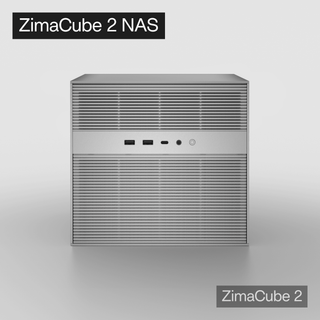
A ZimaCube 2 personal cloud NAS can provide a local storage and application layer when a project genuinely needs multiple drives, an SSD working tier or shared access to a growing archive. Choose hardware for retained source data, active services and backup policy. The product recommendation is architectural context, not evidence that this cloud model, preview service or research system runs locally on the NAS.
Separate inference from data custody. A hosted model may receive approved excerpts while the authoritative originals remain on the server. Optional local indexing, conversion or smaller-model services require their own memory and compute assessment. Keep a second recoverable copy outside the main device, and do not treat RAID or a successful upload as a complete backup strategy. A smaller existing server remains reasonable when it already meets the measured workload.
FAQ
Is Genie 4 a conventional video generator?
The announcement describes an interactive world model whose scene responds as users intervene. That introduces continuity and state-management questions beyond the appearance of a fixed clip.
Can a realistic Genie environment be treated as a digital twin?
Visual realism does not establish spatial or physical accuracy. The acknowledged limitations require separate validation before using a generated environment as engineering or robotics evidence.
Can I install Genie 4 on a home NAS?
The cited announcement is a trusted-tester research preview. It does not provide a self-hosted checkpoint, home-server hardware specification or deployment license.
Should I expose the whole private archive to an AI tool?
Only provide the material needed for the task through an appropriately restricted account or working directory. Check what the specific service uploads, logs and retains. A private storage location does not guarantee that a connected tool keeps processing local.
When does a larger NAS become useful?
When measured source-data growth, shared access, active applications or retention requirements justify the storage topology. It does not automatically resolve model access, unsupported runtimes, network upload limits or uncertainty in a research claim.
What is the stopping condition before production use?
Stop when you cannot establish the software/model identity, input authority, required feature availability or recovery path. Resolve those conditions first, then repeat the small test. Do not compensate for missing evidence by making a more confident recommendation.
Sources and Further Reading
Reporting checked on October 28, 2026. Product availability, access plans and security advisories can change. Upstream claims are attributed; workflow recommendations and architecture examples are editorial analysis, not measurements from a ZimaSpace hardware test.
Related guide: A Creator Server Setup for YouTube Footage, Proxies, Project Files, and Channel Archives.
Related guide: How to Share Premiere Pro or DaVinci Resolve Media Across Two Editing Workstations Without Broken Paths.
Related guide: Storage Topology for Photography: What Belongs on NVMe, HDD, and Off-Site Storage?.

Produtos recomendados
CENTRO DE TECNOLOGIA E IA
Mais para ler
AI Scientific Breakthroughs: Why Verification and Reproducible Records Matter
Understand AI research: claim to evidence with verified release context, practical workflow limits, private-file handling, review steps and realistic ZimaOS storage roles.
AI Video Quality Is Improving. How Should Creators Protect Their Original Media?
Understand AI video: quality and trust with verified release context, practical workflow limits, private-file handling, review steps and realistic ZimaOS storage roles.
MAI Image 2.7 Explained: AI Photo Editing and a Recoverable Creative Workflow
Understand MAI Image 2.7 Preview with verified release context, practical workflow limits, private-file handling, review steps and realistic ZimaOS storage roles.


