
Storage Topology for Photography: What Belongs on NVMe, HDD, and Off-Site Storage?


Photography storage works best when low-latency application state, high-capacity originals, and independent recovery copies live on storage chosen for their different jobs.
NVMe, HDD, and off-site storage are not competing answers to the same problem. A photographer needs fast catalog and cache access, stable capacity for growing RAW libraries, a clear place for active jobs, and recovery copies that survive failure of the studio system. The topology should let those layers grow independently instead of moving the entire library every time one requirement changes.
Start With Data Behavior, Not Drive Labels
A photography storage topology should classify data by how it behaves. Catalogs, preview databases, cache, and active project metadata need low latency. RAW originals and completed jobs need large, stable capacity. Off-site copies need independence from the studio rather than editing speed. The medium follows the workload, not the other way around.
TechTarget defines tiered storage as placing data on storage classes with different performance, capacity, availability, and cost characteristics. That workload-to-storage-tier principle gives photographers a better starting point than putting every file on the fastest or largest device.
Map every path before buying capacity: catalog, previews, cache, active RAWs, completed RAWs, exports, client deliveries, local backup, and off-site backup. Mark which data can be regenerated and which cannot.
Keep Catalogs, Previews, and Cache on Low-Latency NVMe
Catalog databases and previews are accessed in many small operations while browsing, filtering, rating, and editing. Cache files are disposable but performance sensitive. An internal or directly attached NVMe path keeps those operations responsive without consuming the capacity tier reserved for years of originals.
Need to Know IT’s Lightroom-on-NAS workflow separates a local catalog from original images stored on NAS and treats the catalog as latency-sensitive application state. That catalog-local originals-centralized model supports keeping database-style state on fast local storage while the image library lives elsewhere.
Set explicit size limits for preview and cache paths. Back up the catalog, but do not spend off-site capacity preserving caches that the application can rebuild. The NVMe tier should remain fast because it contains bounded working state, not because every photo lives there.
Use HDD Capacity for RAW Originals and Completed Jobs
RAW libraries grow by terabytes while most files are read sequentially after ingest and during export. A protected HDD pool is usually the capacity tier for completed shoots, archived projects, family or client video, and other originals that need durable organization more than local-SSD latency.
TechRadar’s photography storage advice distinguishes fast SSDs for active projects from lower-cost HDD capacity for backups and completed work. That active-SSD versus archive-HDD split matches a topology where high-cost flash is reserved for working state.
Organize the HDD tier by job, date, client, or another durable scheme that remains understandable without editing software. Keep enough free space for the next ingest and for filesystem operations; do not run the archive at the edge of capacity.

Active RAW Files May Stay on NVMe or Move to the NAS by Workload
There is no rule that every active RAW must sit on local NVMe. A solo photographer with moderate file sizes and a fast network may edit originals directly from centralized storage. High-resolution bursts, panorama work, large video clips, or a slower network may justify keeping the current job on local NVMe and synchronizing it to the archive.
NAS Compares’ Thunderbolt NAS versus DAS guide frames performance, connectivity, file systems, remote access, and expansion as separate workflow trade-offs. That connection-and-performance decision supports measuring the editing path rather than choosing storage by category name.
| Data role | Default tier | Move it when |
|---|---|---|
| Catalog and previews | Local NVMe | Only when the editing application explicitly supports another safe model |
| Current job RAWs | Fast NAS or local NVMe | Local when network latency or throughput affects editing |
| Completed originals | Protected HDD pool | Move to colder storage only under a documented archive policy |
| Cache and proxies | NVMe | Rebuild instead of backing up when practical |
| Recovery copy | Independent local/off-site target | Never treat the live pool as its own backup |
Test one real job at 1:1 preview generation, culling, Develop operations, and export. The correct tier is the one that meets the photographer’s latency requirement while preserving a clean archive path.
Separate the Backup Tier From the Live Storage Pool
A mirrored or parity-protected pool can keep the archive available after some drive failures, but it still contains the same live state. Deletion, ransomware, filesystem damage, theft, and an administrator mistake can affect the entire pool. Backup therefore needs a different failure boundary.
Digital Photography School recommends multiple copies in different locations because camera cards and hard drives can all fail. That multiple-copy photography rule is the reason backup belongs outside the live NVMe and HDD topology.
Use a second local target for fast recovery and an off-site destination for site-level loss. Back up originals, project state, and catalogs according to their recovery value. Generated previews and cache can use a different policy.
Off-Site Storage Should Optimize for Recovery, Not Editing
The off-site tier does not need workstation latency. Its job is to survive events that affect the studio and to restore data within an acceptable time. Bandwidth, retention, encryption, restore cost, and the ability to recover a large archive matter more than interactive browsing speed.
Cloudwards distinguishes active cloud storage from backup services designed around recovery and retention. That collaboration-versus-recovery boundary helps keep off-site protection from becoming another synchronized working copy.
Estimate how long a full restore would take and which current jobs need faster recovery. Keep a small emergency local copy or replacement workflow for active client work if the full archive cannot be downloaded quickly.
Let Growth Move One Tier at a Time
The value of a layered topology is that capacity growth does not force every component to move. A full HDD archive can expand independently from the catalog SSD. A cache can be rebuilt without touching originals. A larger off-site plan can be purchased without relocating the editing workstation.
Fstoppers’ account of moving from multiple external drives to NAS describes how scattered storage makes older work harder to locate and manage. That central-archive growth problem shows why stable storage roles matter as the library expands.
The ZimaSpace high-speed photography storage workflow covers active-editing performance. A ZimaBoard 2 Mini Home Server fits a compact compute-first photo workflow with deliberate attached storage. A ZimaCube 2 AI NAS is the clearer base when multi-drive capacity, long retention, concurrent access, and storage-first recovery define the photography archive. A good topology lets the photographer expand capacity, speed, or backup independently without rebuilding the whole workflow.
A practical review cycle keeps the topology honest. Once every quarter, compare the last three months of ingest growth, current NVMe free space, archive-pool utilization, off-site completion time, and the size of the largest active job. If the catalog tier is filling with generated previews, trim or relocate rebuildable data before buying more capacity. If active projects repeatedly move back to local SSD because the network is slow, treat that as a measured workflow requirement rather than a temporary annoyance. If off-site restores would take too long for a current client deadline, keep a faster secondary copy for recent jobs while older work remains in the normal recovery tier. The topology should change only when observed workload crosses a threshold, so every upgrade solves a known bottleneck instead of creating another storage layer to manage.

Recommended products

NAS & Server Setup
More to Read
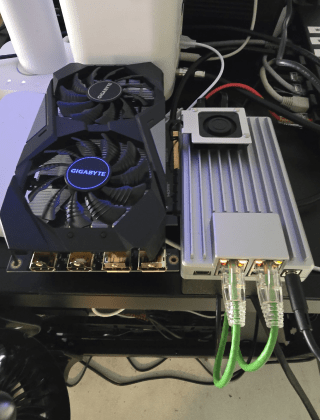
Can a Dorm Server Run Quietly Enough for Sleep, Study, and Video Calls?
Yes—a dorm server can stay unobtrusive when hardware is low-power, storage vibration is controlled, heavy jobs are scheduled, and noise is tested in the...
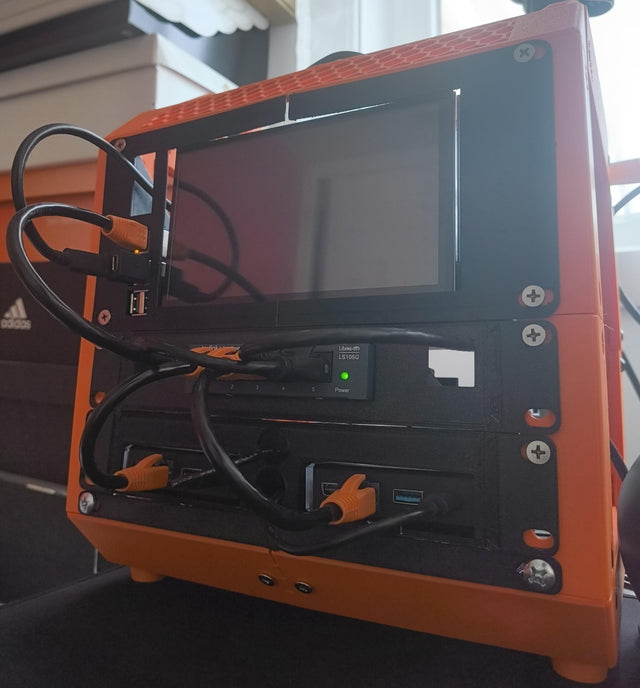
A Student Homelab That Can Move From Dorm Room to First Apartment
Keep a student homelab portable by separating services from room-specific networking, minimizing hardware, backing up state, and rehearsing a clean move.
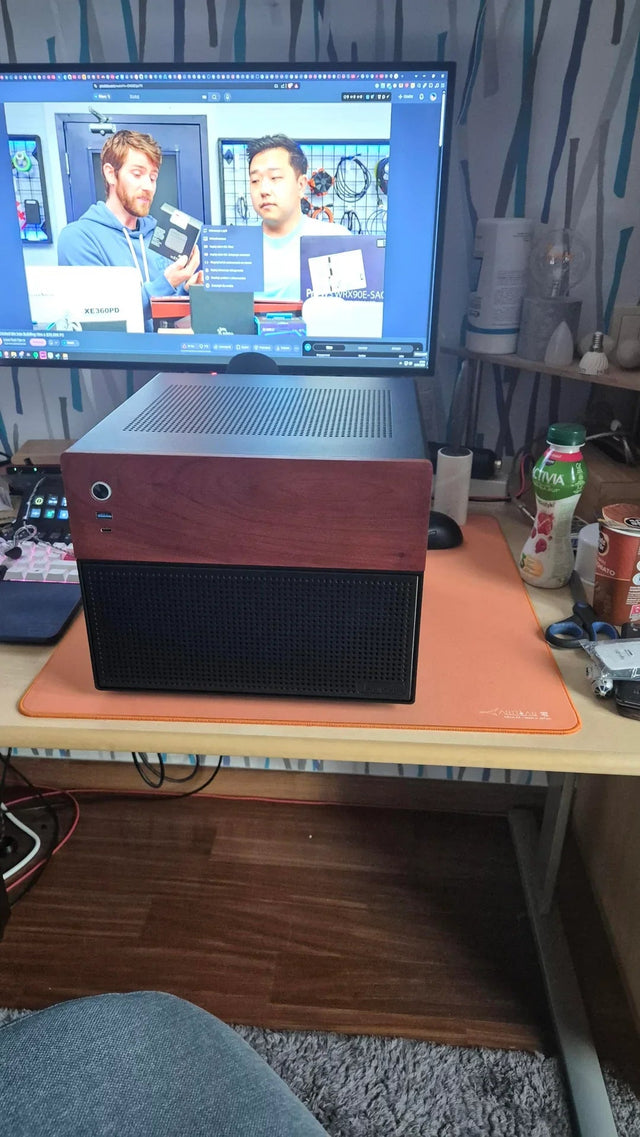
How to Share One Home Server With Roommates Without Sharing Accounts or Private Files
Give every roommate a named identity, private storage, and only the shared roles they need; keep administration, backups, and offboarding separate.


