
Top 10 Open-Source AI Projects Trending on GitHub in 2026


GitHub's hottest AI projects in August were not dominated by new foundation models. Agent harnesses, reusable skills, multi-agent workspaces, and routing infrastructure captured much of the month's developer attention.
This ranking uses August 2026 GitHub star growth rather than lifetime popularity. The result is a snapshot of what open-source AI developers are choosing to explore right now.
How We Ranked These Trending Open-Source AI Projects
The ranking uses the GitTrend August 2026 monthly dataset, which tracks GitHub repositories by stars gained during the month.
August's dataset followed 100 repositories that collectively gained roughly one million stars. We filtered that larger list using four rules:
- AI must be central to the project's purpose rather than a minor feature;
- the repository must be publicly available on GitHub;
- the project must have an identifiable open-source license;
- ranking order follows August star growth rather than an editorial score.
The time window is August 1–31, 2026. We intentionally use monthly star growth instead of current total stars because total counts continue changing after publication.
One important filtering example is public-apis/public-apis. It ranked #7 in GitTrend's overall August list with +18.9K stars, but it is not fundamentally an AI project, so it was removed and the next qualifying AI repository moved into the Top 10.
Top 10 Open-Source AI Projects Trending on GitHub in August 2026
| Rank | Project | August Star Growth | Category | Why It Matters |
|---|---|---|---|---|
| 1 | DeepSeek Harness | +152.1K | Agent Harness | Plugin-based runtime for building extensible AI agents |
| 2 | mattpocock/skills | +33.9K | Agent Skills | Portable engineering workflows for coding agents |
| 3 | Archify | +28.7K | Agent Skill / Diagrams | Turns codebases and systems into verifiable technical maps |
| 4 | Diagram Design | +25.3K | Agent Skill / Visual Design | Editorial diagram generation for coding agents |
| 5 | DSH Desktop | +20.4K | Agent Desktop | Desktop environment for the DeepSeek Harness ecosystem |
| 6 | Ponytail | +20.2K | Agent Behavior | Pushes coding agents toward simpler, smaller implementations |
| 7 | Orca | +18.8K | Multi-Agent Development | Coordinates fleets of parallel coding agents |
| 8 | watermarks-remover | +17.2K | AI Privacy Utility | Handles provenance marks and metadata on user-owned content |
| 9 | MoneyPrinterTurbo | +17.1K | AI Video Workflow | Automates script, assets, voice, subtitles, and video production |
| 10 | OmniRoute | +16.8K | AI Gateway | Routes many AI tools and model providers through one endpoint |
Together, these ten projects gained roughly 350.5K stars during August. DeepSeek Harness alone accounted for about 43% of that growth, making its breakout unusually large even within an exceptionally active month.
1. DeepSeek Harness — +152.1K Stars

DeepSeek Harness was the clear outlier of August.
GitTrend recorded approximately 152.1K new stars for the repository during the month—roughly 4.5 times the growth of the second-place AI project.
The important part is what developers were starring.
DeepSeek Harness is not a foundation model. It is an agent harness: the runtime layer around models, tools, skills, sessions, interfaces, storage, and execution.
Its central architectural idea is simple:
Everything Is a Plugin

Model
  |
Harness
  |
+-- Tools
+-- Skills
+-- Sessions
+-- UI
+-- Storage
+-- Sandboxes
+-- Agent Logic
That modularity allows individual pieces of an agent environment to be replaced or extended without treating the agent as one monolithic application.
The popularity of DeepSeek Harness plugins makes the broader implication clearer: developers are increasingly choosing not only which model they want, but also which runtime architecture should surround that model.
There is an equally important caveat. DeepSeek explicitly labels Harness as a developer preview and warns that compatibility-breaking changes are expected.
Its current safety documentation also says the project has not undergone a security audit and should not be treated as production-ready. Because the harness can execute model-generated commands, load third-party plugins, and access resources made available to it, experimental deployments should be isolated and run with limited privileges.
Why it is trending: the attention is moving from standalone LLMs toward programmable agent runtimes.
What to watch: how quickly the plugin ecosystem stabilizes as the core project continues through developer-preview releases.
2. mattpocock/skills — +33.9K Stars
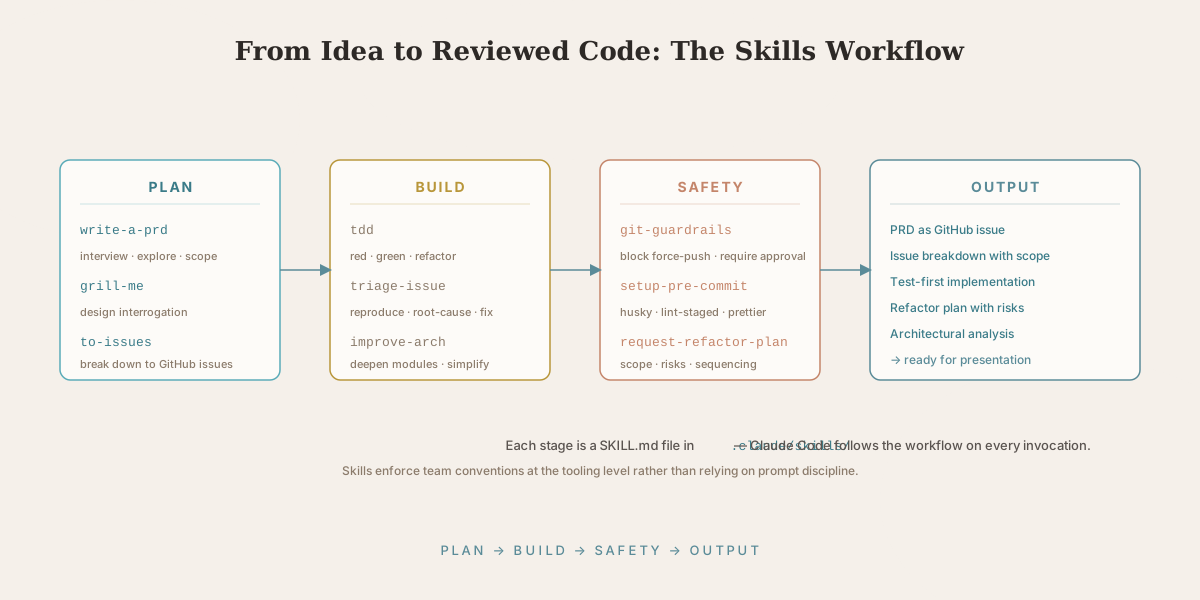
mattpocock/skills is one of the clearest signs that reusable agent skills are becoming software artifacts in their own right.
GitTrend recorded +33.9K stars during August.
The repository is not another coding agent. Instead, it packages engineering practices into small, composable skills designed to work across models and agent environments.
The current project supports installation as a Claude Code plugin or as editable skill files through the broader skills installer, including workflows for Codex and other compatible agents.
This matters because the unit of reuse is changing.
2024
Prompt

   ↓

2025
Agent

   ↓

2026
Portable Skill
A useful skill can carry an engineering method from one agent to another without forcing the user to replace the model, IDE, or complete workflow.
That is closely related to the broader growth of open-source local AI agents: increasingly, the agent runtime and the reusable behavior layered on top of it are becoming separate choices.
Why it is trending: developers want repeatable engineering behavior, not just better one-off prompts.
What to watch: whether agent skills converge around portable formats that move cleanly between Claude Code, Codex, OpenCode, Cursor, and other clients.
3. Archify — +28.7K Stars
Archify gained approximately 28.7K stars during August.
It is an agent skill for turning system descriptions or real codebases into polished technical maps. Current diagram types include architecture, workflow, sequence, data flow, and lifecycle views.
The interesting part is its emphasis on verifiable structure rather than simply asking an LLM to draw decorative boxes.
Archify uses typed intermediate data, validation, deterministic checks, and self-contained HTML output. Generated maps can also be exported into formats such as PNG, SVG, and WebM.
A typical workflow looks like:
Repository / System Description
            |
          Agent
            |
         Archify
            |
     Typed Diagram Data
            |
       Validation
            |
 Interactive System Map
This suggests that coding agents are expanding beyond code editing into technical communication.
Why it is trending: developers want agents to explain architecture as well as modify it.
What to watch: whether diagram artifacts become a normal output of code-review and system-design agents rather than a separate documentation task.
4. Diagram Design — +25.3K Stars

Diagram Design followed closely with approximately +25.3K stars.
At first glance, having two diagram-focused agent skills in the Top 4 may look repetitive. In a data-driven ranking, however, that overlap is part of the signal rather than something to edit away.
Diagram Design focuses heavily on visual quality. Its current system provides dozens of editorial diagram types, self-contained HTML and SVG output, brand-aware styling, and layouts intended to avoid the generic appearance common in automatically generated diagrams.
Its rise beside Archify points toward a wider change in agent output:
Earlier Coding Agent

Code
Markdown

        ↓

New Agent Workspace

Code
Documents
Diagrams
Slides
Interactive Artifacts
AI coding environments are increasingly being asked to produce the artifacts surrounding software, not just the source code itself.
Why it is trending: visual communication is becoming another reusable agent capability.
What to watch: skills that turn coding agents into broader design, documentation, and presentation systems.
5. DSH Desktop — +20.4K Stars

DSH Desktop gained approximately 20.4K stars in August.
There is an important distinction here: DSH Desktop is an independent community project, not an official DeepSeek product. Its repository explicitly states that it is not affiliated with, authorized by, or endorsed by DeepSeek.
The project packages the local DeepSeek Harness Web UI, host service, and plugin environment into native Windows and macOS desktop applications. It also adds desktop lifecycle management, a system tray, plugin management, and mobile remote-control functionality.
The architectural pattern is more interesting than the wrapper itself:
DeepSeek Harness
       |
Plugin Runtime
       |
DSH Desktop
       |
+-- Native Window
+-- Local Service
+-- Plugin Market
+-- Mobile Control
A successful agent harness is already producing additional user environments around the core runtime.
That is one sign that the “agent” is moving beyond a command-line session toward a persistent workspace.
Why it is trending: users want agent runtimes to behave like daily software environments rather than developer demos.
What to watch: how much of the DeepSeek Harness ecosystem remains compatible as upstream APIs continue to move quickly.
6. Ponytail — +20.2K Stars
Ponytail gained approximately 20.2K stars during August with almost the opposite message from many agent projects.
Instead of trying to make the agent do more, Ponytail tries to make it do less unnecessary work.
Its core behavior asks an AI coding agent to act like an efficient senior developer: prefer the simplest solution that works, avoid unnecessary abstractions, reuse existing code, and stop before turning a small problem into a large implementation.
The philosophy can be summarized as:
More AI Capability
       ≠
More Code

Better Context
     +
Better Constraints
     +
Smaller Change
This is an important maturation signal for AI coding.
Early coding-agent discussions often focused on how many files an agent could change or how autonomously it could work. Tools such as Ponytail instead ask whether the agent should be making those changes at all.
Why it is trending: AI coding quality is increasingly about restraint, not maximum output.
What to watch: more reusable behavior layers focused on code review, simplicity, testing discipline, and architectural boundaries.
7. Orca — +18.8K Stars
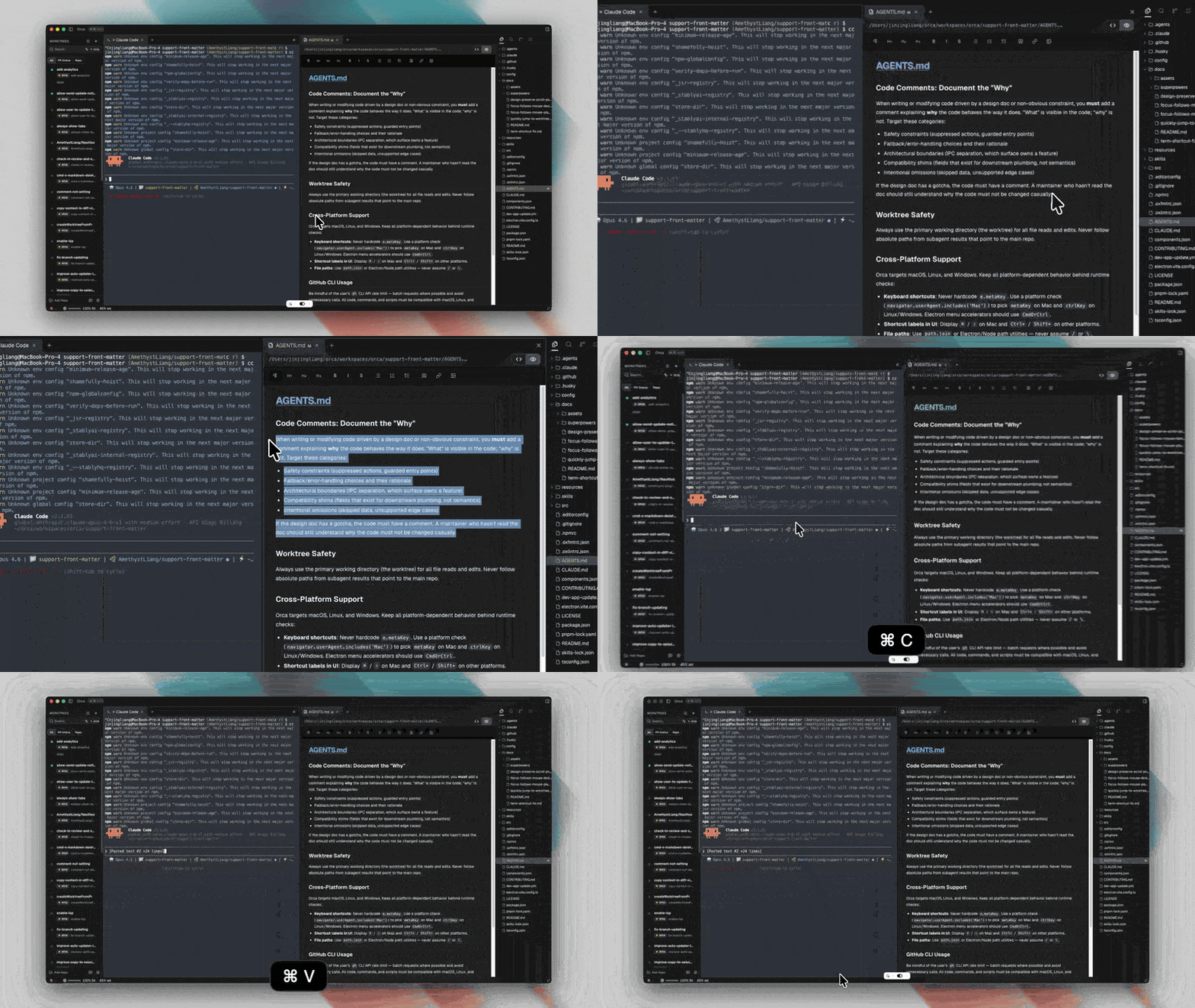
Orca gained approximately 18.8K stars in August.
It describes itself as an agent development environment for working with a fleet of parallel agents.
Rather than replacing Claude Code, Codex, OpenCode, or other coding agents, Orca coordinates them. Multiple agents can run side by side in separate Git worktrees, their progress can be monitored centrally, and the developer can compare or steer the results.
Developer
    |
   Orca
    |
+---+---+---+---+
|   |   |   |   |
A1  A2  A3  A4  A5
|
Separate Worktrees
The project also extends beyond a single desktop: its current ecosystem includes desktop use, mobile monitoring, and deployment on remote infrastructure such as a VPS.
This is a major transition from the original “one coding agent in one terminal” workflow.
As agent fleets grow, infrastructure questions appear quickly:
- Which agent gets which task?
- Which tools can each agent access?
- How are worktrees isolated?
- How are runs observed?
- How do several agents share or avoid conflicting state?
Those problems overlap increasingly with MCP gateways and agent infrastructure.
Why it is trending: coding-agent use is moving from sequential sessions toward parallel orchestration.
What to watch: whether multi-agent IDEs become a standard layer above individual coding CLIs.
8. watermarks-remover — +17.2K Stars
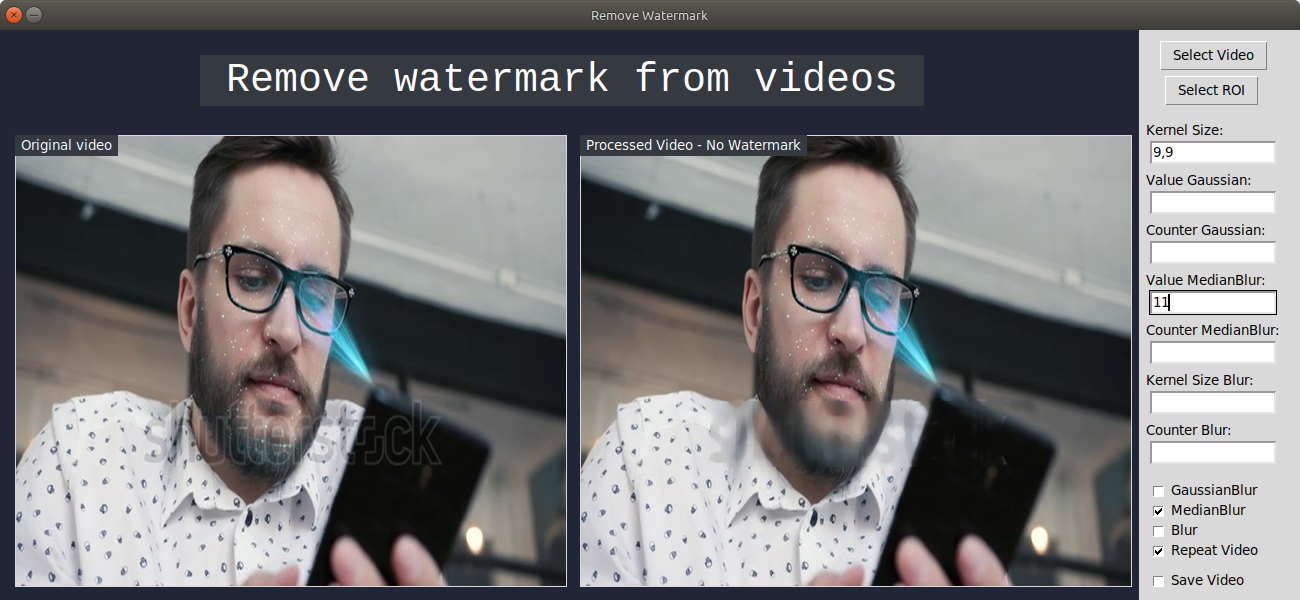
watermarks-remover gained approximately 17.2K stars in August.
It is different from nearly everything else in the Top 10.
The project is a privacy-oriented agent skill and set of Python utilities for removing multiple classes of AI provenance marks from content the user owns.
Its current scope covers areas such as invisible Unicode characters, document metadata, EXIF/XMP properties, C2PA-related metadata, and optional agent-assisted rewriting paths for statistical text markers.
The interesting signal is not simply that one utility became popular.
It shows that the open-source AI ecosystem is developing tooling around the output of AI systems:
AI Generation
     |
Generated Artifact
     |
+----+-------------+
|                  |
Provenance       Metadata
|                  |
Privacy / Hygiene Tools
Why it is trending: provenance, privacy, metadata, and AI-origin signals are becoming their own software category.
What to watch: more tools focused on disclosure, verification, content provenance, and privacy as AI-generated artifacts spread across workflows.
9. MoneyPrinterTurbo — +17.1K Stars
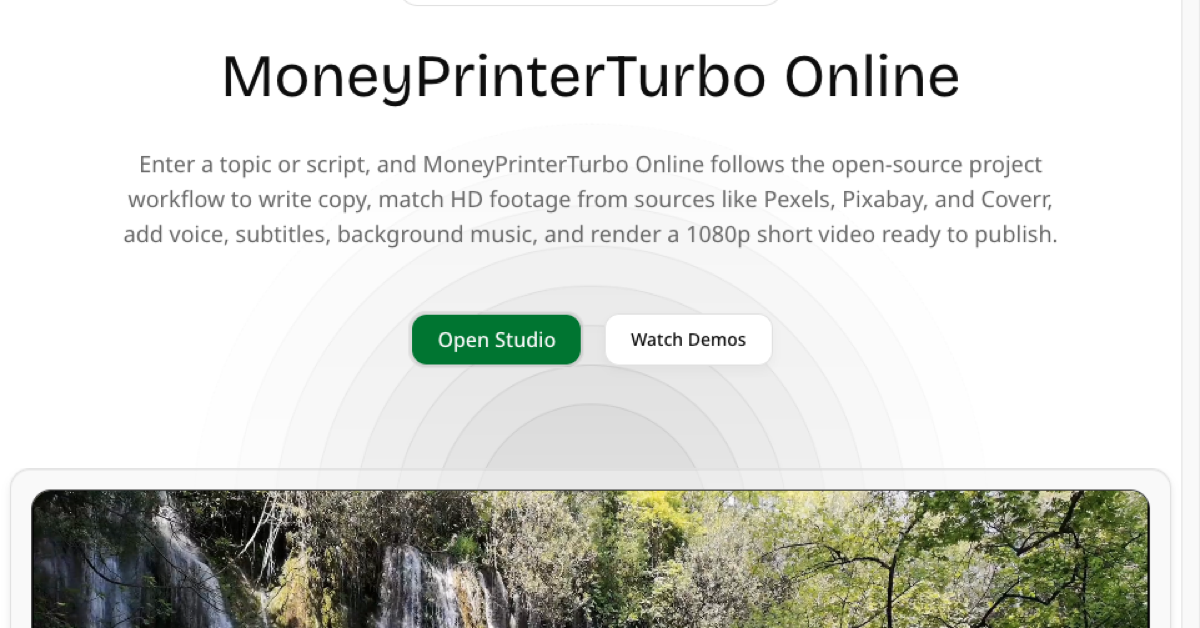
MoneyPrinterTurbo added approximately 17.1K stars in August.
The project is a good example of another 2026 trend: developers increasingly star complete AI workflows rather than a single model.
MoneyPrinterTurbo can start from a topic or script and automate several stages of short-video production, including script generation, media selection, subtitles, voice generation, background music, and final composition.
Its current project also supports both locally supplied or retrieved stock media and optional AI-generated visual assets through supported generation providers.
Topic
  |
Script
  |
Asset Selection / Generation
  |
Voice
  |
Subtitles
  |
Music
  |
Editing
  |
Final Video
This is fundamentally different from starring a new video foundation model.
The value sits in workflow productization: combining several AI and conventional media operations into something a user can execute end to end.
Why it is trending: practical automation can create more immediate value than another isolated model demo.
What to watch: AI workflows that combine local models, cloud APIs, content generation, editing, and publishing behind one repeatable pipeline.
10. OmniRoute — +16.8K Stars
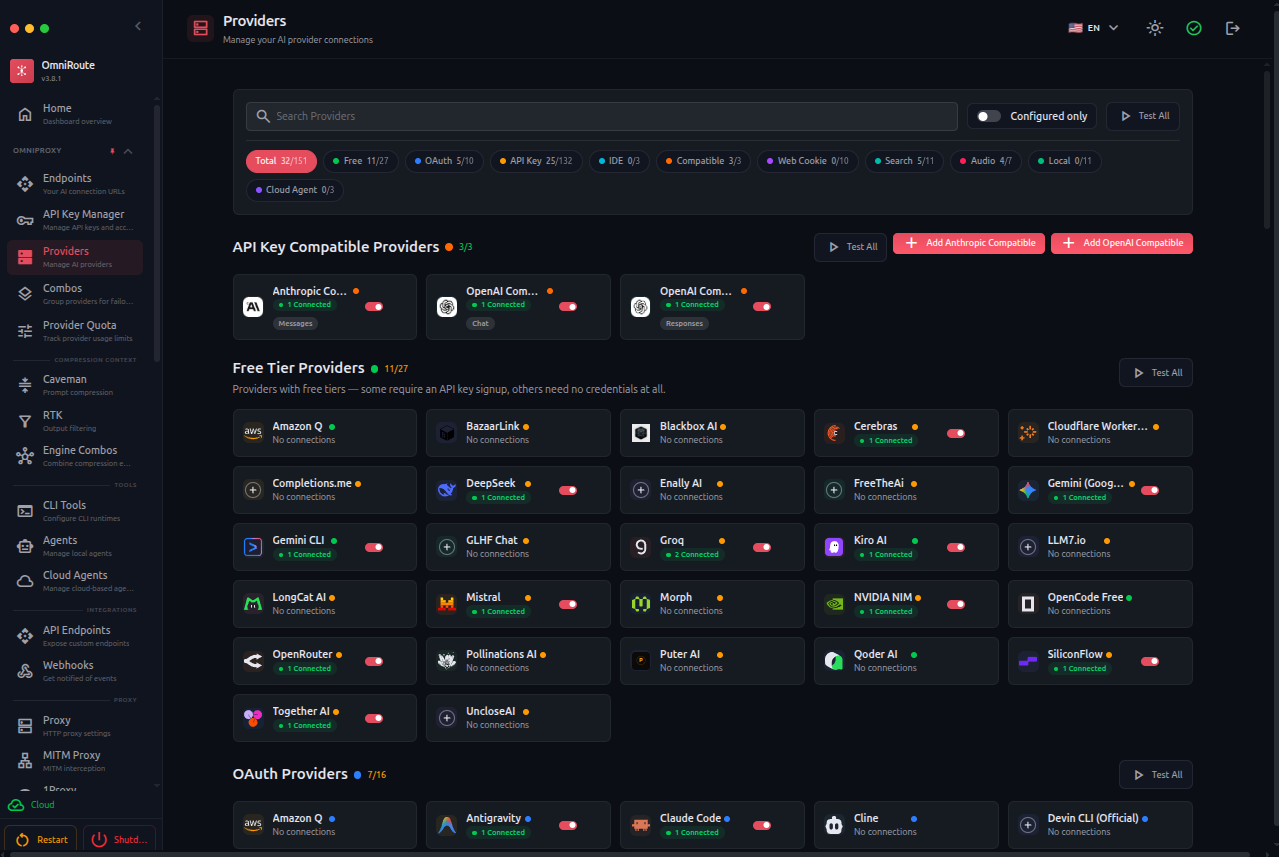
OmniRoute rounds out the Top 10 with approximately +16.8K stars in August.
Its role is infrastructure rather than end-user generation.
OmniRoute provides a single AI gateway in front of many models and providers. Its current project supports hundreds of providers and more than a thousand model endpoints, alongside routing strategies, automatic fallback, quota management, token compression, MCP, A2A, desktop interfaces, and developer-tool integrations.
The underlying problem looks like this:
Claude Code
Codex
Cline
OpenCode
Cursor
   |
OmniRoute
   |
+-- OpenAI
+-- Claude
+-- Gemini
+-- DeepSeek
+-- Kimi
+-- Ollama
+-- LM Studio
+-- vLLM
+-- Other Providers
As the number of AI clients and models rises, direct point-to-point configuration becomes harder to manage.
Routing layers turn model selection into infrastructure rather than an application-specific setting.
This is especially relevant to AI CLI tools and coding agents, where different clients increasingly need access to the same model providers, credentials, usage policies, and local inference endpoints.
Why it is trending: AI stacks increasingly need a routing and resilience layer between clients and models.
What to watch: the convergence of model gateways, MCP, A2A, policy, observability, and agent routing.
What GitHub's August 2026 AI Trends Actually Show
The projects matter individually, but the composition of the list is more interesting than any one repository.
Eight of the ten fastest-growing AI projects in this filtered ranking belong primarily to the broader agent stack:
- DeepSeek Harness — agent runtime;
- mattpocock/skills — reusable agent behavior;
- Archify — agent skill;
- Diagram Design — agent skill;
- DSH Desktop — agent workspace;
- Ponytail — agent behavior layer;
- Orca — multi-agent orchestration;
- OmniRoute — AI routing infrastructure.
That suggests the center of open-source AI activity is moving up the stack.
Model
  |
Gateway
  |
Harness
  |
Skills
  |
Agent
  |
Workspace
The model remains essential, but developers increasingly differentiate their workflows through everything surrounding it.
Trend 1: Agent Infrastructure Is Competing With Model Repositories
DeepSeek Harness is the most obvious example.
A project can now gain enormous attention without shipping a new LLM at all. Harnesses, gateways, memory layers, tool systems, and orchestration environments are becoming first-class open-source projects.
This is a significant shift from a model-centric view of AI software.
For many developers, the decision is no longer:
Which model should I use?It is becoming:
Which model?
Which agent?
Which skills?
Which tools?
Which gateway?
Which runtime?
Which memory?
Which permissions?
The infrastructure around the model is becoming the product.
Trend 2: Agent Skills Are Becoming a Distribution Format
Three of the Top 4 projects—mattpocock/skills, Archify, and Diagram Design—are fundamentally skill-oriented.
That is unusually strong evidence for a category that barely existed as a mainstream software-distribution concept a few years ago.
Skills make one important separation possible:
Agent Client
     ≠
Reusable Workflow
A developer may move from Claude Code to Codex, or from one model to another, while preserving a useful engineering method as portable files.
If that portability continues improving, the agent skill may become analogous to a package:
- installable;
- versioned;
- inspectable;
- forkable;
- shareable;
- composable with other capabilities.
That would make agent behavior itself part of the open-source software supply chain.
Trend 3: One Agent Is Turning Into an Agent Fleet
Orca shows the next scaling problem clearly.
Once several capable coding agents can operate simultaneously, the challenge stops being “Can an agent edit code?”
The problem becomes orchestration.
One Developer
      |
Agent Orchestrator
      |
+-----+-----+-----+
|     |     |     |
Agent Agent Agent Agent
  A     B     C     D
|     |     |     |
Separate Tasks / Worktrees
This creates a new infrastructure layer around:
- task assignment;
- parallel state;
- permissions;
- tool access;
- observability;
- cost control;
- merge and review workflows.
Agent fleets make gateways and policy layers more important rather than less important.
Trend 4: AI Software Is Becoming More Local and User-Controlled
Not every project in the ranking is fully local, but several reflect growing demand for software that can run on hardware controlled by the user.
DSH Desktop launches and manages a local Harness service. Orca can coordinate agent workflows from desktop and remote server environments. OmniRoute supports local inference providers alongside hosted APIs.
This produces a modular local architecture:
Always-On Local Server
        |
+-------+---------+----------+
|                 |          |
Agent Harness   Gateway    Memory
|                 |          |
+-------- Local Network -----+
                  |
             GPU Server
                  |
          Ollama / vLLM
The agent runtime does not need to run on the same machine as the largest model.
An always-on home server can maintain sessions, plugins, routing, storage, repositories, and automation while a GPU workstation or dedicated inference system handles heavier model execution.
This same modularity is one reason local AI agent architectures increasingly look like small distributed systems rather than one large chatbot.
Trending Does Not Mean Production-Ready
GitHub stars measure attention, not maturity.
A fast-growing repository can still have:
- breaking API changes;
- limited documentation;
- unfinished security boundaries;
- young plugin ecosystems;
- unstable storage formats;
- rapid release cycles;
- unreviewed third-party extensions.
DeepSeek Harness is the clearest example because its own documentation explicitly labels it developer-preview software and says users should expect compatibility-breaking changes.
Its safety notice is also unusually direct: the project can execute model-generated code and commands, load external plugins, and access files, processes, credentials, and network resources made available to it.
That means this:
Trending
   ≠
Secure

Stars
   ≠
Stable

Popular
   ≠
Production-Ready
Before deploying a trending agent on a home server, review its license, recent releases, security documentation, permissions, network access, authentication, plugin model, and recovery path.
Other Open-Source AI Projects Worth Watching
Several other AI repositories posted strong August growth but fell just outside the filtered Top 10.
| Project | August Growth | Why It Is Interesting |
|---|---|---|
| OpenAI Codex | +15.9K | Open-source terminal coding agent |
| Hermes Agent | +12.0K | Persistent general-purpose agent architecture |
| Firecrawl | +11.7K | Search, scraping, and web context infrastructure |
| Prime Agent | +10.7K | Self-improving agent for long-running coding tasks |
| Semantica | +9.1K | Graph-native context infrastructure |
| OpenViking | +6.7K | Self-evolving context database for agents |
| Unsloth | +5.7K | Local model training and inference |
OpenViking is particularly notable because its focus on unifying agent memory, RAG, and skills points toward another likely infrastructure battleground: persistent context.
As agents become longer-running, the question is no longer only which model can reason best. It is also what the agent remembers, how that memory is governed, and how context moves across tools and sessions.
Why GitHub Star Growth Is Useful—and What It Cannot Tell You
Monthly star growth is useful because it highlights acceleration rather than historical fame.
A repository with 200,000 lifetime stars may be stable but no longer gaining much attention. A smaller project that gains 20,000 stars in one month may reveal a new category forming much earlier.
But star growth does not measure:
- code quality;
- production adoption;
- security;
- benchmark performance;
- active daily users;
- enterprise deployments;
- maintainer sustainability.
It should therefore be read as a signal of developer attention, not a universal quality score.
That is also why this list does not reorder projects based on which ones fit local AI or home-server use cases best. Doing so would turn a measurable trend ranking into an editorial recommendation list.
Final Verdict
DeepSeek Harness was the dominant open-source AI breakout of August 2026, gaining more than four times as many stars as the second-place AI project in this filtered ranking.
But the bigger story is not DeepSeek alone.
The month's strongest projects show developers moving upward through the AI stack:
Models
   ↓
Gateways
   ↓
Harnesses
   ↓
Skills
   ↓
Agents
   ↓
Multi-Agent Workspaces
mattpocock/skills, Archify, and Diagram Design show that reusable agent behavior is becoming a software category of its own.
DSH Desktop shows an agent harness growing into a persistent user environment.
Ponytail shows that improving agent behavior can mean reducing unnecessary output rather than adding more autonomy.
Orca shows one coding agent becoming a fleet.
OmniRoute shows why those agents increasingly need shared routing infrastructure underneath them.
MoneyPrinterTurbo shows the other side of the trend: users are also rewarding complete AI workflows that turn several separate model capabilities into one repeatable outcome.
The strongest GitHub AI trend in 2026 is therefore not simply that open-source models are getting better. It is that the software surrounding those models is becoming much more modular, reusable, and operational.
FAQ
What was the fastest-growing open-source AI project on GitHub in August 2026?
DeepSeek Harness ranked first in GitTrend's August 2026 monthly dataset with approximately 152.1K stars gained during the month.
How were these GitHub AI projects ranked?
The projects were ranked by GitHub stars gained during August 1–31, 2026. Non-AI repositories were removed from the broader GitTrend monthly ranking, and only public projects with identifiable open-source licensing were included.
Why is public-apis missing from the list?
public-apis ranked highly in the overall August GitTrend dataset, but its primary purpose is maintaining a directory of public APIs rather than building AI software. Removing non-AI projects keeps the ranking aligned with the article's scope.
Does GitHub star growth mean a project is production-ready?
No. Stars indicate developer attention. They do not prove security, stability, production adoption, code quality, or long-term maintenance. Fast-moving developer-preview software should still be tested carefully before deployment.
Why are so many agent skills trending on GitHub?
Skills let developers package repeatable behaviors separately from the model or agent client. That makes useful workflows easier to inspect, share, modify, and move between coding agents.
What is an AI agent harness?
An agent harness is the runtime layer surrounding a model. It can manage tools, sessions, skills, storage, plugins, interfaces, execution loops, permissions, and other components required to turn an LLM into an operational agent.
What is the difference between an AI model and an AI gateway?
A model performs inference. A gateway sits between AI applications and one or more models or providers, handling tasks such as routing, fallback, credentials, quotas, logging, or policy.
Can these trending AI projects run locally?
Several can run fully or partly on user-controlled hardware, but “open source” does not automatically mean “fully local.” Some projects may still connect to hosted model APIs, remote search services, external media providers, or other cloud systems depending on configuration.
Why is monthly star growth better than total GitHub stars for a trending list?
Total stars favor older projects that have accumulated attention for years. Monthly growth measures acceleration during a fixed window, making it more useful for identifying newly emerging projects and categories.
Are GitHub stars a reliable measure of AI project quality?
No single popularity metric is a quality benchmark. Stars are useful for measuring attention, but evaluation should also consider maintenance, releases, documentation, security, licensing, actual users, and whether the project solves the intended problem.
What open-source AI trend should developers watch after agent skills?
Persistent agent context is a strong candidate. Projects around memory, context databases, RAG, reusable skills, and shared state are increasingly trying to solve how long-running agents retain useful information across tasks and sessions.
Will AI agent infrastructure become more important than individual models?
Models will remain fundamental, but infrastructure is becoming increasingly important because developers now need to coordinate models, tools, skills, memory, permissions, agents, and routing. The August 2026 GitHub trend data strongly reflects that shift.

Recommended products

Tech & AI HUB
More to Read
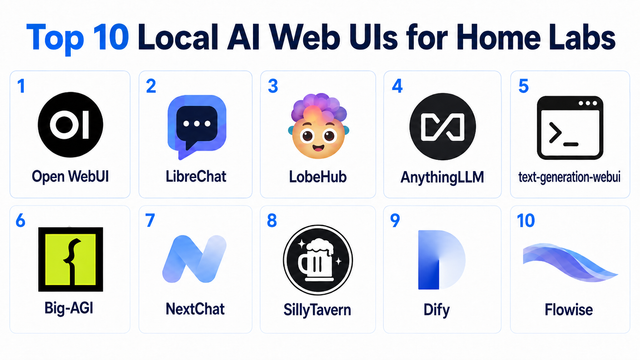
Top 10 Local AI Web UI for Home Labs In 2026
Compare 10 self-hosted local AI web UIs for home labs, covering Ollama support, RAG, agents, multi-user access, setup effort, and ideal use cases.
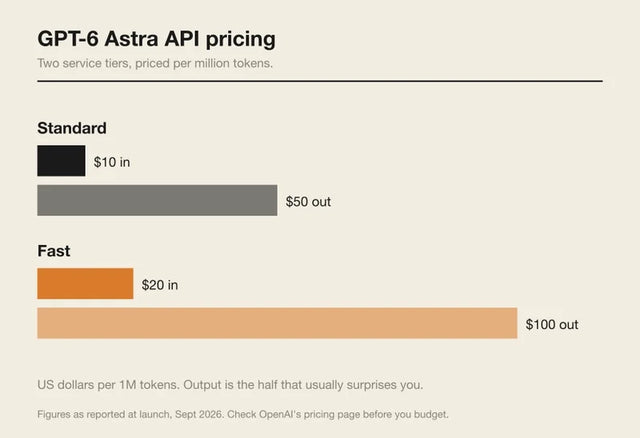
How Much Does GPT-6 Astra Cost Over Time? When Cloud AI Makes Sense vs Local AI
A practical GPT-6 Astra cost guide covering token usage, long-term AI workloads, cloud vs local tradeoffs, and why hybrid AI infrastructure matters.
GPT-6 Astra vs Local AI: Which Parts of an Agent Should Stay on Your Home Server?
GPT-6 Astra can stay in the cloud while your home server keeps files, memory, RAG, tools, permissions, and durable agent state local.


