
GPT-6 Astra vs Local AI: Which Parts of an Agent Should Stay on Your Home Server?


GPT-6 Astra makes the local model less central, but it can make local infrastructure more important. OpenAI's newest frontier model is built for complex reasoning, coding, computer use, research, and end-to-end tool-driven work. That weakens one old reason for buying a large local GPU: trying to reproduce frontier-level reasoning entirely at home.
But an AI agent is much more than its model. Files, memory, retrieval indexes, credentials, tool permissions, task queues, logs, backups, and local devices all exist outside the context window. A home server does not have to run GPT-6 Astra to become the center of an Astra-powered agent.
What Changes With GPT-6 Astra for AI Agents?
GPT-6 Astra pushes cloud models farther from answering questions and closer to completing multi-step work.
OpenAI positions Astra for difficult end-to-end tasks that combine reasoning with tools, coding, browsing, computer use, research, document creation, and professional software workflows. The official GPT-6 Astra launch emphasizes not only stronger reasoning but the model's ability to operate software, inspect results, revise work, and continue toward a finished outcome.
That changes the shape of an agent:
Traditional assistant:
Question → Model → Answer

Agent system:
Observe → Reason → Tool → Action → Review → Continue
OpenAI reports that Astra scored 72.6% on its OSWorld 2.0 setup while completing simulated computer-use tasks in roughly 47% less time than GPT-5.6 Sol. Those are OpenAI-reported evaluation results rather than guarantees for a particular home-server workflow, but they illustrate the direction clearly: the model is becoming more capable of sustained action, not just better text generation.

Can GPT-6 Astra Run Locally?
Not as a downloadable local model under OpenAI's current release.
Astra is being delivered through OpenAI-hosted products and the API. OpenAI has not announced downloadable GPT-6 Astra weights that can be loaded into Ollama, llama.cpp, vLLM, or another self-hosted inference runtime.
That makes this architecture impossible:
HOME SERVER
     |
     v
GPT-6 Astra weights
     |
local inference
But it does not require this architecture either:
Everything
files
memory
tools
credentials
automation
     |
     v
Cloud
The model can remain hosted while much of the agent around it remains under local control.
If Astra Is So Capable, Why Keep Anything Local?
Because the model is only one component of the system.
A useful agent may depend on:
- frontier reasoning,
- local or cloud models,
- private files,
- retrieval indexes,
- long-term memory,
- application state,
- credentials,
- tool permissions,
- approval rules,
- scheduled jobs,
- local devices,
- logs,
- and backups.
Only the first one has to be GPT-6 Astra.
AI AGENT
   |
   +-- Frontier model
   +-- Local model
   +-- Memory
   +-- Files
   +-- RAG
   +-- Tools
   +-- Credentials
   +-- Permissions
   +-- Queue
   +-- Logs
   +-- Backups
The useful question is therefore no longer "cloud AI or local AI?" It is "which layer belongs where?"
Which Parts of an Agent Should GPT-6 Astra Handle?
Astra makes the most sense where expensive frontier intelligence creates a meaningful improvement in task completion.
Good candidates include:
- difficult reasoning,
- unfamiliar problems,
- complex research,
- large codebase understanding,
- difficult debugging,
- computer-use planning,
- multi-step professional workflows,
- and tasks that require repeated inspection and correction.
This is especially important because Astra is not priced like a tiny utility model. The current GPT-6 Astra API specifications list standard token pricing of $10 per million input tokens and $50 per million output tokens.

That does not make Astra "too expensive." It means the architecture should reserve frontier reasoning for work that benefits from frontier reasoning. The broader decision between APIs, owned hardware, and selective routing is covered in more detail in our guide to local and cloud AI costs.
Which Tasks Still Make Sense for a Local Model?
A local model does not have to beat Astra. It only has to be good enough to keep Astra from doing work that never needed Astra.
Routine local workloads may include:
- classification,
- tagging,
- metadata extraction,
- document triage,
- simple summarization,
- log analysis,
- basic routing decisions,
- private preprocessing,
- embeddings,
- and offline fallback.
A hybrid agent can route work according to difficulty:
TASK
 |
 v
ROUTER
 |
 +---- routine / private ----> LOCAL MODEL
 |
 +---- difficult ----------> GPT-6 ASTRA
A small local model can process hundreds of repetitive events without turning every temperature reading, log line, document tag, or file classification into a frontier-model request. Reusable local AI agent skills can also make these smaller models more useful by giving them explicit procedures instead of expecting frontier-level reasoning from every request.
Does Astra's 1M Context Window Replace Local RAG?
No. A large context window changes how much the model can inspect at once; it does not eliminate the need to choose which information should enter that context.
GPT-6 Astra currently supports a 1,050,000-token context window and up to 128,000 output tokens. That is large enough for substantial repositories and document collections, but a NAS can contain terabytes of data and millions of files.
The useful architecture remains selective:
NAS
 |
millions of files
 |
local search / metadata / embeddings
 |
retrieve relevant material
 |
selected context
 |
GPT-6 Astra
rather than:
NAS
 |
everything
 |
1M context
 |
GPT-6 Astra
There is also an economic reason to retrieve selectively. OpenAI's current model page states that requests with more than 272,000 input tokens are charged at 2× the normal input and cache rates and 1.5× the output rate for the entire request.
RAG is therefore not merely a workaround for small context windows. It is a control layer for deciding what information deserves to reach the model.
If the source material already lives on local storage, a private NAS AI assistant shows how retrieval can sit between a large document archive and whichever model ultimately generates the answer.
Is Model Context the Same as Agent Memory?
No. Context is working information. Durable memory is system state.
MODEL CONTEXT

working information
for inference
       |
       v
GPT-6 Astra


DURABLE MEMORY

files
notes
database
RAG index
task history
agent state
       |
       v
Home Server / NAS
OpenAI is improving continuity inside Codex as well. With Astra, Codex can experimentally keep notes across context windows and search earlier context windows for requirements, test results, and tool outputs that may not have survived ordinary compaction.
That solves an important problem: maintaining continuity during a long coding session.
It still does not answer questions such as:
- Which project file is canonical?
- Which job should resume after a reboot?
- What did the agent change last month?
- Which version should be restored?
- Which user approved an action?
- Which credential may this tool access?
Better model memory does not eliminate the need for system memory.
Where Should Files and Long-Term Agent Memory Live?
For an agent that repeatedly works with the same private data, a local server or NAS is a strong place to keep the durable source of truth.
That layer can contain:
- documents,
- project repositories,
- media libraries,
- knowledge bases,
- vector indexes,
- task records,
- agent notes,
- logs,
- and backups.
The cloud model can receive only the subset required for a specific task.
LOCAL DATA

Files
Knowledge base
Memory
Logs
     |
     v
Retriever
     |
     v
Relevant context
     |
     v
GPT-6 Astra
This separates durable ownership from temporary inference.
The agent can switch from Astra to another frontier model next year without rebuilding the file archive, rewriting years of task history, or moving every source document into a new model provider's storage layer. The same role split appears in a practical Mac and NAS AI stack, where active compute and long-lived memory do not have to occupy the same machine.
Should GPT-6 Astra Execute Tools Directly on Your Home Server?
Astra can decide that a tool should run, but unrestricted machine access should not be the default architecture.
OpenAI's current Astra agent tool architecture supports function calling, MCP, computer use, hosted shell, code interpreter, apply patch, file search, and other tools.
For developer-defined tools, however, the application still executes the tool.
That creates a useful boundary:
GPT-6 ASTRA
Reasoning Plane
      |
      v
TOOL REQUEST
      |
      v
LOCAL GATEWAY
      |
 +----+----+----+----+
 |    |    |    |    |
Git  NAS   HA  Apps Scripts
The model can request an action without receiving unrestricted control of the underlying machine.
A tool might expose:
restart_media_server()

read_project_files()

create_backup()

get_home_energy_state()
instead of exposing:
root shell
entire filesystem
all API tokens
all network devices
The model does not need to own the machine in order to reason about what the machine should do.
As the number of tools grows, an MCP gateway layer can help centralize authentication, routing, rate limits, and observability instead of exposing every local tool directly to every agent.
Where Should an AI Agent's Credentials Live?
The more capable computer-use agents become, the more important permission boundaries become.
An agent might eventually need access to:
- Git repositories,
- Home Assistant,
- NAS shares,
- databases,
- cloud applications,
- email,
- calendars,
- SSH services,
- or internal APIs.
The weak architecture is:
AGENT
  |
all credentials
  |
full access
A safer architecture is:
GPT-6 Astra
      |
Tool request
      |
Permission layer
      |
Approved local service
For example:
ALLOW

read /projects/alpha


NOT

read entire NAS
or:
ALLOW

restart one container


NOT

unrestricted root SSH
OpenAI says Astra has improved at respecting task boundaries, handling prompt injection, and avoiding unauthorized or destructive computer actions. Its Astra safety architecture also reflects the greater risk created by increasingly capable tool-using models.
Better model alignment complements permission boundaries. It does not make permission architecture unnecessary. A more detailed AI agent tool permissions model can restrict authority to one folder, one service, or one operation instead of sharing a master credential across the entire agent stack.
Why Does Async Tool Calling Fit a Hybrid Agent?
GPT-6 Astra introduces async tool calling, which is particularly relevant to home-server agents.
The model can call an asynchronous developer-defined tool and continue reasoning, call another tool, or handle an independent part of the task while the application completes the first operation.
GPT-6 Astra
     |
     +-- request local backup
     |
     +-- continue research
     |
     +-- inspect another result
     |
     v
LOCAL SERVER
runs backup
     |
     v
returns result
     |
     v
GPT-6 Astra continues
OpenAI's developer guidance explicitly notes that the application still executes the asynchronous tool and manages the pending work.
That separation maps naturally onto a hybrid architecture:
the cloud model handles reasoning while the local system owns execution state.
What Should Happen Locally Before Data Reaches Astra?
Not every raw byte needs to leave the home just because the final reasoning step uses a cloud model.
A local preprocessing layer can:
- search files,
- filter results,
- extract text,
- remove irrelevant sections,
- classify content,
- redact selected fields,
- generate embeddings,
- and summarize repetitive material.
RAW PRIVATE DATA
       |
       v
LOCAL PROCESSING
       |
       +-- retrieve
       +-- filter
       +-- classify
       +-- redact
       |
       v
MINIMUM USEFUL CONTEXT
       |
       v
GPT-6 Astra
This is different from claiming that cloud APIs have no privacy controls. OpenAI's current API data controls state that API data is not used to train OpenAI models unless the customer explicitly opts in, while eligible organizations can apply additional controls such as Zero Data Retention.
The distinction is architectural:
provider-side privacy controls govern what happens after data is sent; local data minimization governs what needs to be sent at all.
For document-heavy workflows, local knowledge-base workflows can keep parsing, indexing, and retrieval close to the stored data while exposing only the evidence needed by the final model call.
What Does an Astra + Home Server Agent Look Like?
A practical hybrid stack can separate frontier intelligence from durable local infrastructure:
                  GPT-6 ASTRA
                 Cloud Reasoning
                       |
                 selected context
                       |
                       v
                  HOME SERVER
                       |
        +--------------+---------------+
        |              |               |
   Agent Runtime   Tool Gateway    Local Model
        |              |               |
        |         +----+----+       routine jobs
        |         |    |    |
        |        Git   HA   Apps
        |
        v
       RAG
        |
        v
       NAS
 +------+------+------+------+
 |      |      |      |      |
Files Memory  Logs  State  Backups
The architecture can be understood as four planes.
| Plane | Role | Typical Location |
|---|---|---|
| Intelligence | Reasoning and inference | GPT-6 Astra + optional local models |
| Policy | Permissions, approvals, identities | Local gateway / application |
| Execution | Tools, apps, scripts, devices | Home server and local network |
| Data | Files, memory, RAG, logs, backups | Home server / NAS |
The home server's most important AI role may not be inference. It may be everything around inference.
That same principle is useful when deciding whether local AI and file storage should live on one machine or be split between a stable storage server and a separate compute node.

Does GPT-6 Astra Make Local GPUs Less Important?
For some users, yes.
If the only reason for buying a large GPU is to reproduce the strongest possible general reasoning at home, a hosted frontier model can make that investment less compelling.
Astra effectively allows the user to rent difficult reasoning when it is needed.
But local GPUs remain useful for:
- offline inference,
- private high-volume processing,
- repeated predictable workloads,
- image and video models,
- local model experimentation,
- high-volume embeddings,
- and workloads where per-request cloud billing is undesirable.
The important distinction is:
OWNING FRONTIER REASONING
          vs
OWNING LOCAL INFRASTRUCTURE
Astra may reduce the need to own frontier-class compute without reducing the value of owning storage, local services, memory, automation, or a persistent agent runtime.
If local inference is still part of the design, model fit should be checked separately from the rest of the server. Current Ollama hardware requirements are driven primarily by model size, context, concurrency, and the available RAM or VRAM rather than by the requirements of the agent control plane itself.
Does Your Home Server Need a GPU at All?
Not necessarily.
A server whose primary jobs are:
- agent orchestration,
- file storage,
- RAG indexing,
- tool execution,
- Home Assistant,
- task queues,
- logs,
- and backups
can be useful without running a large local language model.
The compute topology could be:
GPT-6 Astra
 cloud reasoning
      |
      v
Low-power Home Server
tools / memory / state
      |
      +----------+
      |          |
     NAS      Optional GPU PC
              local inference
The GPU becomes an optional compute node rather than the definition of the AI server itself.
This matters because a system that is perfectly capable as a file server may still struggle with sustained local inference. The common local AI server limits usually appear when model loading, context growth, embeddings, or GPU workloads begin competing with the server's existing storage and application duties.
When Is an API-Only Astra Agent Enough?
A home server is not automatically required for every Astra workflow.
An API-only architecture can make sense when the agent mostly performs:
- public web research,
- occasional document drafting,
- cloud-hosted coding,
- temporary analysis,
- work inside SaaS applications,
- and tasks with little persistent private state.
User
 |
 v
GPT-6 Astra
 |
 v
Cloud tools
If there is no large private archive, no local device control, no persistent queue, no offline requirement, and no long-running local services, adding a home server may only create operational overhead.
When Does a Hybrid Astra Agent Make More Sense?
A hybrid design becomes more compelling as the agent becomes persistent and connected to real household or work infrastructure.
| Requirement | API-Only | Hybrid Home Server |
|---|---|---|
| Occasional research | Strong fit | Usually unnecessary |
| Large private file archive | Possible | Strong fit |
| Private RAG index | Possible | Strong fit |
| 24/7 task queue | Possible | Strong fit |
| Local devices and APIs | Indirect | Strong fit |
| Offline fallback | No | Possible |
| Local credentials and policy | Possible | Strong fit |
| Long-term logs and backups | Cloud-dependent | Strong fit |
| Frontier reasoning | Strong fit | Use Astra remotely |
The dividing line is not whether the user likes local AI.
It is whether the agent needs durable local state and authority.
Does GPT-6 Astra Make Local AI Less Relevant?
It changes where local AI is valuable rather than making it irrelevant.
Local models no longer need to carry the entire burden of intelligence. They can specialize in routine, private, high-volume, or offline work while Astra handles harder reasoning when escalation is justified.
At the same time, stronger computer use makes the infrastructure around the model more important.
An agent that can reason about more tools needs clearer tool boundaries.
An agent that can handle longer tasks needs durable task state.
An agent with a million-token context still needs a way to retrieve from terabytes of files.
An agent that can operate software still needs credentials, approvals, logs, and recoverable data.
Use frontier AI for judgment; keep durable state and authority close to home.
That produces a different definition of local AI:
OLD IDEA

Local AI
=
Run the model locally


HYBRID IDEA

Local AI infrastructure
=
Files
Memory
Retrieval
Tools
Permissions
Task state
Logs
Backups
Local fallback
+
optional local models
The strongest model can live in the cloud while the agent still has a local home.
The home server does not have to run GPT-6 Astra to become the center of an Astra-powered agent.
FAQ: GPT-6 Astra vs Local AI
Can GPT-6 Astra run locally on a home server?
OpenAI has not announced downloadable GPT-6 Astra weights in the current release. Astra is currently being delivered through OpenAI-hosted products and API access rather than as a self-hosted local model.
Does GPT-6 Astra replace local AI?
No. Astra can take over difficult frontier reasoning while local models remain useful for routine processing, private preprocessing, embeddings, classification, high-volume jobs, and offline fallback.
Does GPT-6 Astra's 1M context window replace RAG?
No. The large context window lets Astra consider more information in one request, but retrieval is still useful for selecting relevant material from much larger file collections and controlling token cost. A document search and RAG workflow remains useful even when the final model has a very large context window.
Is a 1M context window the same as long-term memory?
No. Context is information available during inference. Long-term agent memory needs durable storage, retrieval, updating, versioning, and recovery across tasks and model sessions.
Where should an AI agent's memory live?
Persistent agent memory can live in files, databases, search indexes, or other storage controlled by the application. A home server or NAS is useful when that state needs to remain local, durable, searchable, and independent of one model provider.
Should GPT-6 Astra have direct SSH access to a home server?
Not by default. A safer architecture exposes narrowly scoped tools and permissions so the model can request specific actions without automatically receiving unrestricted root access to the machine. The same principle is explored in more detail through capability-based agent access.
Why is async tool calling important?
Async tool calling lets Astra continue reasoning or perform independent work while the application executes a longer-running tool. This fits hybrid systems where local jobs, backups, scripts, or services may take time to finish.
Where should AI agent credentials live?
Credentials should be controlled by the application or policy layer and scoped to the smallest practical set of resources and actions. The model can request a tool operation without receiving every underlying password or token.
Does a hybrid Astra agent need a local GPU?
No. A home server can provide files, RAG, tools, automation, permissions, queues, and backups without running a large model. A GPU can be added separately when local inference workloads justify it.
What should a local model handle instead of Astra?
Good candidates include classification, extraction, tagging, embeddings, routine summarization, local log analysis, private preprocessing, and offline fallback—tasks where frontier reasoning provides limited additional value.
When is an API-only Astra setup enough?
It can be enough for occasional research, cloud-based coding, document work, and tasks without large private archives, local devices, persistent jobs, or significant long-term agent state.
When does a home server become useful for GPT-6 Astra?
A home server becomes useful when the agent needs persistent local files, RAG, schedules, task queues, local tools, device access, credentials, logs, backups, or other services that should remain available independently of the cloud model.

Recommended products

Tech & AI HUB
More to Read
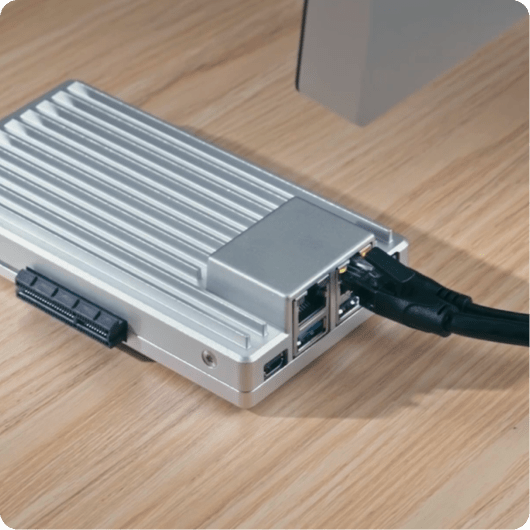
Home NVR Storage in 2027: Why Event Embeddings Will Change Video Retention
A mechanism-first explanation of home nvr storage, its shared-resource tradeoffs, three query-fanout FAQs, and a practical verification protocol.
Self-Hosted AI Authentication in 2027: Why Workload Identity Will Replace Shared Keys
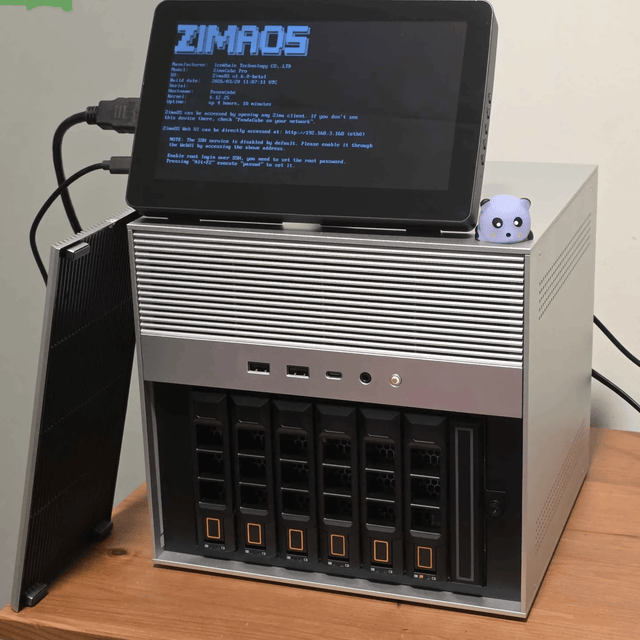
A mechanism-first explanation of self-hosted ai authentication, its shared-resource tradeoffs, three query-fanout FAQs, and a practical verification protocol.
Local Model Delivery in 2027: Why Content-Addressed Distribution Will Matter
A mechanism-first explanation of local model delivery, its shared-resource tradeoffs, three query-fanout FAQs, and a practical verification protocol.


