
Mac for AI, NAS for Memory: A Practical Private AI Stack


A practical private AI stack does not have to be one giant GPU server. For many home users, developers, and small creators, a cleaner setup is to let a Mac handle the active AI work while a NAS stores the long-term memory.
The Mac runs local models, AI chat interfaces, coding assistants, document workflows, embedding jobs, and agent scripts. The NAS stores documents, notes, code repositories, media, model archives, embeddings, summaries, and backups. The value comes from the role split: compute stays responsive, memory stays durable, and private data does not have to leave your network.
The Clean Role Split: Mac Thinks, NAS Remembers
Many users already have an Apple silicon Mac that feels fast enough for development, writing, automation, and local tools. The problem starts when every AI-related file gets pushed onto the Mac: documents, model files, indexes, notes, outputs, screenshots, code mirrors, and backups all begin competing with normal workstation storage.
The cleaner pattern is to split the stack by responsibility. The Mac handles active inference, local chat, AI UI, scripting, embeddings, and agent orchestration. The NAS holds the private memory layer: source documents, knowledge folders, repo mirrors, shared notes, project archives, model archives, generated summaries, snapshots, and backup targets.
This is not a Mac-versus-NAS decision. The Mac is the active brain. The NAS is the durable memory. The private AI stack becomes useful when the two are connected with clear folders, stable networking, permissions, indexing, and backup.
| Layer | Mac Does Best | NAS Does Best |
| AI inference | Run local models and AI tools | Usually not the main inference engine |
| User experience | Chat UI, IDE, scripts, agents | Shared apps and storage services |
| Knowledge source | Reads retrieved context | Stores documents, notes, and repos |
| Model files | Active models on fast SSD | Archive older or less-used models |
| Embeddings | Generate and query active indexes | Store or back up index exports |
| Data safety | Temporary working files | RAID, snapshots, backup targets |
| Access | Personal workstation | Shared private memory |
Why a Mac Is a Good Local AI Workstation
Not everyone wants a loud, hot, high-maintenance GPU server under the desk. A Mac mini, Mac Studio, or well-specced MacBook can be a quiet AI workstation for local chat, coding help, document summarization, embeddings, and small agent workflows.
The software ecosystem is one reason this works. MLX is an Apple silicon machine learning framework with a unified memory model, and tools such as Ollama make local model workflows approachable on macOS. The trend around a small Mac as an AI workstation reflects a real shift: many useful AI workflows no longer require a full server rack.
The boundary is important. A Mac is quiet, integrated, and easy to live with, but it is not automatically better than a high-VRAM NVIDIA workstation for every model or workload. Large models, heavy multi-user inference, and long-running agent loops can still push beyond what a single Mac should handle comfortably.
Why the NAS Should Hold the Memory
The fastest-growing part of a private AI stack is often not the chat app. It is the data around the chat app: PDFs, Markdown notes, meeting transcripts, project docs, code repositories, screenshots, media metadata, exported conversations, model files, embeddings, summaries, and generated reports.
Those files need to last longer than one Mac setup. They need clear folders, permissions, snapshots, backup, sharing, and migration paths. A NAS is better suited for that long-term memory role because it is designed around shared storage, multi-drive capacity, data protection, and always-available file access.
But a NAS does not become AI memory just because files sit on it. The memory becomes useful only when source folders are organized, selected paths are indexed, sensitive folders are excluded, and outputs are written back in a way that humans can review later.
Mounting NAS Shares Is the First Integration Step
Before adding agents, vector databases, or RAG pipelines, the Mac needs a stable way to read and write NAS files. If the mounted folders are unreliable, the whole AI workflow becomes unreliable too.
A practical layout might expose shares such as Documents, Knowledge, Projects, Media, AI Outputs, and Backups. The Mac mounts these shares, then local scripts, chat tools, coding assistants, and indexers read from selected paths instead of scanning the entire NAS.
Start with narrow access. Give the AI workflow read-only access to a few knowledge folders before allowing writes. Exclude private keys, financial records, password exports, backup images, generated folders, and anything that does not need to become model context.
RAG Turns NAS Files Into Searchable AI Memory
If a local model only sees the text you paste into a chat box, it is not really using your NAS as memory. It can answer the current prompt, but it cannot reliably search years of notes, project folders, research PDFs, or repo documentation.
RAG changes the flow. The Mac scans selected NAS folders, chunks documents, generates embeddings, stores vectors, retrieves relevant chunks, and then sends only the useful context to the local model. A local vector search service is one way to keep that retrieval layer inside your own environment.
The source files should still live on the NAS. The vector index is a working layer, not the original truth. If the index breaks or becomes stale, it should be possible to rebuild it from the NAS folders instead of losing the knowledge base itself.
Store Active Indexes on Fast Storage, Archive Them on the NAS
One common design question is where to put models, embeddings, and indexes. Keeping everything on the NAS feels clean, but active AI workloads often benefit from the Mac’s internal SSD or a fast external SSD.
Ollama’s macOS documentation notes that local model files can require additional space and may reach tens to hundreds of gigabytes, which makes local model storage on macOS a real planning issue. Active models and active indexes usually feel better on fast local storage. Older models, exported indexes, summaries, and source documents can live on the NAS.
A good hybrid layout is simple: Mac SSD for active models, cache, and current vector indexes; NAS for source files, model archives, exported index backups, and long-term AI outputs. Indexes can be rebuilt. Source documents and human-authored notes must be protected first.
| Data Type | Better Location | Why |
| Active LLM models | Mac SSD | Faster loading and smoother inference |
| Older model files | NAS archive | Saves Mac storage |
| Source documents | NAS | Durable private memory |
| Code repositories | Mac working copy + NAS mirror | Fast work plus safer copy |
| Vector index | Mac SSD for active use | Faster retrieval |
| Index backup/export | NAS | Rebuild safety |
| AI summaries and outputs | NAS | Long-term knowledge record |
| Backups | NAS + separate copy | Recovery, not just storage |
A Local Web UI Makes the Stack Usable Across Devices
If the AI system only works from a terminal on the Mac, it will stay a hobby project. A practical private AI stack needs a normal interface: a browser page that can be opened from another Mac, an iPad, a phone, or a development laptop on the same network.
Open WebUI describes itself as a self-hosted AI platform for local models with support for Ollama and OpenAI-compatible APIs. In this stack, the Mac can host the UI and model endpoint, while the NAS supplies the files and long-term memory.
Keep the UI private by default. A LAN dashboard is useful; a public internet-facing AI control panel is a different security problem. Use accounts, restrict access, avoid exposing model endpoints directly, and keep file tools limited to the folders the AI actually needs.
Network Speed Decides Whether the Stack Feels Smooth
Small Markdown files, code folders, and notes can work fine over a stable 1GbE connection. The stack feels different when it starts scanning thousands of PDFs, syncing model archives, indexing media metadata, or moving large project folders between the Mac and NAS.
RAG indexing often involves many small reads. Model archives involve large sequential transfers. Backups involve long sustained writes. Media tagging may create continuous scanning. These workloads do not stress the network in exactly the same way, but all of them benefit from a stable Mac-to-NAS path.
Start with reliable cabling, fixed IPs, and stable shares. If the NAS also handles media, backups, AI memory, and multiple devices, 2.5GbE or 10GbE can make the stack feel much less fragile. The goal is not speed for its own sake; the goal is for the private memory layer to feel boring and always available.
Privacy Comes From Boundaries, Not Just Local Hardware
The reason many users want a Mac + NAS AI stack is simple: they do not want private documents, client code, family files, notes, logs, contracts, or internal knowledge sent to a cloud model by default.
Keeping the model, source files, embeddings, outputs, and logs on local hardware helps. A private AI workstation on a Mac is attractive because sensitive work can happen close to the data instead of through a remote API.
Local hardware is not enough by itself. Browser extensions, cloud fallback, sync apps, agent tools, logs, and exposed endpoints can still leak data if configured carelessly. Real privacy comes from permissions, excluded folders, read-only defaults, controlled logs, and clear rules about when cloud AI is allowed.
Agents Need Read-Only First, Write Access Later
The stack becomes more powerful when an agent can read NAS folders, summarize files, generate reports, update notes, rename documents, or write outputs back to shared storage. It also becomes easier to make a large mistake.
A prompt is not a security boundary. A local agent may misunderstand a folder, overwrite the wrong file, generate a misleading summary, expose a secret in an output, or run a command that should have required review. Local deployment reduces data exposure to outside services, but it does not remove operational risk.
The safe path is gradual. Start with read-only Q&A over selected folders. Then allow writes only to a dedicated AI Outputs folder. Only later should the agent modify source folders, repos, or project files, and those actions should require approval.
Back Up the Memory Before Trusting the AI Stack
If the NAS becomes private AI memory, it stores more than raw files. It stores the context your AI relies on: documents, notes, code mirrors, embeddings, summaries, outputs, prompts, configs, scripts, model archives, and workflow history.
RAID can help with drive failure, and snapshots can help roll back accidental changes. But neither one is a complete backup strategy. If an AI workflow writes bad summaries, corrupts outputs, deletes folders, or pollutes an index, you need a recovery path that goes beyond “the NAS is still online.”
Protect source documents first. Keep snapshots on important shares, export key indexes or make them rebuildable, back up human-authored notes, and keep a separate copy of critical data. AI memory is useful only if it remains recoverable.
Local vs Hybrid Is the Real Decision
The wrong question is whether a Mac + NAS stack can replace every cloud AI model. The better question is which tasks should stay local and which tasks are worth sending to a stronger cloud model with limited, redacted context.
Local is strongest for private document Q&A, personal notes search, repo explanation, family archive summaries, media metadata, routine coding help, and offline workflows. Cloud models can still be useful for complex reasoning, large architecture planning, broad research synthesis, and difficult debugging.
The best private AI stack is usually hybrid by policy. Default to local for private data. Use cloud only when the task needs stronger reasoning and the context can be minimized. That gives you privacy for daily work without pretending local hardware wins every benchmark.
| Task | Local Mac + NAS Stack | Cloud / Hybrid |
| Private document Q&A | Strong | Use carefully |
| Personal notes search | Strong | Usually unnecessary |
| Codebase explanation | Strong if indexed | Useful for hard reasoning |
| Large architecture planning | Limited | Strong |
| Family archive summaries | Strong | Avoid raw upload |
| Sensitive contract review | Local-first | Redact if cloud |
| Media metadata tagging | Strong | Usually local enough |
| Complex research synthesis | Useful with local docs | Cloud may help |
| Agent writes to files | Approval required | Approval required |
Where the NAS Fits in a Private AI Workflow
The NAS should not be positioned as a replacement for the Mac’s local AI performance. Its more natural role is the memory layer: the place where documents, repo mirrors, model archives, AI outputs, summaries, snapshots, and backup copies live.
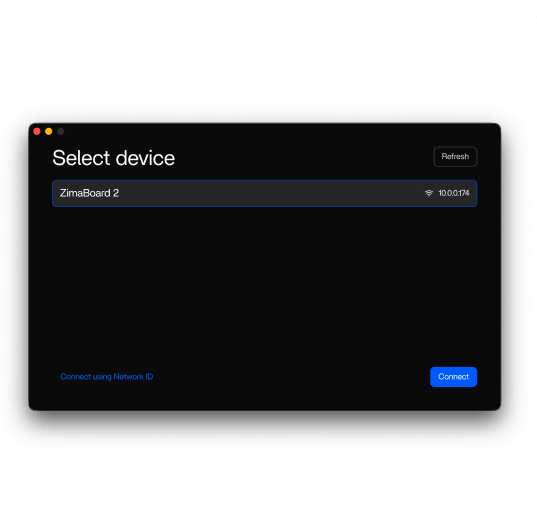
For users who want that memory layer in one local system, a private AI memory layer such as ZimaCube 2 can store documents, code mirrors, model archives, vector index exports, and AI-generated outputs. For lighter services around the stack, a lightweight self-hosted tooling node such as ZimaBoard 2 can run small containers, automation helpers, or private workflow services.
The important point is the division of labor. The Mac handles active AI. The NAS keeps the knowledge organized, searchable, permissioned, backed up, and recoverable. That is what turns a local model demo into a practical private AI stack.
Final Takeaway
A Mac + NAS private AI stack works because the two machines solve different problems. The Mac is the active AI workstation: local models, chat UI, coding tools, embedding jobs, and agent workflows. The NAS is the durable memory layer: documents, repos, notes, summaries, model archives, indexes, snapshots, and backups.
This setup is not about beating every cloud model. It is about keeping private data close, making local AI useful every day, and building a system where memory is organized, searchable, permissioned, and recoverable.
FAQ
Can a Mac really run local AI models?
Yes. Modern Apple silicon Macs can run useful local AI models, especially smaller and mid-sized models matched to available memory. The experience depends on RAM, model size, quantization, storage speed, and workload.
Should the NAS run the AI model instead?
Usually not unless the NAS has strong compute hardware. In this stack, the Mac handles active inference and AI tools, while the NAS stores documents, indexes, outputs, archives, and backups.
Where should model files be stored?
Active models should usually live on the Mac SSD for faster loading. Older or less-used model files can be archived on the NAS to save local storage.
Where should embeddings and vector indexes live?
Active indexes often perform better on the Mac SSD. The NAS is a good place to store source documents, exported index backups, summaries, and rebuildable pipeline outputs.
Does this stack keep data private?
It can, if configured carefully. Local models, local indexes, and NAS storage keep data inside your network, but you still need permissions, excluded folders, controlled logs, and clear rules for any cloud fallback.
Do I still need cloud AI?
Sometimes. Local AI is strong for private documents, repo Q&A, notes, summaries, and routine workflows. Cloud AI may still help with hard reasoning, large architecture planning, or broad research synthesis after sensitive context is removed.
Is 1GbE enough between the Mac and NAS?
It can be enough for small documents, notes, and code. If you index large folders, move model archives, scan media, or run many devices at once, 2.5GbE or 10GbE can make the stack feel smoother.
What should I set up first?
Start with stable NAS shares, a local model runner on the Mac, a simple web UI, and read-only document Q&A over one folder. Add vector search, write-back folders, and agent tools only after the basic workflow is reliable.

Recommended products

Support & Tips
More to Read

How to Turn Existing NAS Folders Into a Searchable Photo Library Without Moving Your Originals
Learn how to index existing NAS photo folders with ZimaOS Photos, Immich, or PhotoPrism while preserving original files, metadata, and recovery options.
NAS Share Shows Old Files After Storage Replacement: Checks and Fixes
Compare local storage with the active share and a clean client. Repair only the layer proven stale, then verify the result survives reconnect and...
Mini PC Cooling Maintenance Guide for Fans, Vents, and Thermal Baselines
Use repeatable idle and load readings. Clean external airflow first, confirm fan behavior, and open the chassis only when evidence survives a controlled retest.


