
2026 Top AI Agent Skills for Local AI Workflows


The best AI agent skills for local AI workflows are not just broad abilities like “run a local model,” “build RAG,” or “search files.” The most useful skills are reusable, installable, or copyable workflow packages that help an AI agent work with local models, local files, private knowledge bases, vector databases, MCP tools, and self-hosted AI apps.
For most local AI users, the strongest starting set includes delegate-local for routing tasks to local models, chroma-local for self-hosted semantic search, qdrant-search-quality for retrieval tuning, acquire-codebase-knowledge for repository understanding, mcp-builder for building local tool integrations, and a secure filesystem MCP server for controlled local file access.
If you are still comparing reusable skills by role or workflow, you can also start from the AI Agent Skill Finder and use this article as the local AI workflow layer.
What Are AI Agent Skills for Local AI Workflows?
An AI agent skill is a reusable package of instructions, resources, scripts, references, and workflow rules that tells an AI agent how to perform a specific task more reliably. In the SKILL.md ecosystem, a skill is usually a folder that contains a SKILL.md file and may also include helper scripts, examples, templates, or references. The Agent Skills specification defines this folder-based structure clearly: the skill file provides metadata and instructions, while optional folders can hold executable code or supporting documentation.
For local AI workflows, this matters because local models often have less reasoning depth, smaller context windows, or weaker tool-use behavior than large cloud models. A strong skill gives the agent a repeatable operating procedure. Instead of asking a local model to “build RAG,” the skill can tell it which vector database to use, how to chunk files, how to store metadata, how to validate retrieval quality, and when to ask the user before changing persistence or permissions.
AI Agent Skills vs Local AI Tools
Local AI tools run the model or provide the interface. Ollama, LM Studio, Open WebUI, Continue, AnythingLLM, llama.cpp, and similar tools help you run or interact with models locally. A skill is different. A skill does not only run the model; it teaches the agent how to complete a workflow inside that environment.
For example, “Ollama” is a local model runtime. “Use a local model for code review” is a broad workflow. A reusable skill such as delegate-local is closer to a concrete agent skill because it gives the agent a specific routing behavior and installation path.
AI Agent Skills vs MCP Servers
MCP servers give agents access to tools and data sources. Skills tell agents when and how to use those tools. In a local AI workflow, this distinction is important. A filesystem MCP server may expose local file operations. A skill can add safety rules, project conventions, file access boundaries, and validation steps so the agent does not blindly edit files or leak private paths.
AI Agent Skills vs Generic Prompts
A prompt is usually one-time instruction. A skill is reusable. A prompt says, “Use local RAG.” A skill says, “When working with local RAG, inspect the data source, choose chunking rules, decide persistence, check embedding dimensions, validate retrieval quality, and document what was changed.”
That is why skills are especially valuable for local AI workflows. They turn fragile one-off prompting into repeatable local procedures.
Why Local AI Workflows Need Agent Skills
Local AI workflows are attractive because they can reduce cloud dependency, improve data control, and support private personal or team knowledge bases. But they also introduce practical problems. Users must choose a model runtime, select embedding models, configure vector databases, expose files safely, manage hardware limits, and decide which tasks should stay local.
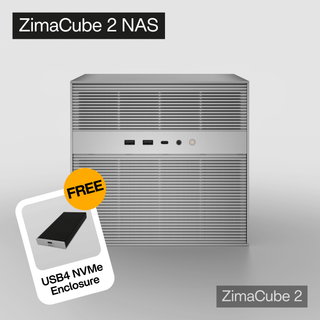
For users building a private AI assistant, local knowledge base, or self-hosted coding assistant, the hardware layer also matters. A device such as ZimaCube 2 AI NAS can act as a private storage and local AI workflow base, while the agent skill layer helps define how models, files, embeddings, and tools should be used.
Local Models Need More Procedural Guidance
Cloud models can often infer missing steps, but local models may need clearer procedures. A local model may know what RAG is, but still fail to choose stable chunking, persistent paths, or validation checks. Skills make the workflow explicit. This helps smaller models complete tasks with less trial and error.
Local RAG Needs Better Retrieval Decisions
Local RAG is not only about storing files in a vector database. The agent must decide what to index, how to split documents, which metadata to preserve, when to use hybrid search, and how to test recall. Without a skill, the agent may build a demo that works for three files but breaks when the user adds a real archive.
Local Agents Need Safer Access to Files and Tools
Local agents often need file access, shell commands, Git operations, browser automation, and local API calls. These are powerful capabilities, but they create risks. A good skill should define permission boundaries, validation steps, rollback behavior, and “ask before proceeding” conditions.
Top AI Agent Skills for Local AI Workflows
1. delegate-local
delegate-local is one of the most relevant concrete skills for local AI workflows because it focuses on routing tasks to local backends such as Ollama or MLX. It is useful when you want an agent to delegate suitable tasks to a local model instead of always depending on a cloud model.
Type: SKILL.md package.
Best for: local model routing, privacy-aware delegation, hybrid local/cloud workflows.
Why it matters: local AI is not just about having a model installed. The agent needs to know which tasks are safe and suitable for local execution. A routing skill helps make that decision repeatable.
2. chroma-local
chroma-local is a Chroma skill for local and self-hosted semantic search. It gives the agent guidance on when to use a local server, Docker, persistence, TypeScript or Python clients, embedding functions, metadata, and local collection behavior.
Type: SKILL.md package.
Best for: local semantic search, local RAG, development-time vector search, test environments.
Why it matters: many local AI projects fail because the vector store is treated as an afterthought. This skill helps the agent make concrete implementation decisions before writing code.
3. qdrant-search-quality
qdrant-search-quality is useful when a local RAG system returns irrelevant results, misses expected documents, or performs poorly after a model, chunking, or data-size change.
Type: SKILL.md package.
Best for: retrieval tuning, embedding model choice, hybrid search, reranking, recall testing.
Why it matters: a local knowledge base is only useful if retrieval quality is good. This skill helps the agent diagnose whether the issue comes from the data, chunking, embedding model, query strategy, or Qdrant configuration.
4. qdrant-deployment-options
qdrant-deployment-options helps an agent decide whether a Qdrant project should use local mode, Docker, self-hosted production deployment, cloud, hybrid, or edge options.
Type: SKILL.md package.
Best for: local vector database deployment, self-hosted RAG, production planning.
Why it matters: local AI workflows often start as experiments and later become production systems. This skill helps prevent the common mistake of using a prototype storage mode as if it were production infrastructure.
5. acquire-codebase-knowledge
acquire-codebase-knowledge is a GitHub Copilot skill that helps an agent map an existing repository, detect stack details, document structure, identify integrations, inspect tests, and generate codebase onboarding documents.
Type: GitHub Copilot skill / SKILL.md package.
Best for: local repository understanding, codebase onboarding, architecture documentation.
Why it matters: local AI coding workflows depend heavily on repository context. This skill is valuable because it requires the agent to support claims with source files or terminal output instead of guessing architecture from filenames.
6. mcp-builder
mcp-builder is an Anthropic skill for building Model Context Protocol servers. It is especially relevant when a local AI workflow needs to expose a private tool, database, local service, or internal API to an agent.
Type: Claude / SKILL.md package.
Best for: local tool integration, custom MCP servers, private agent tooling.
Why it matters: MCP turns local tools into agent-accessible capabilities. The skill layer helps the agent design those tools with clear names, focused outputs, useful error messages, and safer workflows.
7. filesystem MCP server
The filesystem MCP server is not a SKILL.md package, but it is an important MCP-related component for local AI workflows. It gives agents controlled filesystem operations such as reading, writing, listing, moving, searching, and inspecting files within allowed directories.
Type: MCP-related tool, not a skill by itself.
Best for: local file access, private document workflows, repository editing, personal knowledge bases.
Why it matters: local AI agents often become useful only when they can touch files. But file access must be bounded. This is where MCP plus a safety-oriented skill can work together.
8. Ollama Agent Skills
Ollama Agent is a local AI agent tool that supports local models, long-term memory, local RAG, MCP servers, and custom skills. It allows users to create skill directories with a SKILL.md file and load skills from global, project, or CLI-provided directories.
Type: local AI agent with SKILL.md-style support.
Best for: local model agents, local RAG, offline workflows, custom skill creation.
Why it matters: this is a strong example of how the SKILL.md idea is moving beyond one vendor. Local AI users can define their own reusable workflows and keep them close to their local model stack.
9. Open WebUI
Open WebUI is a self-hosted AI platform that can operate offline, work with Ollama and OpenAI-compatible APIs, and support RAG. It is not a single SKILL.md package, but it is highly relevant to the local AI workflow ecosystem.
Type: self-hosted local AI platform.
Best for: local AI interface, private chat, local RAG, multi-user self-hosted workflows.
Why it matters: some users do not want to start with code. They want a local AI workspace first. Skills can then define repeatable actions inside or around that workspace, such as document ingestion, model selection, or knowledge-base maintenance.
10. AnythingLLM Agent Skills
AnythingLLM is another important local-first AI project because it supports many local and cloud model providers, embedder models, and vector databases. It also includes agent and skill-selection concepts that help users build more practical local AI workflows.
Type: local-first AI application / agent workspace.
Best for: local knowledge bases, private chat, agent workspaces, mixed local/cloud model setups.
Why it matters: local AI workflows often need more than one component. AnythingLLM shows how local models, embedders, vector databases, and agents can be combined into a usable workspace.
How to Choose the Right Skill for a Local AI Stack
The best local AI skill depends on the layer you are trying to improve. Do not choose a skill only because it sounds impressive. Choose it because it solves a bottleneck in your workflow.
Choose by Model Runtime
If your main problem is running models locally, start with runtime and routing skills. For example, use a local runtime such as Ollama or LM Studio, then add a routing skill like delegate-local when you want the agent to decide which tasks should stay local.
Choose by Data Layer
If your main problem is private knowledge search, focus on vector database and RAG skills. Use chroma-local when you need a simple local semantic search setup. Use Qdrant skills when you need more explicit guidance around search quality, scaling, deployment mode, or model migration.
Choose by Agent Permission Level
If your agent needs to read files, edit code, or use shell commands, focus on access-control and repository-understanding skills. A filesystem MCP server can expose local files, but the skill layer should define what the agent is allowed to do, when it must ask first, and how it should verify changes.
Conclusion
The most useful AI agent skills for local AI workflows are not generic abilities. They are reusable operating procedures that help agents work with local models, local files, private repositories, local vector databases, and self-hosted tools.
For a practical 2026 local AI stack, start with three layers. First, choose a local runtime such as Ollama, LM Studio, or a self-hosted interface. Second, add data-layer skills such as chroma-local or Qdrant skills for local RAG and vector search. Third, add agent-operation skills such as delegate-local, acquire-codebase-knowledge, mcp-builder, and filesystem access rules so your agent can act safely and repeatably.
The key distinction is simple: “local AI workflow” is the environment, but “AI agent skill” is the reusable behavior that helps an agent succeed inside that environment.
FAQ
What is the best AI agent skill for local AI workflows?
For most users, the best starting skill is either delegate-local, if the priority is routing work to local models, or chroma-local, if the priority is building a local RAG or semantic search workflow.
Are Ollama and LM Studio agent skills?
No. Ollama and LM Studio are local model runtimes or local API environments. They become part of an agent workflow when paired with skills, MCP tools, repository instructions, or local RAG procedures.
What is the difference between a local AI tool and a SKILL.md package?
A local AI tool runs models, stores data, or provides an interface. A SKILL.md package tells the agent how to complete a repeatable task using tools, files, scripts, and references.
Can local AI agents use private files safely?
Yes, but file access should be restricted. A filesystem MCP server can expose specific directories, while a skill should define permission boundaries, validation steps, and when the agent must ask before editing or deleting files.
Which skills are best for local RAG?
chroma-local is a strong starting point for simple local semantic search. qdrant-search-quality is better when retrieval quality, hybrid search, reranking, or recall testing become important.
Do local AI workflows need a powerful GPU?
Not always. Small models, embeddings, lightweight RAG, and repository analysis can often run on modest hardware. Larger models, long-context workloads, real-time inference, and multi-user deployments benefit from stronger CPU, GPU, memory, and storage bandwidth.
Can I create my own local AI agent skill?
Yes. A useful custom skill can be as simple as a folder with a SKILL.md file that describes when to use the skill, what steps the agent should follow, which files or scripts it may use, and how to verify the result.

Recommended products
AI HUB
More to Read

AI Agent Skills for Indie Hackers in 2026
This guide explains the best AI agent skills for indie hackers, from frontend design and web app testing to Supabase, webhooks, Sentry, Cloudflare, MCP,...
How AI NAS Fits Into Smart Home Data Workflows
This guide explains how AI NAS fits into smart home data workflows by connecting cameras, sensors, Home Assistant backups, logs, media libraries, documents, local...
AI NAS for Smarter Home Backups and File Recovery
This guide explains how AI NAS makes home backups easier to recover by combining real backup protection with OCR, metadata indexing, duplicate detection, content...


