
AI Agent Skills for Indie Hackers in 2026


Quick Answer
The best AI agent skills for indie hackers are not just generic abilities like “write code,” “build a landing page,” or “debug my app.” The most useful skills are reusable workflows that help one founder move from idea to MVP, from MVP to launch, and from launch to a product that can survive real users.
For an indie hacker, the strongest starter stack includes frontend-design for landing pages and product UI, webapp-testing for end-to-end validation, acquire-codebase-knowledge for understanding an existing repo, Supabase Agent Skills for backend and database work, Hookdeck Webhook Skills for Stripe and SaaS integrations, Sentry for AI for production debugging, Cloudflare Skills for low-cost deployment, and mcp-builder for custom automations.
If you are comparing skills by role, stack, or use case, the AI Agent Skill Finder can help you map these skills to your actual indie hacker workflow.
What Are AI Agent Skills for Indie Hackers?
An AI agent skill is a reusable package that teaches an AI agent how to complete a specific workflow. In the SKILL.md ecosystem, a skill is usually a folder with a SKILL.md file and optional scripts, examples, references, or assets. The Agent Skills specification defines this structure as a portable way to package instructions for agents.
For indie hackers, this matters because the work is not limited to coding. A solo founder may need to design a landing page, write a pricing page, set up authentication, create a database schema, integrate Stripe, ship on Vercel or Cloudflare, debug production errors, write launch copy, and answer user feedback. A normal prompt can help once. A skill can help the agent repeat the workflow with fewer mistakes.
AI Agent Skills vs Prompts
A prompt is usually a one-time instruction. For example, “build me a SaaS landing page” is a prompt. A skill is more durable. It can define when to inspect the existing design system, how to structure the page, what accessibility rules to follow, how to test the result, and what files to update.
This distinction is important because indie hackers repeat the same work many times. You do not only build one page. You build a homepage, onboarding screen, dashboard, billing page, settings page, changelog, and support docs. A skill gives the agent a repeatable operating method.
AI Agent Skills vs SaaS Tools
SaaS tools help you run parts of the business. Supabase can provide a backend. Stripe can handle billing. Sentry can track errors. Vercel or Cloudflare can host the product. But these tools do not automatically teach your AI agent how to use them correctly.
Agent skills fill that gap. A Supabase skill can help the agent avoid weak database patterns. A webhook skill can help the agent handle raw body verification and idempotency. A deployment skill can help the agent think about caching, function usage, and performance instead of only pushing code.
AI Agent Skills vs MCP Servers
MCP servers expose tools and data to agents. Skills tell agents when and how to use those tools. For example, an MCP server may give an agent access to a local file system, GitHub, a database, or analytics data. A skill can define the workflow: inspect first, summarize risks, ask before destructive changes, run tests, and document the result.
Why Indie Hackers Need Agent Skills
Indie hackers do not usually have a large team behind them. The same person may be product manager, engineer, designer, marketer, support rep, and DevOps engineer. AI agents can reduce the workload, but only if they are guided by repeatable skills instead of vague instructions.
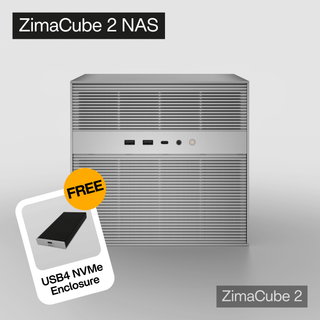
This is especially true for founders who want more private or local control over their workflow. A device such as ZimaCube 2 AI NAS can support private files, product research, local knowledge bases, and self-hosted AI workflows, while agent skills define how the assistant should work with that information.
One Founder Has to Cover Product, Code, Design, and Ops
A solo founder does not only need code generation. They need judgment. Should this feature be built now? Is the onboarding confusing? Is the database schema safe? Are billing events handled correctly? Is the app slow because of client-side waterfalls, serverless function usage, or unoptimized images?
Agent skills help because they compress expert procedures into reusable packages. Instead of asking the agent to “make it better,” the founder can use a skill that focuses on UI quality, testing, deployment cost, database performance, or production debugging.
AI Can Build Demos, but Skills Help Ship Real Products
Many indie hackers can now build a prototype with AI. The harder part is shipping something that handles real users. Real products need auth, billing, webhooks, database migrations, error monitoring, performance checks, privacy choices, and support workflows.
This is where concrete skills are more useful than generic AI coding. A generic agent may generate a Stripe webhook handler that looks correct but fails signature verification. A webhook-specific skill can guide the agent through provider-specific verification, raw body handling, event routing, retries, and local testing.
Repeatable Workflows Matter More Than One-Off Prompts
Indie hacking is full of recurring tasks: launch a page, test a feature, fix a bug, improve performance, write docs, review analytics, answer feedback, and prepare the next release. Agent skills are useful because they make these tasks repeatable.
The best skill is not always the most impressive one. It is the one you will use every week.
Top AI Agent Skills for Indie Hackers
1. frontend-design
frontend-design is one of the most useful skills for indie hackers because product perception starts with the interface. A solo founder may not have a designer, but still needs a landing page, dashboard, pricing page, onboarding flow, and settings screen that feel intentional.
Best for: landing pages, product UI, onboarding screens, pricing pages, dashboard polish.
Why it matters: many AI-generated interfaces look generic. A dedicated frontend design skill helps the agent think about layout, contrast, hierarchy, spacing, interaction states, and product feel before it writes code.
2. webapp-testing
webapp-testing helps an agent test a web application instead of simply claiming that the work is done. For indie hackers, this is critical because most MVP bugs appear in real flows: signup, login, checkout, onboarding, dashboard filters, mobile layouts, and form validation.
Best for: end-to-end testing, browser checks, UI debugging, regression testing.
Why it matters: AI agents often stop after editing files. A testing skill pushes the agent to run the app, inspect behavior, find broken states, and verify the result before calling the feature complete.
3. acquire-codebase-knowledge
acquire-codebase-knowledge is useful when an indie hacker inherits an old project, returns to a side project after months, or asks an agent to understand a repo before making changes.
Best for: repository onboarding, architecture mapping, stack detection, documentation.
Why it matters: indie projects often grow unevenly. This skill helps the agent build a map of the codebase, identify stack choices, inspect integrations, document testing patterns, and avoid guessing how the project works.
4. Vercel Agent Skills
Vercel Agent Skills are especially useful for indie hackers building with React, Next.js, and Vercel. The collection includes skills such as vercel-optimize, react-best-practices, web-design-guidelines, and writing-guidelines.
Best for: Next.js apps, React performance, landing page quality, Vercel cost control, product docs.
Why it matters: indie hackers often ship quickly and clean up later. These skills help the agent check performance, caching, accessibility, route behavior, bundle size, and content quality before small issues become expensive problems.
5. Supabase Agent Skills
Supabase Agent Skills are a strong fit for indie hackers because Supabase is commonly used for auth, Postgres, storage, realtime features, edge functions, and vector search. The repo includes a general supabase skill and supabase-postgres-best-practices.
Best for: SaaS backend, authentication, Postgres schema design, RLS, migrations, storage, vectors.
Why it matters: many MVPs break at the data layer. A Supabase skill can help the agent make better decisions around tables, policies, queries, migrations, indexing, and auth flows.
6. Hookdeck Webhook Skills
Hookdeck Webhook Skills are valuable for indie hackers because real SaaS products rely on webhook events. Stripe billing, Clerk auth events, GitHub repository events, Shopify orders, and support-tool notifications all need secure webhook handling.
Best for: Stripe webhooks, SaaS integrations, billing events, webhook retries, signature verification.
Why it matters: webhook code often looks simple but fails in production because of raw body parsing, missing idempotency, invalid signatures, or incomplete event handling. A provider-specific webhook skill helps the agent avoid those common mistakes.
7. Sentry for AI
Sentry for AI helps coding agents set up Sentry, investigate production errors, and fix issues using stack traces, breadcrumbs, traces, and project context.
Best for: production debugging, error monitoring, PR review, issue triage.
Why it matters: once an indie product has users, bug fixing becomes more important than feature generation. A Sentry-aware skill helps the agent connect real errors to the code that caused them.
8. Cloudflare Skills
Cloudflare Skills are useful for indie hackers who want low-cost deployment, edge functions, Workers, Pages, KV, D1, R2, Vectorize, Agents SDK, or web performance audits.
Best for: edge deployment, serverless functions, Cloudflare Workers, performance, low-cost infrastructure.
Why it matters: many indie products need to stay cheap while still feeling fast. Cloudflare-related skills can help an agent build, deploy, optimize, and debug on a platform that many solo builders already use.
9. mcp-builder
mcp-builder helps an agent build Model Context Protocol servers. This is useful when an indie hacker wants an AI assistant to interact with private tools, local scripts, analytics, product databases, internal APIs, or custom automations.
Best for: custom agent tools, internal automations, private APIs, founder workflows.
Why it matters: indie hackers often have unique workflows that no public skill covers. MCP lets the founder expose a tool to an agent, while the skill helps the agent build the integration properly.
10. Custom Founder Workflow Skills
Not every useful indie hacker skill already exists as a public repo. Some of the most valuable skills may be custom skills created for your own workflow. For example, you could create a skill for weekly KPI review, customer feedback triage, landing page refreshes, launch checklist generation, support response drafting, competitor monitoring, or changelog writing.
Best for: founder-specific operations, growth workflows, support, research, launch routines.
Why it matters: public skills help with common workflows, but custom skills encode your product context. A good founder skill should include when to use it, what files or data sources it may inspect, what output format it should produce, and what actions require confirmation.
How to Build an Indie Hacker Agent Skill Stack
Start With the MVP Layer
The MVP layer should help you build and validate the first usable product. Start with frontend-design for the interface, Supabase skills for backend and auth, and webapp-testing for real user flows. This stack helps the agent move beyond mockups into a product that users can actually try.
Add the Launch and Growth Layer
After the MVP works, add skills that support launch quality. Vercel writing-guidelines can help with docs and landing page copy. Vercel web-design-guidelines can improve interface quality. Hookdeck webhook skills can support integrations with billing, user events, and third-party systems.
Add the Reliability and Operations Layer
Once users arrive, focus on reliability. Sentry for AI can help debug production issues. Vercel optimize skills can help reduce cost and improve performance. Cloudflare skills can help with edge deployment, Workers, caching, and web performance. Custom MCP-based skills can connect the agent to your own internal tools.
Conclusion
For indie hackers, AI agent skills are most valuable when they reduce repeated founder work. The goal is not to collect every skill. The goal is to build a practical stack that helps you design, build, test, launch, monitor, and improve a small product without needing a full team.
The best way to think about this is simple: prompts help you ask once, but skills help your agent work better every week. A strong indie hacker stack should include UI skills, testing skills, backend skills, deployment skills, webhook skills, debugging skills, and custom founder workflow skills.
That is the difference between using AI as a coding shortcut and using AI as a repeatable operating system for building a real indie product.
FAQ
What are the best AI agent skills for indie hackers?
The best starting skills are frontend-design, webapp-testing, acquire-codebase-knowledge, Supabase Agent Skills, Hookdeck Webhook Skills, Sentry for AI, Cloudflare Skills, and mcp-builder.
Are AI agent skills the same as no-code tools?
No. No-code tools help you build without writing much code. AI agent skills help an AI agent perform a specific workflow more reliably. They can support code, no-code, low-code, local tools, APIs, docs, and operations.
Do indie hackers need SKILL.md packages?
Not always, but they become useful when you repeat the same workflow often. If you frequently ask your agent to build pages, test flows, update docs, fix bugs, or review database changes, a reusable skill is better than rewriting the same prompt every time.
Which skill should a non-technical founder start with?
A non-technical founder should start with frontend-design, webapp-testing, and a codebase understanding skill. These skills help the founder evaluate what the agent built, test whether the product works, and understand the project structure before asking for more changes.
Which skills are best for SaaS MVPs?
For SaaS MVPs, the most useful categories are frontend UI, authentication, database design, payments, webhooks, production debugging, and deployment optimization. Supabase skills, Hookdeck webhook skills, Sentry skills, and Vercel or Cloudflare skills are especially relevant.
Can I create my own indie hacker skill?
Yes. A custom indie hacker skill can be as simple as a folder with a SKILL.md file that describes the workflow, trigger conditions, required inputs, expected output format, and safety rules. Good candidates include launch checklists, customer feedback triage, weekly KPI reviews, and support response workflows.
How should I avoid unsafe third-party skills?
Treat third-party skills like code. Read the SKILL.md file, inspect any scripts, check the repository, avoid skills that request unnecessary access, and test them in a safe environment before using them on important projects.

Recommended products
AI HUB
More to Read

2026 Top AI Agent Skills for Local AI Workflows
This guide explains the best AI agent skills for local AI workflows, from SKILL.md packages and local RAG skills to MCP tools, Ollama-based agents,...

How AI NAS Fits Into Smart Home Data Workflows
This guide explains how AI NAS fits into smart home data workflows by connecting cameras, sensors, Home Assistant backups, logs, media libraries, documents, local...

AI NAS for Smarter Home Backups and File Recovery
This guide explains how AI NAS makes home backups easier to recover by combining real backup protection with OCR, metadata indexing, duplicate detection, content...


