
Local AI Cost in 2026: API, Home Server, or Hybrid?


Local AI cost in 2026 is not a simple “API is expensive, home server is cheap” question. API providers still offer the easiest path to frontier models, fast upgrades, and elastic scale. But API bills can become harder to predict when usage grows, prompts get longer, agent loops multiply, and teams start routing everyday work through premium models.
A home server changes the cost structure. Instead of paying per token, you pay for hardware, electricity, storage, cooling, backup, and maintenance. That can make sense for repeated, private, local-file-heavy, or always-on workloads. For many individuals and small teams, the strongest answer is hybrid: run routine and sensitive tasks locally, and reserve APIs for difficult reasoning, multimodal work, or burst demand.
Start With Workload Shape, Not Model Brand
The first cost question is not whether GPT, Claude, Gemini, Llama, Qwen, or Mistral is cheapest. The first question is what kind of workload you actually have. A few occasional prompts, a daily document-processing pipeline, a coding agent, and a private RAG assistant all create different cost curves.
API makes sense when usage is low, unpredictable, or quality-sensitive. A home server becomes more attractive when tasks are repeated, private, local-file-heavy, or always on. Hybrid works when you need both: local control for routine work and cloud capability for hard tasks.
| Workload Shape | Better Starting Point |
| Occasional chatbot use | API |
| Frontier reasoning | API |
| Repeated document Q&A | Local or hybrid |
| Private customer documents | Local or controlled hybrid |
| Batch summarization | Depends on volume |
| Always-on assistant | Local or hybrid |
| Coding agent with many loops | Hybrid |
| Small team experimentation | API first |
The same model can be cheap or expensive depending on how often it runs, how much context it carries, and how many times it loops.
API Cost Looks Simple Until Token Creep Starts
API pricing looks clean because it is usually tied to input and output tokens. That makes it easy to start. The hidden problem is token creep: your cost per token may fall while tokens per task rise.
A simple prompt can become a long system message, a large document context, a retrieval-augmented prompt, a tool call chain, a retry loop, and a long final answer. Agent workflows amplify this because one user request may turn into many model calls.
The cost problem is not only the price of one answer. As LM-Kit explains in its discussion of local AI cost and performance, cloud inference costs scale with ongoing usage, while local inference shifts more of the cost into hardware and operations. That trade-off becomes more important when a workflow runs every day.
| API Cost Driver | Why It Raises the Bill |
| Long prompts | More input tokens per request |
| Long outputs | Output tokens can dominate cost |
| Agent loops | One task becomes many API calls |
| Tool calls | Each tool step adds context and output |
| Retries | Failed attempts still cost money |
| Long context | Documents and codebases inflate input size |
| RAG chunks | Retrieved context is sent repeatedly |
| Premium models | Routine tasks may use expensive models unnecessarily |
Your cost per token may fall while tokens per task rise, and the second curve often wins.
API Still Wins When You Need Quality, Scale, or Zero Infrastructure
API is still the easiest way to start. There is no server to buy, no GPU driver to debug, no model file to manage, no power budget to calculate, and no uptime responsibility. You can test ideas quickly and switch models as providers release new capabilities.
API also remains the better fit when quality matters more than cost. Frontier models are usually stronger for advanced reasoning, complex coding, multimodal understanding, long-context synthesis, and customer-facing tasks where failure is expensive.
| API Advantage | Practical Meaning |
| No hardware purchase | Low upfront cost |
| Frontier models | Stronger reasoning, coding, and multimodal ability |
| Elastic scaling | Handles traffic spikes more easily |
| Fast model upgrades | New capabilities arrive without hardware changes |
| Managed infrastructure | No GPU drivers or server maintenance |
| Low commitment | Good for testing workflows before building infrastructure |
API is often the cheapest way to learn what your AI workload actually is.
API Risk Is Not Only Price. It Is Dependence
The downside of API is not only the monthly bill. It is dependence. Prices can change, usage limits can tighten, model access can shift, rate limits can affect peak workloads, and vendor policies may not fit every internal workflow.
For low-risk public content, that may not matter much. For private documents, proprietary code, customer records, or internal automation, the team must also consider data handling terms, retention settings, access controls, and whether the provider’s roadmap matches the product’s long-term needs.
| API Dependency | Cost or Control Risk |
| Pricing changes | Monthly cost may shift |
| Usage limits | Heavy workflows may be capped |
| Model restrictions | Best models may not be available for every task |
| Token budgets | Teams may need to ration usage |
| Vendor policy | Some outputs or use cases may be restricted |
| Data handling terms | Privacy depends on provider settings |
| Rate limits | Burst workflows may need planning |
| Outages | Cloud dependency affects availability |
API convenience is real, but so is vendor dependence.
Home Server Cost Is Fixed, but Not Free
Running AI locally does not mean AI becomes free. It means the cost moves from a variable token bill to local infrastructure. You pay upfront for hardware and continue paying for electricity, cooling, storage, backup, updates, monitoring, and troubleshooting.
Before buying hardware, it helps to separate the model budget from the whole system budget. A local AI setup needs compute, but it also needs RAM, NVMe or SSD storage, document storage, backups, network access, and a place to run tools like Ollama, Open WebUI, Qdrant, or other Docker-based services. The hardware planning process in building a private home AI server with budget hardware is useful here because it treats local AI as a full system, not just a GPU purchase.
| Local AI Cost Area | What to Count |
| Hardware | Server, GPU, RAM, storage |
| Storage | Models, documents, vector DB, backups |
| Electricity | Idle and load power over time |
| Cooling | Heat and noise in a home or office |
| Maintenance | Updates, drivers, containers, logs |
| Backup | Protecting models, configs, and data |
| Network | Remote access, LAN speed, security |
| Time | Setup and troubleshooting |
Local AI converts token bills into hardware, power, storage, and maintenance costs.
A Home Server Wins When Usage Is Repeated, Private, or Always On
A home server becomes attractive when the workload is predictable enough to keep the hardware useful. If a team runs the same summarization, extraction, transcription, local RAG, tagging, or internal assistant workload every day, the fixed-cost model starts to make sense.
Local AI is also strong when data should not leave the environment. Private documents, customer folders, internal code, family archives, and local business records can be processed without sending full context to an external API.
| Home Server Fits When... | API Fits Better When... |
| Tasks repeat daily | Usage is occasional |
| Data is sensitive | Data can leave your environment |
| Files live locally | Context is small |
| Latency should stay on LAN | Quality matters more than latency |
| Budget favors fixed cost | Budget favors pay-as-you-go |
| Team can maintain a server | Team wants no infrastructure |
| Workload is predictable | Demand is highly bursty |
Local AI is strongest when the server becomes part of a repeated workflow, not when it sits idle after a weekend experiment.
Hardware Aging Is Different for Local AI
Local AI hardware does not age exactly like a phone or laptop. Older workstations, used GPUs, and compact servers can remain useful if the model size, quantization level, memory, and workload match the hardware.
The main limiter is often not raw CPU speed. For many local LLM workflows, VRAM, RAM, storage speed, model size, quantization, and concurrency decide whether the experience feels practical. A small model answering one user locally has very different requirements from a team running many simultaneous agent workflows.
| Hardware Factor | Cost Impact |
| VRAM | Determines model size and speed |
| RAM | Helps with larger local workloads |
| NVMe | Speeds model loading and RAG index access |
| Power draw | Affects monthly running cost |
| Quantization | Lets smaller hardware run larger models |
| Concurrency | More users require more hardware |
| Upgrade path | Extends useful life |
The goal is not to buy the largest AI server possible. It is to avoid paying cloud prices for work your local hardware can already do well.
Hybrid Is Often the Real 2026 Cost Strategy
Hybrid is not a compromise. It is a routing strategy. In a practical local AI versus cloud AI workflow, cloud models can handle planning, difficult reasoning, or premium responses, while local models handle high-volume execution steps, private preprocessing, and tasks that do not need a frontier model.
That division matters because most workflows are uneven. Some tasks need the strongest model available. Many others only need classification, extraction, tagging, formatting, summarization, retrieval, or first-pass drafting.
| Task Layer | Local Model | API Model |
| Document indexing | Strong fit | Rarely needed |
| Private search | Strong fit | Only after filtering or redaction |
| Simple summarization | Strong fit | Optional |
| Extraction / tagging | Strong fit | Optional |
| Complex reasoning | Sometimes | Strong fit |
| Final polished writing | Sometimes | Strong fit |
| Coding agent | Local for context/filtering | API for hard tasks |
| Burst traffic | Limited | Strong |
| Offline use | Strong | Not available |
Hybrid cost control means using local AI for predictable base load and API for expensive edge cases.
Model Routing Is the Biggest Hybrid Lever
Not every request needs your most expensive model. Model routing means deciding which model should handle a task based on complexity, privacy level, context size, output importance, latency needs, user tier, and budget cap.
A local model can classify the request, retrieve documents, summarize context, remove sensitive content, or create a first draft. The API model can then receive only the selected context and solve the hard part. This reduces token creep without giving up frontier quality where it matters.
| Routing Rule | Cost Benefit |
| Local model classifies task first | Avoids expensive model for simple requests |
| Local RAG retrieves documents | Reduces long-context API calls |
| API only sees selected context | Lowers input tokens |
| Local draft before API polish | Reduces premium-model work |
| Hard cap on agent loops | Prevents runaway cost |
| Small model for extraction | Saves premium tokens |
| Frontier model for final reasoning | Preserves quality where it matters |
Model routing is the point where hybrid stops being a compromise and becomes a cost strategy.
The Break-Even Point Depends on Usage, Not Hype
There is no universal query count where every team should leave APIs and buy a server. Break-even depends on token volume, output length, model tier, hardware cost, electricity price, utilization, maintenance time, and whether the workload will still exist six months from now.
A useful local LLMs versus cloud API cost analysis for 2026 makes this point clearly: cloud remains rational for light usage and experimentation, while hybrid and local-first approaches become more compelling as daily usage, privacy needs, and repeatable workflows grow. The useful lesson is not to copy one break-even number; it is to model your own workload.
API monthly cost =
(input tokens × input price)
+ (output tokens × output price)
+ embeddings/search/tool costs
+ retries and agent loops
Local monthly cost =
hardware amortization
+ electricity
+ storage
+ backup
+ maintenance time| Factor | Pushes Toward API | Pushes Toward Home Server |
| Low monthly usage | Yes | No |
| High repeated usage | No | Yes |
| Long agent loops | Maybe expensive | Local can absorb routine loops |
| Frontier quality needed | Yes | No |
| Private local data | Maybe not | Yes |
| Hardware already owned | Less important | Stronger |
| Electricity expensive | Yes | Weaker |
| Maintenance time limited | Yes | No |
Break-even is not a universal query count. It is a relationship between usage volume, model tier, output length, hardware cost, and utilization.
RAG Changes the Cost Equation
Retrieval-augmented generation changes the cost question because the model is only one layer. A useful RAG system also needs document storage, embeddings, a vector database, metadata, permissions, file watchers, OCR, re-indexing, backup, and security.
In an API-first RAG setup, documents or selected chunks may be sent to external services repeatedly. In a local or hybrid setup, the archive can live on a NAS or home server, embeddings can be generated locally or selectively, and only filtered context needs to leave the local environment.
| RAG Cost Layer | API-First Approach | Local / Hybrid Approach |
| Embeddings | API embedding cost | Local or API embeddings |
| Vector DB | Managed cloud or SaaS | Local Qdrant / Chroma |
| Documents | Uploaded or synced | Stored on NAS/server |
| Privacy | Vendor-dependent | Local control |
| Re-indexing | API usage may grow | Local compute cost |
| Backup | Cloud export needed | NAS backup plan |
| Permissions | Vendor/tool dependent | Local access model |
For document-heavy AI, local storage is not just a cost feature. It is part of the architecture.
Agent Workflows Make Cost Less Predictable
An AI agent is not a single prompt. It may plan, read files, browse, call tools, write code, retry, revise, summarize logs, generate long output, and keep context across steps. That means one user request can become many model calls.
This is where hybrid routing becomes practical. Routine steps can run locally, while harder reasoning steps go to an API only when needed. The goal is not to avoid API entirely. The goal is to avoid paying a premium model to repeat cheap steps over and over.
| Agent Behavior | Cost Risk | Cost Control |
| Many tool calls | More tokens per task | Limit loop count |
| Long context | High input cost | Local retrieval first |
| Repeated planning | Hidden token growth | Use smaller routing model |
| Large final output | High output cost | Set output budget |
| Retry loops | Duplicate cost | Add validation rules |
| Multiple users | Scales quickly | Hybrid queue/routing |
Agent cost is rarely the price of one answer. It is the cost of the loop.
Privacy and Control Can Be Worth More Than Pure Cost
Sometimes the value of local AI is not lower cost. It is knowing where the data stays. Customer records, contracts, financial documents, employee files, codebases, private notes, and family archives may have value that cannot be measured only in tokens.
That does not mean local AI is automatically secure. A home server still needs access control, encryption, backups, updates, logs, permissions, and secure remote access. Local control reduces some vendor risk, but it creates infrastructure responsibility.
| Privacy Need | API | Home Server | Hybrid |
| Public content | Strong fit | Optional | Optional |
| Internal docs | Depends on terms | Strong fit | Strong fit |
| Customer data | Needs policy review | Strong fit | Controlled routing |
| Codebase context | Good but sensitive | Strong fit | Local context + API reasoning |
| Offline use | Not available | Strong fit | Local fallback |
| Data residency concern | Provider-dependent | Local control | Selective API use |
Pure cost can tell you what is cheaper. Privacy and control tell you what is acceptable.
A Small Team Decision Model: API, Home Server, or Hybrid?
For most small teams, the best path is staged. Start API-first when the workflow is uncertain. Add a local layer when repeated tasks, private documents, or cost pressure appear. Move toward hybrid when the team needs both local control and frontier model quality.
A home-server-first strategy makes sense when the team already knows the workload is repeated, private, and stable. A pure API strategy remains reasonable when usage is light, quality matters most, and infrastructure time is scarce.
| Scenario | Best Fit |
| Freelancer uses AI a few times daily | API |
| Startup testing new AI features | API |
| Small team runs private document search | Hybrid / home server |
| Homelab user wants offline assistant | Home server |
| Support team summarizes tickets daily | Hybrid |
| Coding agent with unpredictable loops | Hybrid |
| Family archive and local photo AI | Home server |
| Compliance-sensitive internal docs | Local or controlled hybrid |
| User-facing app with burst traffic | API or hybrid |
The cheapest long-term setup is usually the one that avoids using a premium cloud model for tasks a smaller local model can already handle well.
Where ZimaSpace Fits in the Cost Stack
ZimaSpace fits best as the local layer in a hybrid AI setup: the place where documents live, AI apps run, vector databases store indexes, and repeated private workflows stay close to the data. It should not be framed as a replacement for every API call. It is the infrastructure layer that reduces unnecessary API use.
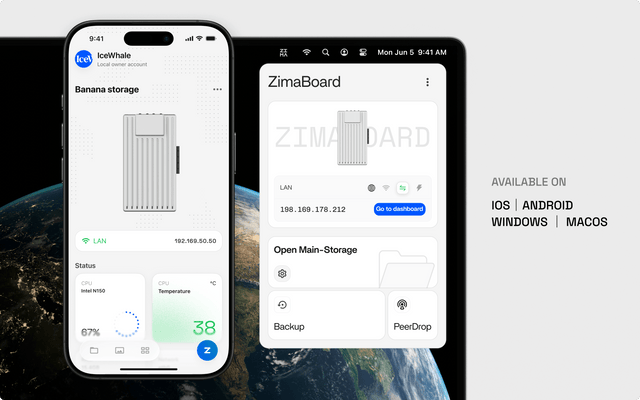
For lightweight Docker-based AI tools, small RAG experiments, local dashboards, and always-on private utilities, the ZimaBoard 2 personal server can sit between a laptop and the cloud: local enough to keep routine workflows private, but flexible enough to run self-hosted services.
When the workflow includes larger document libraries, private cloud folders, local RAG archives, media storage, and backup, the ZimaCube 2 NAS becomes the storage and app layer behind the AI workflow. In a hybrid design, it can keep the data local while selected prompts or final reasoning still go to an API.
| ZimaSpace Role | Why It Matters for Local AI Cost |
| Local document storage | Reduces repeated document uploads |
| Private RAG data layer | Keeps retrieval close to the files |
| Docker apps | Runs AI tools, vector databases, and dashboards |
| Model archive | Stores local models and versions |
| Backup target | Protects documents, configs, and AI data |
| Hybrid routing node | Local-first processing with API fallback |
The right role for a local server is not “replace the cloud forever.” It is “own the parts of the workflow that should be local.”
Practical Decision Checklist
Use the checklist below before deciding whether to stay API-only, build a home server, or move to hybrid. The goal is not to choose the most powerful setup. The goal is to choose the setup that matches cost, privacy, maintenance, and model quality.
| Question | Choose API If... | Choose Home Server If... | Choose Hybrid If... |
| Usage volume | Low or unpredictable | High and repeated | Mixed |
| Model quality | Frontier required | Local model is enough | Both needed |
| Privacy | Data can leave | Data should stay local | Only selected context leaves |
| Budget style | Operating expense | Upfront fixed cost | Balanced |
| Maintenance | No infra time | Comfortable managing server | Can manage a local layer |
| RAG data | Small context | Large local archive | Local index + API reasoning |
| Agent loops | Few and controlled | Routine loops are local | Hard loops go API |
| Latency | Internet acceptable | LAN/offline preferred | Local first, API fallback |
| Growth | Need fast scaling | Predictable internal use | Variable workload |
Final Takeaway
Local AI cost in 2026 is not about choosing one permanent winner. API is often the cheapest way to start and still gives the best access to frontier models. A home server becomes valuable when workloads are repeated, private, local-file-heavy, or always on. Hybrid is often the most practical long-term design because it keeps routine work local while reserving API spend for tasks that truly need a frontier model.
The right cost plan starts with workload shape: estimate token volume, watch token creep, count agent loops, include hardware and electricity, decide what data must stay local, and route each task to the cheapest model that can do it well.
FAQ
Is local AI always cheaper than API in 2026?
No. Local AI can be cheaper for repeated and predictable workloads, but API is often cheaper for light use, experimentation, burst traffic, and tasks that need frontier models.
When does a home server make financial sense for AI?
A home server makes sense when the workload runs often enough to use the hardware regularly, especially for private documents, local RAG, batch processing, or always-on internal tools.
Why do API bills rise even when model prices fall?
Because token usage per task can grow. Longer prompts, bigger outputs, RAG chunks, tool calls, retries, and agent loops can increase total tokens faster than per-token prices fall.
What is the best setup for a small team?
Many small teams should start API-first, then add a local layer when usage, privacy, or cost pressure becomes clear. Hybrid often gives the best balance of capability and control.
Does hybrid AI mean using two models at random?
No. Hybrid AI should use routing rules. Simple, private, or repeated tasks run locally, while difficult reasoning, coding, multimodal tasks, or burst demand go to API models.
Can a NAS or home server replace frontier AI APIs?
Not completely. A NAS or home server can run local models and store private data, but frontier APIs are still better for many high-quality reasoning, coding, and multimodal tasks.
What is token creep?
Token creep happens when each task uses more context, output, tool calls, or retries over time. Even if token prices drop, total monthly cost can still rise.
Where does ZimaSpace fit in a hybrid AI setup?
ZimaSpace can act as the local data and app layer: storing documents, running Docker AI tools, hosting local RAG components, backing up AI data, and routing routine work locally.

Recommended products

Tech & AI HUB
More to Read

Can a Local LLM Resume Generation After Its Process Restarts?
A mechanism-first explanation of llm generation resume, its shared-resource tradeoffs, three query-fanout FAQs, and a practical verification protocol.
Can a Home Server Run Embeddings and Video Transcoding on the Same Integrated GPU?
A mechanism-first explanation of shared igpu embeddings and transcoding, its shared-resource tradeoffs, three query-fanout FAQs, and a practical verification.

How Does Access-Token Lifetime Affect Security and Household Friction?
A mechanism-first explanation of access-token lifetime, its shared-resource tradeoffs, three query-fanout FAQs, and a practical verification protocol.


