
Can a Local Voice Assistant Work Across Multiple Rooms With One Inference Server?


Yes. Multiple rooms can share one local voice inference server. Each room needs a microphone/speaker satellite, while heavier speech-to-text, language-model reasoning, and text-to-speech can run centrally on a home server. The system scales best when wake-word detection or voice activity detection happens near the microphone so idle rooms do not continuously stream audio into the server.
The main limit is not the number of rooms. It is how many people speak at the same time and how much compute each pipeline stage needs. Six mostly idle satellites can be easier than two rooms generating overlapping Whisper, LLM, and TTS jobs.
What Does a Multi-Room Local Voice Architecture Look Like?
Kitchen satellite ----Bedroom satellite -----Office satellite -------> Local voice server
Living room satellite --/      |
                              +-- STT
                              +-- intent / LLM
                              +-- TTS
                              +-- Home Assistant / tools
The satellite's job can stay lightweight: capture audio, detect a wake word or speech, tag the request with its room identity, play the returned audio, and optionally handle local mute controls.
Home Assistant's current Wyoming integration is a good example of this separation. It can connect Assist to local speech-to-text, text-to-speech, and wake-word systems such as Whisper, Piper, Speech-to-Phrase, and openWakeWord.
Why Local Wake-Word Detection Helps So Much
If every satellite streams 24/7 audio to the server, network traffic is usually still manageable on a wired or healthy Wi-Fi LAN, but the central machine must continually inspect multiple audio streams. It also creates a larger privacy surface because every room's background audio reaches the central service.
A better design is:
Room satellite
  |
  +-- local wake word / VAD
  |
  +-- only after trigger
          |
          v
      stream utterance
          |
          v
   central inference
Home Assistant's voice satellite documentation describes always-on streaming, stream-on-speech, and local-wake-word modes. It also notes that small satellite hardware can handle local wake detection and audio cleanup, allowing many satellites without putting the same load on the central server.
One Server Does Not Mean One Shared Conversation
This is the most important application-layer rule. The inference process can be shared, but each room or user needs its own session state.
| Shared Centrally | Keep Separate Per Room / Session |
|---|---|
| Whisper model weights | Audio buffer |
| LLM model weights | Conversation history |
| Piper voice model | Room identity |
| Tool connectors | User / permission context |
| GPU or NPU | Reply destination |
Without this separation, a follow-up such as “turn it off” could accidentally inherit context from a different room. The server should attach a session identifier to every utterance and carry it through STT, intent resolution, tool execution, and TTS playback.

Room Context Can Make Short Commands Better
A multi-room system has information that a single smart speaker does not: it knows where the microphone is.
Instead of forcing the user to say “turn off the living room lights” every time, the satellite can supply an area identifier:
spoken: "turn off the lights"
room:   "kitchen"

resolved action:
Home Assistant -> kitchen lights -> off
This is especially useful for deterministic home control, where short commands should not require an expensive general-purpose LLM at all. ZimaSpace's look at Home Assistant's expanding local processing explains why focused local pipelines can coexist with larger models for more open-ended requests.
What Becomes the First Bottleneck?
Voice is a pipeline, so the slowest required stage sets perceived latency.
| Stage | Typical Resource Pressure | Multi-Room Risk |
|---|---|---|
| Wake word / VAD | Small CPU on satellite | Low if distributed |
| Speech-to-text | CPU/GPU, memory bandwidth | High during overlapping speech |
| Intent / LLM | GPU/CPU + KV cache | High for open-ended requests |
| Tool execution | Network / service latency | Depends on target |
| Text-to-speech | CPU/GPU | Moderate |
| Audio playback | LAN | Usually low |
For household use, simultaneous speech is often rare. That allows the server to queue short bursts instead of provisioning enough compute for every room to talk continuously at once.
Can STT, the LLM, and TTS Share One GPU?
They can, but memory and scheduling matter. Loading several models at once may consume more VRAM than any one stage needs. A small server can use different devices or execution modes:
- STT on CPU or iGPU;
- LLM on GPU;
- TTS on CPU;
- or serialize short STT/LLM/TTS jobs on one accelerator.
The second design saves hardware but can increase latency when two rooms speak together. Measure time-to-first-transcript and time-to-first-audio instead of only raw tokens per second.
Prevent One Room's Speaker From Triggering Another Microphone
Multi-room voice introduces an acoustic problem: the assistant's own TTS may be heard by another satellite and interpreted as a new request.
Use:
- local wake words rather than open transcription of all sound;
- echo cancellation and noise suppression;
- playback state so a satellite can suppress its microphone during its own response when appropriate;
- room-specific volume;
- short response phrasing for routine control.
Do not solve feedback by muting every microphone in the house whenever one speaker talks; that makes concurrent room use unnecessarily fragile.
How Should a Home Server Size the Queue?
Start with realistic concurrency. A four-person home with eight satellites may rarely exceed two simultaneous requests. Configure a bounded queue rather than letting audio jobs pile up without limit.
voice request
   |
   +-- slot available -> run now
   |
   +-- short queue -> "one moment" / wait
   |
   +-- queue full -> fail clearly
Priority can also help: deterministic light-control commands should not wait behind a long conversational LLM answer. Route fast home-control intents through a smaller pipeline and reserve the large model for questions that actually require it.
Privacy Improves When the Server Is Local, but Permissions Still Matter
Central local inference keeps audio off a cloud service, but every satellite now reaches a privileged system that may control locks, lights, media, alarms, and private data.
Associate room and user context with permission policy. A guest-room satellite might control lights and temperature without receiving access to calendars or private NAS files. A child's room may have another tool set entirely.
For the broader orchestration layer, the local AI tool trust-boundary guide explains why voice recognition alone should not grant administrative authority.
Multi-Room Voice Deployment Checklist
- Give every satellite a stable room ID.
- Run wake word or VAD on the satellite where practical.
- Keep conversation state separate per room/session.
- Use a fast deterministic path for routine home-control commands.
- Queue expensive STT/LLM jobs with a bounded concurrency limit.
- Measure overlapping-user latency.
- Enable echo cancellation / feedback prevention.
- Give each room only the tools it needs.
- Keep a local fallback for essential home-control commands.
FAQs
Does every room need its own AI computer?
No. Satellites can be inexpensive microphone/speaker endpoints. The expensive models can run once on a central server.
Can multiple rooms talk to the server at the same time?
Yes if the runtime has enough concurrent capacity or a short queue. Each request needs separate session and audio state even when model weights are shared.
Should wake-word detection run centrally?
It can, but local wake detection reduces constant audio streaming, central load, and privacy exposure. It is generally the cleaner multi-room design when satellite hardware supports it.
Final Verdict
One local inference server can serve a house full of voice satellites. Keep the endpoints simple, push wake detection toward the room, centralize expensive models, and isolate every session. Size for simultaneous utterances rather than speaker count, and route routine commands through a fast local path so a long LLM conversation in one room does not make the rest of the home feel slow.

Recommended products

Tech & AI HUB
More to Read
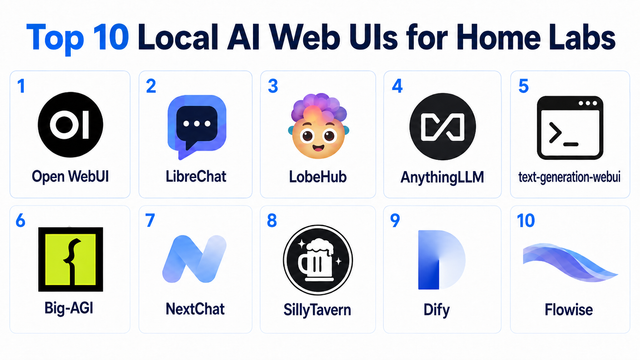
Top 10 Local AI Web UI for Home Labs In 2026
Compare 10 self-hosted local AI web UIs for home labs, covering Ollama support, RAG, agents, multi-user access, setup effort, and ideal use cases.
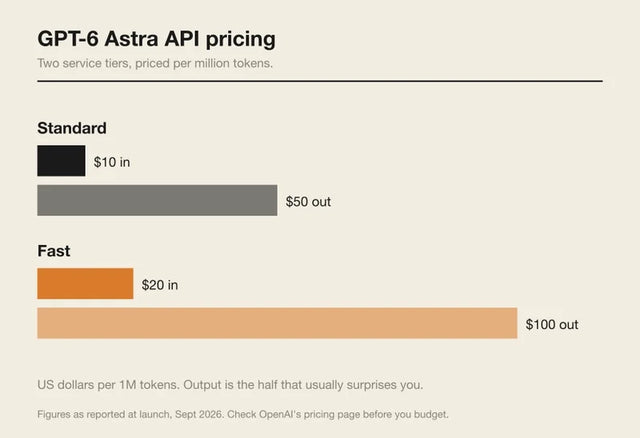
How Much Does GPT-6 Astra Cost Over Time? When Cloud AI Makes Sense vs Local AI
A practical GPT-6 Astra cost guide covering token usage, long-term AI workloads, cloud vs local tradeoffs, and why hybrid AI infrastructure matters.
GPT-6 Astra vs Local AI: Which Parts of an Agent Should Stay on Your Home Server?
GPT-6 Astra can stay in the cloud while your home server keeps files, memory, RAG, tools, permissions, and durable agent state local.


