
Can a Small Local Model Route Requests to Larger Models Reliably?


Yes, a small local model can route requests to larger models reliably enough to be useful—but not reliably enough to be the only safety mechanism. Model routing works best when the local router handles an optimization problem: which requests are probably easy enough for a cheaper or smaller model? High-stakes, ambiguous, long-context, or tool-heavy work should still have deterministic escalation rules.
The goal is not to predict “intelligence” perfectly. It is to reduce unnecessary expensive inference while keeping the cost of routing mistakes within a measured tolerance.
What Does a Local Model Router Actually Decide?
Incoming request
      |
      v
Small local router
      |
      +-- easy / routine ----> small local model
      |
      +-- hard / uncertain --> larger local model
      |
      +-- frontier needed ---> cloud model
The router can be a classifier, an embedding-based similarity system, a small LLM, a learned preference model, or a combination of rules and learned scores.
Projects such as RouteLLM demonstrate the pattern by producing a score used with a threshold to choose between a weak and strong model.
Why a Threshold Is More Important Than the Router's Label
A router that says “easy” or “hard” hides the real operating decision. A score plus threshold lets you choose the cost-quality trade-off.
router score: estimated need for strong model

0.0 -------------------------- 1.0
 easy                         hard

threshold = 0.35
score >= 0.35 -> escalate
RouteLLM's documentation recommends calibrating the threshold on queries resembling the real incoming workload because the percentage routed to the strong model changes with the request distribution. That warning is especially important at home: your mix of Home Assistant commands, coding questions, private RAG, family search, and long-form reasoning looks nothing like a generic benchmark.
Build Hard Escalation Rules Before Learned Routing
Some requests should bypass the small router entirely.
| Request Type | Recommended Route | Why |
|---|---|---|
| Simple classification / formatting | Small local | Low complexity and easy to verify |
| Known home-control intent | Deterministic / small local | Fast and bounded |
| Large codebase debugging | Large model | Long context + reasoning |
| High-stakes decision | Large model + verification | Cost of miss is high |
| Unknown tool request | Escalate or require approval | Authority risk |
| Router confidence near threshold | Large model | Conservative fallback |
This keeps routing failures from turning into security failures. ZimaSpace's tool-execution trust-boundary guide is relevant here: choosing a model and granting a side effect are separate decisions.

What Does “Reliable” Mean for a Router?
Measure the failure you actually care about. A router can look accurate overall while still sending the worst possible prompts to the weak model.
Track at least:
- strong-model miss rate: prompts that needed escalation but stayed small;
- unnecessary escalation rate: easy prompts sent to the expensive model;
- end-task success: did the final workflow complete correctly?
- latency: did routing add more delay than it saved?
- cost or energy: how much expensive inference was avoided?
For many home systems, strong-model misses deserve more weight than unnecessary escalations. Spending an extra inference call is usually cheaper than silently returning a bad backup command or wrong automation plan.
Use a Shadow Evaluation Period
Before letting the router choose production models, run it in shadow mode:
- send every request through the current trusted route;
- record what the router would have selected;
- compare small-model and large-model answers offline;
- label failures by request category;
- choose a threshold based on acceptable misses;
- only then allow automatic routing.
A few hundred representative household requests are usually more useful than chasing a public leaderboard score that measures another domain.
Multi-Turn Conversations Are Harder Than Single Prompts
Routing a single question such as “convert this date” is easier than routing the fifth turn of a conversation where important context is in earlier messages.
RouteLLM's current controller implementation explicitly notes that its routers were trained on first-turn data and that multi-turn routing needs more research. That is a good general warning: a router evaluating only the latest user sentence may see “yes, do that” and have no idea that “that” means a complex infrastructure migration.
Options include:
- route on a compact conversation summary plus the latest turn;
- pin one model for the lifetime of a task;
- escalate automatically after tool use or long context begins;
- let the stronger model take over when the small model requests help.
Can the Small Model Decide That It Is Unsure?
Self-reported confidence is useful as one signal, but it is not a guarantee. Models can be confidently wrong.
A safer router combines signals:
route score =
  learned difficulty
+ context length
+ tool requirement
+ domain rule
+ user importance
+ prior failure category
For example, a 3B model might classify “summarize this two-paragraph note” as local-safe, while a deterministic rule escalates any request containing an infrastructure change plan, encryption key operation, or financial/legal instruction.
Use Verification to Catch Under-Routing
Some small-model tasks have cheap validators. JSON can be schema-checked. Code can run tests. File moves can be dry-run. Retrieved answers can require citations. A classifier can be checked against allowed labels.
When validation fails, route the same task to the larger model with the original context plus the validation error.
small model result
      |
      v
validator
  |       |
 pass    fail
  |       |
 done    v
       large model
This turns routing into an adaptive system rather than a one-shot guess.
Why Routing Fits a Home AI Server
A home server often has a cheap always-on model but limited capacity for a larger local model. It may also have access to a frontier API for difficult tasks. Routing lets the home system keep routine work private and inexpensive while escalating selectively.
This complements the broader local versus API versus hybrid AI cost model: a hybrid system does not have to send every prompt through the same compute tier.
A Conservative Routing Policy for Home Use
- Default repetitive extraction, tagging, and formatting to the small model.
- Escalate requests above a tested complexity threshold.
- Escalate high-stakes categories by rule regardless of score.
- Escalate when validators fail.
- Escalate ambiguous multi-turn tasks.
- Log routing decisions and outcomes.
- Recalibrate when models, prompts, or workload mix changes.
- Keep a manual “use strongest model” override.
FAQs
Does the router itself have to be an LLM?
No. A small classifier, embedding similarity model, rules engine, or learned preference router may be faster and easier to calibrate.
Can routing guarantee the same quality as always using the largest model?
No. Routing is a trade-off. You can reduce the miss rate with conservative thresholds, hard escalation rules, and validators, but there is always distribution shift and classification error.
Should a router choose tools as well as models?
It can help classify intent, but tool authorization should remain in a separate policy layer. Model selection is an optimization decision; privileged execution is a security decision.
Final Verdict
A small local model can be a useful router when you make it conservative, measurable, and replaceable. Calibrate on real requests, define categories that always escalate, validate cheap outputs, and monitor strong-model misses. The router's job is not to prove that the small model is capable. It is to decide when spending more compute is worth the reduced risk.

Recommended products

Tech & AI HUB
More to Read
Top 10 Local AI Web UI for Home Labs In 2026
Compare 10 self-hosted local AI web UIs for home labs, covering Ollama support, RAG, agents, multi-user access, setup effort, and ideal use cases.
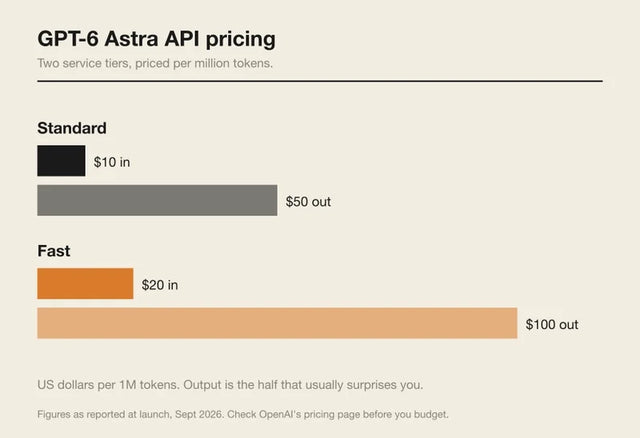
How Much Does GPT-6 Astra Cost Over Time? When Cloud AI Makes Sense vs Local AI
A practical GPT-6 Astra cost guide covering token usage, long-term AI workloads, cloud vs local tradeoffs, and why hybrid AI infrastructure matters.

GPT-6 Astra vs Local AI: Which Parts of an Agent Should Stay on Your Home Server?
GPT-6 Astra can stay in the cloud while your home server keeps files, memory, RAG, tools, permissions, and durable agent state local.


