
Should Family Photos, Home Videos, and Documents Live in the Same Storage Pool?


Family photos, home videos, and documents can share one storage pool when their datasets, permissions, retention, and recovery paths remain separate.
The pool should combine capacity only where the workloads share the same drive-failure tolerance, encryption boundary, maintenance window, and expansion path. The files themselves still need distinct ownership, access, app-state, snapshot, and backup rules. A second pool becomes justified only when performance, security, or availability requirements differ enough to outweigh the extra capacity fragmentation and administration.
Separate the Storage Pool Decision From the Data-Zone Decision
A storage pool answers where capacity and drive redundancy come from. Data zones answer who owns the files, which applications can write to them, how quickly they grow, and how they are restored. Photos, home videos, and documents can share one pool while still living in separate datasets, shares, or volumes with different policies.
TechTarget explains that storage volumes sit above underlying capacity and can carry their own filesystem and permissions. That logical-volume boundary is the key reason one physical pool does not require one undifferentiated household library.
Start by naming three roles: photo originals and app state, home-video originals and viewing copies, and private or shared documents. Give each role its own path, owner, capacity alert, snapshot schedule, backup class, and application permissions before selecting the number of pools.
Keep One Pool When Capacity and Failure Requirements Are Similar
One pool is reasonable when all three data classes can tolerate the same drive layout, encryption boundary, maintenance window, and expansion method. Shared free capacity is easier to use because an unexpected video import does not strand unused space in a separate document pool.
Puget Systems describes NAS planning as a combination of capacity, network use, backup, and application requirements rather than a drive-count exercise. That combined capacity-and-workload model supports one pool when the household truly shares the same operating assumptions.
Use datasets or shares inside the pool to preserve boundaries. Reserve free space, monitor each data zone separately, and document which service owns each path. One pool should simplify capacity management, not erase the difference between irreplaceable originals and rebuildable thumbnails.
Before committing, model a year of growth for each zone and simulate the largest likely import. One pool remains comfortable only when video growth cannot consume the reserve needed for documents, photo indexes, and snapshot retention. Capacity sharing is an advantage when it absorbs uneven growth, but a liability when one workload can crowd out every other recovery obligation.
Split Pools When Performance, Encryption, or Availability Must Differ
Separate pools become useful when one workload creates a different risk or maintenance pattern. Large home-video edits may need high sequential throughput, sensitive documents may require a tighter encryption and access boundary, and a photo application database may benefit from low-latency SSD storage even while originals live on HDDs.
TechRadar’s current NAS guidance evaluates systems across capacity, multi-user access, media use, performance, and backup rather than assuming one configuration fits every workload. That workload-specific storage threshold helps identify when logical separation is no longer enough.
Do not split merely because the file types look different. Split when the change produces a measurable benefit: independent maintenance, a different protection class, lower latency for app state, or a clearer expansion path. Otherwise, extra pools add free-space fragmentation and more recovery procedures.

Give Photos, Videos, and Documents Different Permissions
Family photos may have private uploads and shared albums. Home videos may be read-only to televisions but writable by curators. Documents may include both household records and person-specific medical or financial files. These access models should remain distinct even when the bytes live on the same disks.
WIRED’s NAS sharing guide emphasizes separate users and controlled folder sharing rather than one unrestricted network share. That user-and-folder permission model supports a shared pool with sharply separated household roles.
Create individual accounts and small groups. Give televisions read-only access to approved media, photo apps only the libraries they index, and document users only the records appropriate to their role. Keep backup repositories, credentials, and application databases outside ordinary browsing.
Use Different Snapshot and Retention Policies Inside the Same Pool
Documents change in small, frequent edits and may need long version history. Photo originals change less after intake but may need protection against deletion and metadata mistakes. Video files can be large, and keeping many changed copies may consume capacity quickly. One retention policy will overprotect some data and underprotect other data.
Backblaze’s 3-2-1 guidance separates primary data from additional recovery copies and locations. That copy-and-retention separation should be applied per data class rather than treating the pool itself as the backup plan.
Use frequent versions for active documents, daily or scheduled snapshots for photo and video libraries, and longer off-site retention for irreplaceable originals. Exclude generated thumbnails and caches when they can be rebuilt. A snapshot schedule should follow change rate and recovery value, not the top-level pool name.
Record retention in a table that names the dataset, snapshot frequency, local history, off-site history, and deletion authority. Review it after a major photo migration or video project. This prevents an administrator from discovering during a restore that the pool had snapshots, but the important dataset was excluded or its history expired sooner than expected.
Do Not Let One Pool Become the Only Copy
A shared pool concentrates household value. Drive redundancy can keep data available after one disk fails, but the same pool remains vulnerable to deletion, ransomware, filesystem damage, theft, fire, and administrator mistakes. Splitting the pool inside the same chassis does not create geographic or credential independence.
The Washington Post’s guidance on important personal data recommends keeping a local copy even when cloud storage is already in use. That independent-local-and-cloud copy model works in both directions: the home pool also needs a copy outside itself.
Send critical documents, original photos, and irreplaceable family videos to an independent destination. Test restores by data zone. Replaceable entertainment media can use a different protection level, but the classification must be explicit before capacity pressure encourages silent deletion.
Choose the Smallest Topology That Preserves Separate Recovery Paths
For many families, one protected bulk pool plus a small SSD app-data tier is enough. Photos, videos, and documents remain in separate datasets with their own permissions and backup rules. Multiple bulk pools make sense only after a clear performance, security, or operational threshold appears.
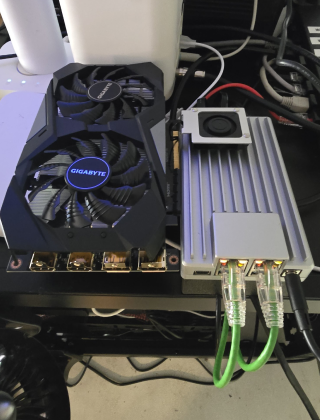
ServeTheHome’s compact-server project shows how a small system can be designed around bounded compute, storage, and networking roles. That role-bounded server design is a better model than creating a complex storage topology before the household needs it.
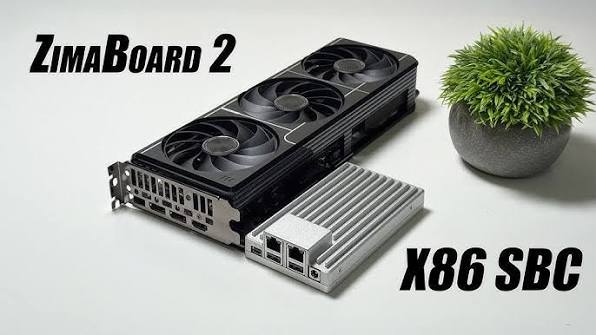
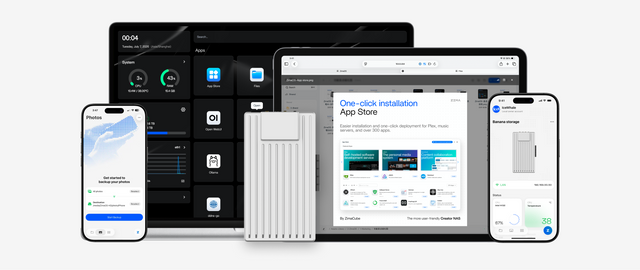
The ZimaSpace guide on planning home NAS capacity by workload helps quantify the growth boundary. A ZimaBoard 2 Mini Home Server fits a compact compute-first setup with deliberate attached storage. A ZimaCube 2 AI NAS is the clearer base when several users, multi-drive capacity, longer retention, and storage-first recovery define the household system. The topology is correct when each data class can be expanded and restored without becoming indistinguishable from the others.
One pool is not the same as one folder, one permission model, or one backup policy. Keep the hardware topology as simple as possible while preserving separate household data and recovery boundaries.
Test the topology with three failures: a deleted document, a damaged photo database, and a full video dataset. If each can be restored without moving or exposing the other zones, the logical separation is doing its job. If every event requires a whole-pool recovery, the apparent simplicity is hiding excessive coupling.

Recommended products

NAS & Server Setup
More to Read
A Local RAG Setup for Research Papers, Notes, and Private Documents
Keep original documents authoritative, make indexing repeatable, require citations, and separate replaceable models from private source data.
Why Are Developers Using a Gateway Node for Private DNS, VPN, and Test Apps?
A gateway node gives private apps one controlled name and access path, while compute nodes stay unexposed and replaceable.
How to Build a Reproducible App Stack With Compose Files, Secrets, and Persistent Data Separated
Keep Compose definitions portable, secrets protected, and app data independently backed up so the stack can be rebuilt on a clean host.


