
What Are the Workflow Trade-Offs Between a Family NAS and Shared Cloud Storage?


A family NAS favors local control and predictable access, while shared cloud storage favors low-maintenance collaboration and simple access from anywhere.
The better workflow depends on where family members work, which files they share, how much data they store, who can maintain the system, and what happens when the internet, the NAS, or one account becomes unavailable. The useful comparison is not local hardware versus a subscription in isolation. It is the full path from capture and editing to sharing, versioning, backup, remote access, administration, and recovery.
Start With the Family Workflow Instead of the Storage Location
List the tasks the storage system must support: automatic phone uploads, shared documents, media playback, school files, laptop backup, remote access, and long-term photo retention. Then identify who performs each task, which devices are involved, and whether it must work away from home or during an internet outage.
TechTarget’s NAS and cloud comparison treats total cost, performance, control, scalability, maintenance, and remote collaboration as connected decision criteria. That workflow-wide comparison model applies to a household even though its users and budgets are smaller.
| Family task | NAS advantage | Cloud advantage |
|---|---|---|
| Large local photo or media library | Fast local access without repeated internet transfer | No hardware capacity planning at home |
| Shared school and office documents | Local ownership and familiar network folders | Simple remote editing and link sharing |
| Device backup | Fast destination for several home devices | Copy already exists outside the house |
| Family administration | Full control over users, storage, and retention | Provider handles hardware and infrastructure |
Do not choose one platform for every task by default. A household may keep large originals and backups on the NAS while using cloud folders for active documents and external sharing.
Cloud Storage Simplifies Sync and Collaboration but Is Not Automatically a Backup
Shared cloud folders are designed to keep files available across devices and users. Changes, renames, and deletions may synchronize quickly, which is useful for collaboration but can also propagate mistakes. Version history may help, yet its retention and recovery behavior depends on the service and plan.
TechTarget distinguishes file sync and sharing from cloud backup: sync keeps selected folders aligned across users and devices, while backup is designed around protected recovery copies. That sync-versus-backup boundary is essential when the family assumes a shared cloud folder is already a complete recovery system.
Use shared cloud storage for active collaboration and convenient access. Keep a separate recovery plan for critical photos, documents, and account exports. Test whether deleted files, overwritten versions, and a lost account can actually be recovered within the required time.
A NAS Gives Local Workflows Predictable Performance and Ownership
A NAS sits on the home network and can provide shared folders, device backups, media libraries, and application data without sending every local transfer through the internet. Large photo exports, video files, computer images, and repeated media playback can remain inside the local network.
Puget Systems notes that network-attached storage allows several computers to share files locally without routing the entire workflow through a cloud service. That local shared-storage path becomes valuable when the household handles large files or several backup sources.
The trade-off is ownership of the infrastructure. Someone must manage drives, capacity, users, updates, monitoring, remote access, and backups. Local control creates flexibility only when the household also assigns a maintenance owner and documents recovery.

Permissions Feel Different in a Cloud Workspace and a Family NAS
Cloud services usually present sharing through accounts, invitations, and links. A NAS may expose users, groups, folders, applications, and file protocols separately. The cloud path is often easier for occasional collaboration, while the NAS path can offer more precise separation between private, shared, read-only, and administrative data.
WIRED’s NAS sharing guide describes network storage as an always-available family repository that can expose selected files and folders across household devices. That folder-and-user sharing model works best when every family member has an individual account rather than one shared administrator login.
For cloud storage, review who owns the family plan, who can remove members, and what happens to files when an account leaves. For a NAS, separate private folders, family shares, application state, and backup destinations. In both systems, public links and unrestricted shared credentials should be exceptions rather than the default workflow.
Remote Access Is Easier in the Cloud but Local Access Is More Resilient on a NAS
Cloud storage is designed for access from different networks and locations without the family operating its own remote gateway. A NAS is naturally available on the home network, but safe remote access requires a supported application, private tunnel, relay, or other controlled path.
TechTarget explains that cloud NAS can be reached from almost anywhere but remains dependent on network bandwidth and internet transfer speed. That remote-access-versus-bandwidth trade-off changes which platform feels faster and more reliable for each family member.
Keep essential local files available when the internet fails, and test remote access from mobile data rather than only home Wi-Fi. The ZimaSpace guide to remote NAS access without directly exposing files covers the NAS-side boundary. Do not make remote access the only route to administer or recover the home server.
Cost Depends on Growth, Time, and Who Performs Maintenance
Cloud storage turns capacity and infrastructure into a recurring operating cost. A NAS concentrates cost into hardware, drives, power, replacement, and the administrator’s time. Neither model is automatically cheaper because the result changes with storage growth, retention, internet bandwidth, drive replacement, and the number of services included.
Cloudwards’ 2026 comparison notes that NAS provides local control but makes the owner responsible for hardware, privacy, and maintenance, while cloud storage offers easier scaling and managed infrastructure. That ownership-versus-managed-service trade-off is more useful than comparing one monthly price with one hardware receipt.
| Cost category | Family NAS | Shared cloud storage |
|---|---|---|
| Initial cost | Server, drives, and optional UPS | Usually low or none |
| Ongoing cost | Power, replacement drives, and maintenance time | Subscription and possible capacity upgrades |
| Growth event | Buy or replace physical storage | Move to a larger plan |
| Exit cost | Copy data to another local system | Download, verify, and migrate the cloud library |
Estimate three to five years of likely photo, video, and backup growth. Include the cost of an independent backup for the NAS and the cost of exporting or preserving cloud data outside the provider account.
Recovery Is Strongest When NAS and Cloud Fail Independently
A NAS can protect laptops and phones while remaining vulnerable to theft, fire, ransomware, controller failure, and administrator mistakes. Cloud storage provides geographic separation but can still be affected by account loss, synchronized deletion, provider rules, and internet availability.
Cloudwards distinguishes cloud storage from online backup by purpose: storage emphasizes synchronization and collaboration, while backup emphasizes recovery and protected copies. That collaboration-versus-recovery distinction supports using different systems for active sharing and independent protection.
Define which system is authoritative for each data type. Then test recovery in both directions: restore a deleted cloud file from an independent copy, and restore a NAS dataset after simulating loss of the live pool. A mirror or sync relationship is not sufficient when the same mistake can reach every connected copy.
A Hybrid Workflow Usually Solves More Family Problems Than a Total Replacement
A practical family design keeps large originals, device backups, and media on the NAS; uses cloud folders for active documents, remote collaboration, and external sharing; and sends critical NAS data to an off-site destination. The systems complement one another because they fail, scale, and serve users differently.
Backblaze’s NAS guidance recommends pairing local network storage with an off-site cloud copy to complete a broader backup strategy. That local-plus-off-site architecture is safer than asking either the NAS or the shared cloud account to be the only copy.
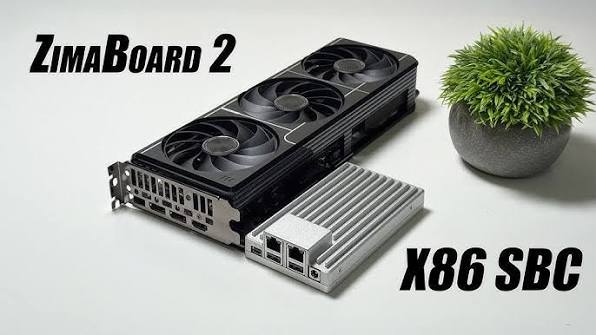
The ZimaSpace guide for several family phone libraries helps define storage growth and account separation. A ZimaBoard 2 Mini Home Server fits a compact local file, backup, and self-hosted app layer with deliberate attached storage. A ZimaCube 2 AI NAS is the clearer base when multi-drive capacity, several family accounts, long retention, and storage-first recovery define the local side of the workflow.
The right choice is the workflow the family can use without constant administration and recover without relying on the same account, device, location, or person that caused the failure.

Recommended products

NAS & Server Setup
More to Read
A Local RAG Setup for Research Papers, Notes, and Private Documents
Keep original documents authoritative, make indexing repeatable, require citations, and separate replaceable models from private source data.
Why Are Developers Using a Gateway Node for Private DNS, VPN, and Test Apps?
A gateway node gives private apps one controlled name and access path, while compute nodes stay unexposed and replaceable.
How to Build a Reproducible App Stack With Compose Files, Secrets, and Persistent Data Separated
Keep Compose definitions portable, secrets protected, and app data independently backed up so the stack can be rebuilt on a clean host.


