
Home NAS Buying Guide for Families With Several Phone Libraries


A family NAS is worth buying when several phones need one dependable photo home without forcing everyone into a shared login or leaving the NAS as the only copy. The safest default is a multi-user photo application, separate private and shared spaces, enough usable capacity for current libraries plus several years of video growth, and an independent backup of both media files and the app database. Start with a compact two-drive system when the household is small and growth is predictable; move to a multi-bay platform when several people shoot a lot of video or the archive must remain expandable for years.
What a Multi-Phone Family NAS Must Solve
The first buying decision is not the number of drive bays. It is whether every family member can upload, browse, and share without confusing one person’s private camera roll with another person’s account.
A useful household workflow normally includes:
- One account for each person
- Automatic upload from each phone
- A private library by default
- Shared albums or a controlled family space
- A clear rule for screenshots, downloads, and messaging-app media
- An admin account that is not used for daily browsing
Bert Wagner’s family-friendly self-hosted photo server shows why usability matters as much as storage: the system became valuable when family members could reach photos from their own devices while the archive was protected in several ways.
Before comparing hardware, test the intended application with two real phones. Confirm that each user can sign in separately, choose which phone folders upload, create a shared album, and recover from a changed password. The ZimaSpace Immich family photo backup workflow is a practical next step because it connects mobile uploads, separate accounts, remote access, database protection, and restoration planning.
A NAS is a better fit than a USB drive when several phones need the same always-on destination. It is less compelling when one person manages every photo manually and no one else needs independent access.
Size Storage for Photos, Videos, and Growth
Phone libraries grow unevenly. Photos add steadily, while long 4K clips, Live Photos, slow-motion video, and repeated exports can create sudden jumps. Tyler Hall’s description of multi-gigabyte 4K family videos is a useful reminder that a few long clips can matter more than thousands of ordinary photos.
Estimate usable capacity with four inputs:
- Current combined size of every phone library
- Existing family archives on computers, cloud services, and external drives
- Expected annual growth, especially video
- Space needed for snapshots, imports, application databases, and temporary processing
Do not calculate from advertised drive capacity alone. Mirroring or parity reduces usable space, and the photo application may create thumbnails, previews, indexes, or machine-learning data. The ZimaSpace home NAS storage sizing guide provides a useful range for homes with several phones, computers, and backup histories.
| Family library | Sensible starting design | Move up when |
|---|---|---|
| Two light phone libraries, mostly photos | Two drives with several years of headroom | 4K video or older archives are added |
| Three to five active phone libraries | 8–16TB usable is a practical planning range | Annual growth or snapshot retention becomes unpredictable |
| Video-heavy family archive | Multi-bay platform with expansion room | Drive replacement would otherwise require rebuilding the whole layout |
| Photos plus media server, PCs, and apps | Separate capacity for archives and application data | Several workloads compete for the same pool |
Buy enough headroom to avoid replacing every drive after the first large import. Do not overbuy an enterprise-sized platform if the household only adds a few hundred gigabytes per year and can expand later.
Separate Private Libraries From Shared Family Space
A family archive usually needs two different experiences: private ownership and convenient sharing. One giant shared account is simple on day one but makes deletions, favorites, face labels, and personal albums difficult to attribute later.
Self-hosted photo software also varies in how it handles uploads, albums, search, permissions, plugins, and mobile access. A self-hosted photo gallery comparison can help narrow the software model before hardware is purchased. The goal is not to choose the app with the longest feature list; it is to choose one that the least technical family member will actually use.
Use separate accounts for private phone backups, then create shared albums for holidays, children, pets, or family events. For folders outside the photo app, grant access only where needed and keep the archive read-only for most users. The ZimaSpace guide to family accounts and storage permissions explains why individual accounts, limited folder access, and controlled external sharing are safer than guest access.
Families leaving a cloud service should also check feature expectations. A NAS can centralize originals and shared albums, but it may not reproduce every cloud editing tool, automatic memory, or effortless off-site access. Review whether a NAS can replace iCloud Photos for a family before treating local ownership and cloud convenience as identical products.
The decision rule is simple: choose the NAS and application combination that preserves account boundaries while making the shared family view easy enough to become a habit.
Build Recovery Before Choosing Drive Bays
RAID or drive mirroring helps the NAS remain available after a drive failure, but it does not create an independent copy. A mistaken deletion, damaged database, ransomware event, power incident, theft, or failed update can affect the whole system.
Backblaze’s 3-2-1 backup strategy gives the right planning model: maintain three copies, use two types of storage, and keep one copy off-site. For a family photo system, the phone may temporarily be one copy, the NAS the working archive, and an external or cloud destination the recovery copy—but only if uploads and backup jobs are actually monitored.
Protect both layers:
- Original photos and videos
- Photo-application database and configuration
- Shared album metadata
- User accounts and permissions
- Recovery instructions and encryption keys
The ZimaSpace article on the safest way to store family photos helps separate archive design from simple drive redundancy. Also decide how often the backup runs: active phone uploads may justify daily protection, while a stable historical archive may change more slowly.
A larger NAS is not automatically safer. A smaller system with tested off-site recovery is a better family archive than a six-bay system that holds the only copy.
Which Home NAS Platform Fits Your Family?
Choose hardware only after the upload workflow, capacity range, account model, and backup destination are clear.
Compact two-drive route
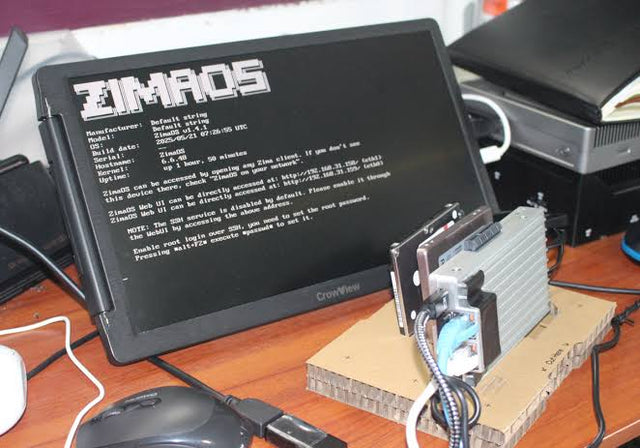
ZimaBoard 2 is a compact x86 home-server platform with an Intel N150 processor, dual 2.5GbE, PCIe expansion, and two SATA connections. It fits a controlled family library when two drives provide enough capacity and the buyer is comfortable selecting drives, mounting, and the photo application.
Choose this route when the family wants a small DIY system, predictable growth, and flexibility to run Immich or another self-hosted service. Avoid it when the archive already needs several large drives or simple appliance-style drive expansion is the top priority.
Multi-bay long-term route
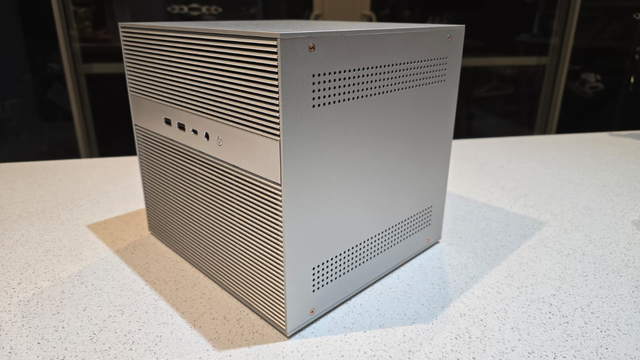
ZimaCube 2 provides six HDD bays, SSD expansion, dual 2.5GbE on the standard model, and stronger platform options for larger workloads. It is the more natural fit for several active phone libraries, long retention, a growing video archive, or a NAS that will also host family files and media services.
Choose the standard tier for family storage and lighter self-hosting; consider higher tiers only when other workloads genuinely need more CPU, networking, SSD, or GPU capability. The broader ZimaCube personal-cloud collection is useful when comparing editions after the storage and workload criteria are already established.
Family NAS buying checklist
Before buying, verify:
- Every family member gets a separate account.
- Two test phones can upload without mixing libraries.
- Shared albums work without exposing all private media.
- Usable capacity includes redundancy, app data, and growth.
- The NAS has an independent backup destination.
- The photo database is included in the recovery plan.
- Remote access does not require opening unsafe public ports.
- The platform has enough drive bays for the next expansion, not every imaginary future use.
Frequently Asked Questions
Should every phone upload everything?
Usually no. Screenshots, downloads, memes, and messaging folders can create clutter. Let each user select the phone albums that belong in the long-term archive.
Is two-bay storage enough for a family?
It can be enough when current data and annual growth are measured, two large drives provide several years of headroom, and an independent backup exists. Multi-bay storage becomes more useful when video growth or several workloads make expansion hard to predict.
Can the NAS be the only photo copy?
No. The NAS should be the central working archive, not the only recovery point.
Final Takeaway
Choose a compact two-drive family NAS when the household has a clear upload routine, moderate growth, and a separate backup. Choose a multi-bay platform when several phone libraries, 4K video, long retention, or additional home-server workloads make expansion more valuable than the smallest footprint. The best system is the one that keeps users separate, sharing simple, capacity visible, and recovery tested.

Recommended products

Buying Guide
More to Read
Local AI Server Checklist Before Buying a GPU
A pre-purchase checklist for avoiding a fast but incompatible, under-cooled, or VRAM-limited GPU in a home AI server.
Container Server Storage Checklist Before One Large Pool
A storage design checklist that prevents one convenient container pool from becoming one shared capacity and recovery failure domain.
NAS Drive Mixing Checklist Before Combining Capacities
A pre-purchase and pre-deployment checklist for mixed NAS disks that prevents hidden capacity waste and unpredictable recovery behavior.


