
2026 AI Agent Skills for Local Knowledge Bases


AI agent skills for local knowledge bases help you turn private files, notes, PDFs, manuals, transcripts, project documents, and research folders into a searchable AI workspace. Instead of uploading the same documents again and again, you can build a reusable workflow for extracting content, indexing knowledge, searching relevant context, and generating grounded answers from your own files.
This guide explains the 2026 best AI agent skills for local knowledge bases, how they fit into RAG workflows, and how to build a private knowledge system with local storage or an AI NAS.
Quick Answer
AI agent skills for local knowledge bases are reusable workflows that help an AI agent read, clean, index, search, cite, and update private knowledge. The best skills are not just generic “document search” abilities. They are concrete SKILL.md packages, GitHub projects, or local AI workflows for file parsing, RAG implementation, vector search, evidence control, and knowledge packaging.
| Rank | Skill or Project | Best For | Source Type |
|---|---|---|---|
| 1 | pdf |
PDF extraction, OCR, scanned documents, tables | Document skill |
| 2 | docx |
Word documents, reports, briefs, SOPs | Document skill |
| 3 | rag-implementation |
Designing RAG systems and retrieval pipelines | RAG skill |
| 4 | document-rag-pipeline |
Turning document folders into searchable knowledge bases | RAG pipeline skill |
| 5 | chroma |
Local vector search and small knowledge-base experiments | Vector search skill |
| 6 | qdrant-vector-search |
Production-grade semantic search and vector retrieval | Vector search skill |
| 7 | OpenRAG-Skill |
Evidence-first answers from supplied knowledge | Grounded answer skill |
| 8 | book-to-skill |
Turning books, PDFs, and folders into reusable agent skills | Knowledge packaging workflow |
| 9 | AnythingLLM |
Local document chat, agents, and private AI app workflows | Local knowledge-base app |
| 10 | rag-skill |
Local knowledge-base retrieval demo project | Local RAG skill demo |
A practical local knowledge-base stack starts with file extraction, then adds chunking, metadata, embeddings, vector search, retrieval evaluation, and citation rules. For private workflows, the storage layer matters just as much as the AI layer.
What Are AI Agent Skills for Local Knowledge Bases?
AI agent skills for local knowledge bases are reusable task packages that help agents work with private information stored on your own devices, servers, or local network. They can define how an agent should read files, detect file types, extract text, clean content, chunk documents, generate embeddings, search relevant passages, and answer with evidence.
A simple prompt might say:
“Search my files and answer this question.”
A local knowledge-base skill should define a repeatable process:
- Identify the source folder.
- Detect supported file types.
- Extract clean text and metadata.
- Run OCR when needed.
- Split long documents into retrievable chunks.
- Store embeddings in a local vector database.
- Search by keyword and semantic meaning.
- Return relevant passages.
- Generate an answer with evidence.
- Mark outdated, missing, or incomplete sources.
That is the difference between casual file chat and a real local knowledge-base workflow.
A local knowledge base is especially useful when you work with:
| Use Case | Example Files |
|---|---|
| Personal research | PDFs, notes, highlights, saved articles |
| Team knowledge | SOPs, meeting notes, project documents |
| Developer documentation | API docs, README files, changelogs, tickets |
| Creator workflow | scripts, transcripts, content calendars, brand docs |
| Home lab or NAS setup | service docs, config notes, logs, tutorials |
| Small business operations | invoices, manuals, policies, customer FAQs |
| Private AI assistant | personal documents, local archives, knowledge folders |
The key value is control. You are not only asking an AI model to remember things. You are building a system that lets the agent retrieve your own knowledge when it needs it.
Local Knowledge Base vs RAG vs Vector Database
A local knowledge base, RAG system, and vector database are related, but they are not the same thing.
| Term | Meaning | Example |
|---|---|---|
| Local knowledge base | Your private collection of documents and structured knowledge | PDFs, notes, manuals, transcripts |
| RAG | The workflow that retrieves relevant knowledge before generating an answer | Search files, retrieve chunks, answer with context |
| Vector database | The search infrastructure that stores embeddings for semantic search | Chroma, Qdrant, FAISS, Milvus |
| AI agent skill | The reusable workflow that tells the agent how to use the above pieces | PDF extraction, RAG setup, evidence-first answers |
A vector database does not automatically create a useful knowledge base. It stores searchable representations of your content. A RAG workflow does not automatically guarantee trustworthy answers. It needs good ingestion, chunking, metadata, retrieval, and answer discipline.
AI agent skills sit above these layers. They help the agent follow the right procedure instead of improvising every time.
For example, a local knowledge-base skill can tell the agent:
- Which folders to index
- Which files to ignore
- How to chunk long documents
- What metadata to keep
- When to use keyword search
- When to use vector search
- How to cite retrieved evidence
- When to say “I don’t know”
That is why local knowledge-base skills are useful. They turn RAG from a technical setup into a repeatable operating process.
Best AI Agent Skills for Local Knowledge Bases
The best skills depend on the type of knowledge you want to store. Some skills focus on documents. Some focus on retrieval. Some focus on vector search. Others help turn long source material into reusable agent memory.
1. pdf
The pdf document processing skill is useful when your local knowledge base includes PDFs, scanned files, research papers, reports, manuals, invoices, or exported documents.
Best for:
- PDF text extraction
- OCR for scanned files
- Table and image extraction
- Splitting and merging PDFs
- Making document archives searchable
- Preparing source material for RAG
PDFs are often the hardest part of a local knowledge base. If extraction fails, retrieval quality suffers. A PDF skill helps the agent treat this as a structured preprocessing step.
2. docx
The docx document skill is useful for Word documents, internal reports, client briefs, meeting notes, SOPs, and long-form drafts.
Best for:
- Word document reading
- Internal documentation
- Policy documents
- Project briefs
- Knowledge-base source files
- Team reports
A local knowledge base often contains mixed document formats. Word files can include headings, comments, tracked changes, tables, and repeated formatting. A docx skill helps preserve more structure before the content enters a retrieval pipeline.
3. rag-implementation
The rag-implementation skill is useful when you want to build the local knowledge-base system itself. It covers decisions such as chunking, embeddings, vector databases, hybrid search, retrieval optimization, and debugging retrieval quality.
Best for:
- RAG system design
- Semantic search implementation
- Vector database selection
- Chunking strategy
- Embedding model decisions
- Retrieval quality debugging
This skill is important because RAG is not just “upload documents to a chatbot.” A useful local knowledge base requires technical choices, and those choices affect answer quality.
4. document-rag-pipeline
The document-rag-pipeline skill is designed around turning document collections into searchable knowledge bases.
Best for:
- Folder-based document ingestion
- PDF text extraction
- OCR workflows
- Chunking with overlap
- Embeddings
- Local full-text search
- Semantic similarity search
This is a strong example of an end-to-end local knowledge-base workflow. It connects the practical steps most users actually need: extract, clean, chunk, embed, store, search, and answer.
5. chroma
The Chroma RAG skill is useful for local vector search experiments and smaller knowledge bases. Chroma is often used by developers who want a simple open-source vector database for local RAG prototypes.
Best for:
- Local RAG experiments
- Small knowledge bases
- Developer testing
- Semantic document search
- Metadata filtering
- Open-source prototypes
For a first local knowledge base, Chroma-style workflows are often easier to test than a large production retrieval stack.
6. qdrant-vector-search
The qdrant-vector-search skill is useful when the knowledge base needs more scalable vector search, metadata filtering, and production-style retrieval.
Best for:
- Larger knowledge bases
- Production vector search
- Semantic retrieval
- Filtered search by metadata
- High-performance document retrieval
- Team knowledge-base systems
If your local knowledge base grows from a personal experiment into a team workflow, Qdrant-style retrieval can become more relevant.
7. OpenRAG-Skill
The OpenRAG evidence-first skill is useful when the priority is answer discipline. It focuses on evidence-first retrieval, source-grounded responses, and refusing to over-answer when the source material is incomplete.
Best for:
- Research workflows
- Citation-sensitive answers
- Internal knowledge Q&A
- Evidence-controlled summaries
- Source-grounded writing
- Reducing unsupported claims
Local knowledge bases are only useful if users trust the answers. A skill that enforces evidence-first behavior helps reduce the risk of confident but unsupported output.
8. book-to-skill
The book-to-skill document workflow is useful when you want to turn a long document, book, PDF, or folder into a reusable agent skill.
Best for:
- Technical books
- Training manuals
- Internal handbooks
- Long PDFs
- Course materials
- Reference folders
- Reusable knowledge assets
This is an important bridge between RAG and skills. RAG retrieves source material. A book-to-skill workflow tries to convert source material into reusable procedural guidance that agents can call later.
9. AnythingLLM
AnythingLLM for local document chat is not just a SKILL.md file, but it is highly relevant to local knowledge-base workflows. It provides an all-in-one local or private AI application for document ingestion, chat, agents, vector databases, and document pipelines.
Best for:
- Local AI document chat
- Private knowledge-base apps
- Non-developer workflows
- Team document search
- Local or hybrid LLM setups
- Agent experiments with private files
For users who want a working local knowledge base without building every component from scratch, an application like this can be a practical starting point.
10. rag-skill
The local knowledge-base retrieval skill demo is useful as a direct example of a local knowledge-base skill project. It demonstrates how a skill can sit inside a local knowledge workflow and retrieve from a sample knowledge base.
Best for:
- Learning local RAG structure
- Understanding skill-based retrieval
- Testing local knowledge-base concepts
- Building demo workflows
- Adapting a simple retrieval assistant
This kind of project is helpful because it shows the concept in a smaller, easier-to-understand form.
How to Build a Local Knowledge Base Skill Stack
A local knowledge-base stack should be built in layers. Do not start with ten tools. Start with one folder, one document type, one embedding workflow, and one answer-evaluation habit.
A practical stack looks like this:
| Workflow Layer | Suggested Skill or Tool |
|---|---|
| PDF processing | pdf |
| Word document handling | docx |
| RAG architecture | rag-implementation |
| End-to-end document pipeline | document-rag-pipeline |
| Local vector database | chroma |
| Larger vector database | qdrant-vector-search |
| Evidence-first answering | OpenRAG-Skill |
| Knowledge packaging | book-to-skill |
| Local app layer | AnythingLLM |
| Demo retrieval workflow | rag-skill |
A simple build order is:
- Choose one knowledge domain.
- Create a clean source folder.
- Remove duplicate or outdated files.
- Extract text from PDFs and DOCX files.
- Add metadata such as date, project, author, and topic.
- Chunk documents into retrieval-friendly sections.
- Create embeddings.
- Store vectors locally.
- Test retrieval with real questions.
- Add rules for citation, uncertainty, and updates.
You can also use the AI Agent Skill Finder to compare skills by role and workflow instead of searching GitHub manually.
What Files Should Go Into a Local Knowledge Base?
A local knowledge base works best when the source files are useful, current, and organized. More files do not always mean better answers. A messy knowledge base can produce messy retrieval.
Good source material includes:
| File Type | Why It Helps |
|---|---|
| PDFs | Manuals, reports, papers, guides, contracts |
| DOCX files | Briefs, SOPs, meeting notes, long-form drafts |
| Markdown files | Clean documentation, README files, knowledge notes |
| Transcripts | Video, podcast, meeting, interview content |
| Spreadsheets | Content calendars, inventory, analytics, lists |
| Screenshots with OCR | UI records, receipts, visual notes |
| Web exports | Saved articles, support pages, research clips |
| Logs and changelogs | Technical history and troubleshooting context |
Avoid dumping every file into the index. A useful local knowledge base needs curation.
Before indexing, ask:
- Is this file still accurate?
- Is it duplicated elsewhere?
- Does it contain sensitive information?
- Does it need OCR?
- Does it have a clear title?
- Should it be split into smaller files?
- Does it need metadata?
- Should it be excluded from AI access?
For private knowledge bases, quality beats volume.
Where ZimaCube 2 Fits Into Local Knowledge Base Workflows
A local knowledge base needs a place to live. For small experiments, that place can be a laptop. For growing document libraries, team folders, media archives, and self-hosted AI workflows, local storage becomes more important.
If you use ZimaCube 2 AI NAS, you can use it as a private workspace for storing source documents, media files, transcripts, embeddings, vector indexes, AI-generated summaries, and workflow outputs.
A local AI NAS can help with:
| Local Asset | Knowledge-Base Use |
|---|---|
| Research library | Store PDFs, notes, highlights, and summaries |
| Team documentation | Keep SOPs, project docs, and internal guides searchable |
| Media archive | Turn transcripts and metadata into searchable knowledge |
| Homelab notes | Store configs, logs, tutorials, and service docs |
| Creator assets | Organize scripts, briefs, content calendars, and brand files |
| Development docs | Index API docs, README files, issue notes, and changelogs |
| Private AI outputs | Keep generated summaries and retrieval artifacts locally |
This does not mean every user needs a NAS to build a local knowledge base. But if your goal is private storage, self-hosted automation, long-term file organization, and local AI experiments, an AI NAS can become the foundation layer.
The simplest way to think about it is:
- GitHub gives you reusable skills.
- RAG gives you retrieval.
- A vector database gives you semantic search.
- ZimaCube 2 gives you a local place to store and organize the knowledge those workflows depend on.
Safety Checklist Before Using Local Knowledge Base Skills
Local knowledge-base skills can touch sensitive files. They may read folders, run scripts, generate embeddings, call local or cloud APIs, create indexes, and produce answers that look authoritative.
Before using a third-party skill, check:
- Who maintains the repository?
- Does the skill include executable scripts?
- Does it upload files to external services?
- Does it read folders outside the intended scope?
- Does it store embeddings locally or remotely?
- Does it keep metadata about sensitive documents?
- Does it explain how answers should cite sources?
- Does it handle incomplete evidence correctly?
- Can you test it on sample files first?
- Can you delete the generated index later?
Treat a local knowledge-base skill like a software dependency. Read the SKILL.md, inspect scripts, test in a sandbox, and do not give an unknown skill direct access to sensitive personal, client, or company files.
A good internal rule is simple: if a document should not be uploaded to a random cloud tool, it should not be handed to an unreviewed agent skill either.
Conclusion
AI agent skills for local knowledge bases turn private documents into reusable AI workflows. They help agents extract, clean, index, retrieve, cite, and update knowledge instead of relying on one-off file uploads or vague prompts.
The strongest local knowledge-base stack combines document skills such as pdf and docx, RAG skills such as rag-implementation and document-rag-pipeline, vector search skills such as chroma and qdrant-vector-search, evidence skills such as OpenRAG-Skill, and knowledge packaging workflows such as book-to-skill.
For users who care about privacy and long-term organization, local infrastructure also matters. A device like ZimaCube 2 can act as the storage foundation for documents, media, embeddings, indexes, and self-hosted AI workflows. The goal is not just to chat with files. The goal is to build a local knowledge system that stays useful as your information grows.
FAQ
What is a local knowledge base for AI agents?
A local knowledge base is a private collection of documents, notes, files, transcripts, and structured information that an AI agent can search and use when answering questions. It usually runs on a local device, private server, NAS, or self-hosted environment.
How is a local knowledge base different from cloud document chat?
Cloud document chat usually uploads files to a hosted service. A local knowledge base keeps the files, indexes, or workflows closer to your own device or private infrastructure. This can be useful for privacy, control, long-term organization, and self-hosted AI workflows.
Which AI agent skill should I use first for a local knowledge base?
Start with your file type. If you have many PDFs, start with pdf. If you have Word documents, start with docx. If you want to build the retrieval system itself, use rag-implementation or document-rag-pipeline.
Do I need a vector database for a local knowledge base?
Not always. For a small folder, keyword search may be enough. For semantic search across many documents, a vector database such as Chroma or Qdrant becomes more useful because it can retrieve passages by meaning rather than exact keywords.
Can AI agent skills reduce hallucinations in local knowledge-base answers?
They can help, but only if the workflow is evidence-based. Skills such as OpenRAG-Skill encourage source-grounded answers and refusal when the source material is incomplete. Good retrieval, metadata, and citation rules are also important.
Do I need an AI NAS to build a local knowledge base?
No. You can start on a laptop. However, an AI NAS such as ZimaCube 2 can help when your document library, media archive, embeddings, indexes, and self-hosted workflows grow beyond a simple folder.

AI HUB
More to Read
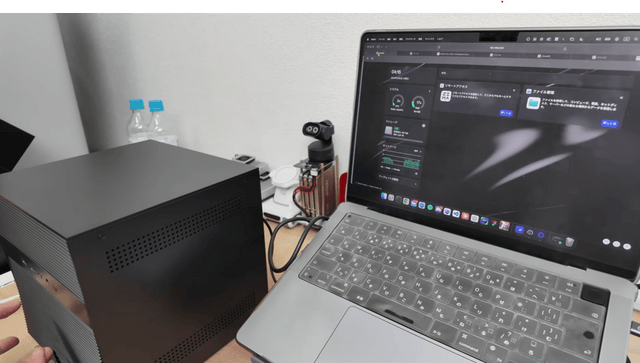
2026 Top AI Agent Skills for Document Search and RAG
A practical guide to AI agent skills for document search and RAG, covering PDFs, DOCX files, vector search, private knowledge bases, and AI NAS...
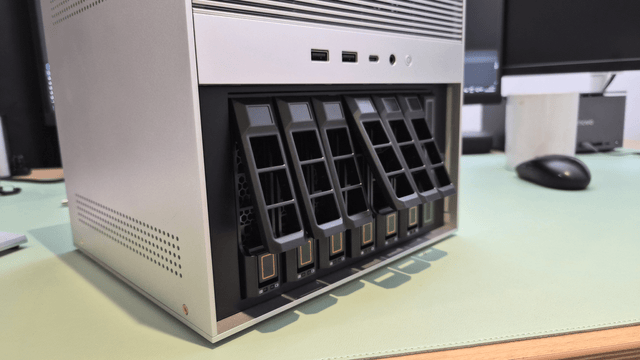
2026 Best AI Agent Skills for Content Creators
A practical guide to the best AI agent skills for content creators in 2026, covering research, writing, SEO, slides, PDFs, media workflows, and AI...
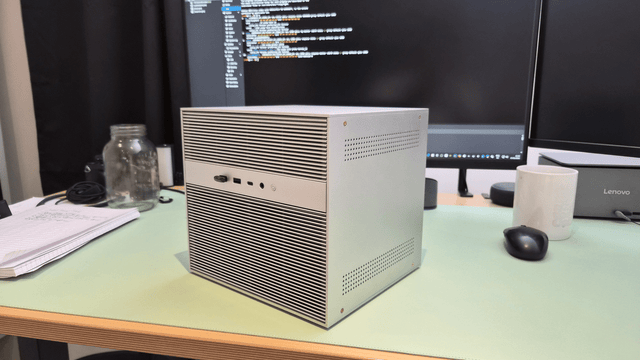
Top 10 Open-Source AI Agent Skills on GitHub
Top 10 open-source AI agent skills on GitHub, including frontend-design, webapp-testing, TDD, security analysis, MCP building, and AI NAS workflows.


