
Reflection Beam 1.0 Explained: Open Weights, Coding Agents, and Deployment Choices


Reflection Beam 1.0 gives developers an open-weight option for coding agents, but it is a very large model. Its model card lists approximately 501.3 billion total parameters and 23.4 billion active parameters. The active count describes computation; it does not mean the full checkpoint has the storage or memory footprint of a 23-billion-parameter dense model.
For most home-server owners, the useful role of a NAS is to hold repositories, approved inputs, and reviewed outputs while inference runs on suitable compute or through a provider. Evaluate runtime support and actual capacity before making local deployment part of the plan.
What does open weight mean for Beam 1.0?
The published checkpoint allows a different level of deployment control from an API-only service, subject to its license and serving requirements. The model card identifies the available formats and intended coding use. It does not supply a ready-made personal agent or eliminate the work of operating a serving stack.
The API versus self-hosted model comparison covers the ownership questions that arise once model deployment becomes your responsibility.
Why are total and active parameters different?
| Term | Practical meaning |
|---|---|
| Total parameters | All model weights that must be represented in the deployment |
| Active parameters | The subset involved in a given token’s computation |
| Weight format | Precision and packaging affecting memory and runtime support |
| Context allocation | Additional resources needed for the selected sequence length |
| Serving capacity | Hardware and software needed for the target concurrency |
A mixture-of-experts design can reduce computation relative to a similarly sized dense model without making all of its weights disappear.
Does a large context window remove retrieval needs?
No. A supported maximum is not a recommendation to send every file. Large inputs can increase processing cost and make it harder to audit which source supported an answer. Select relevant repository paths or document excerpts and retain provenance.
Our web search versus private-document RAG comparison explains how source selection affects both relevance and data exposure. A bigger window does not grant the model access to files it has not been given.
Where should Beam inference run?
Assess a provider-hosted route or appropriately provisioned compute before assuming a home deployment. For local serving, check the actual weight files, supported format, accelerator compatibility, runtime version, context allocation, and concurrency. Disk capacity alone is insufficient.
Use the Beam hardware assessment guide to build a capacity decision from the exact artifact. Do not size an installation using only the active-parameter headline.
How should I assess coding usefulness?
Use a copied repository and a narrow task with a clear acceptance check. Review the proposed diff, the relevant behavior, and any tool failures. Record configuration and date, especially when comparing a hosted service with a self-managed deployment.
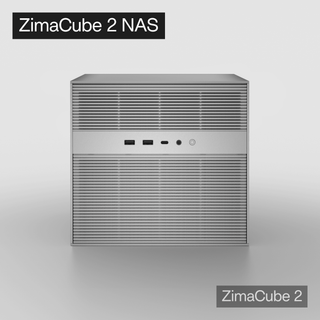
The Beam versus DeepSeek comparison focuses on controllable evaluation conditions. ZimaCube 2 can retain that repository and test evidence independently of where inference takes place.
Frequently asked questions
Can a normal home NAS run full Beam 1.0 just because it has enough disk space?
Disk space alone does not establish inference feasibility. Verify memory, accelerators, runtime support, context allocation, and concurrency.
Does the active-parameter count determine the weight footprint?
No. The deployment must account for the total weights and its serving strategy, not only the weights activated for a token.
Does open weight mean no license obligations?
No. Read the exact checkpoint license and any dependencies or service terms used in your deployment.
Can I use my NAS without hosting the model there?
Yes. Keep repositories and outputs on storage while an appropriate compute host or provider performs inference.
Related reading
- How to Assess Reflection Beam 1.0 Hardware Requirements Before Self-Hosting
- Reflection Beam 1.0 vs DeepSeek V4.1-Flash-1017: What Matters for Coding Agents?
Sources
Cover: Reflection Beam 1.0 official announcement image. Image source.

Recommended products
Tech & AI HUB
More to Read
LFM2.5-24B-A2B Explained: What Total and Active Parameters Mean for Local AI Agents
LFM2.5-24B-A2B combines 24B total and 2B active parameters. Understand memory, agent tooling, local execution, and how a NAS fits the workflow.
IBM Granite Speech 5.0 Explained: What Compact ASR Means for Private Audio Archives
Granite Speech 5.0 TurboCTC is a compact ASR model with a multilingual update. Learn how local transcription can fit a NAS-backed audio archive.

Claude Duet Explained: Proactive Tasks, Connected Apps, and Personal Files
Claude Duet is a proactive-agent research preview. Learn about background tasks, connected accounts, review boundaries, and NAS-backed personal files.


