
Mercury 3 Explained: Why Diffusion Language Models Matter for Fast AI Workflows


Mercury 3 matters because it offers a different approach to generating text: diffusion language modeling rather than the familiar purely left-to-right generation process. Inception emphasizes high throughput and low latency. For a personal agent, the useful question is whether that speed shortens the time to a correct, usable result.
Fast inference can help a workflow with many model calls, but it cannot remove slow file retrieval, browser actions, or human review. Keep your source documents on your chosen storage, submit only task-relevant inputs, and measure the whole job before redesigning a NAS-backed workflow around a headline token rate.
How does a diffusion language model differ?
Autoregressive models conventionally generate output sequentially, conditioning each new token on what came before. Diffusion approaches iteratively refine a representation of the output and can exploit a different generation pattern. The actual API and streaming behavior still depend on the deployed service.
Our diffusion versus autoregressive comparison focuses on those practical consequences. The architecture alone does not establish better answers or identical client behavior.
What is Mercury 3 designed to improve?
Inception positions Mercury 3 around fast text generation and agent workloads. Its reported speed results belong to the vendor’s measured conditions. Prompt length, output size, effort settings, network location, concurrency, and tool activity can change what a user experiences.
Check the current model documentation for supported features. A model described as fast is not evidence that a particular integration supports every tool or structured-output option you use.
Where can speed improve an AI workflow?
| Workflow step | Effect of faster generation |
|---|---|
| Short interactive answer | May reduce visible waiting if service overhead is small |
| Repeated reasoning calls | Savings can accumulate across the loop |
| Long file download | Little effect on the download itself |
| Browser interaction | Tool and page latency may dominate |
| Final review | Correctness still determines whether output is usable |
The accepted-result efficiency guide applies here: a quick wrong answer can create more work than a slightly slower useful one.
Does the model architecture change NAS data control?
No. A remote Mercury request still sends selected input to a provider. Keep retrieval narrow, review what enters prompts, and separate a writable output directory from the original archive. Logs can contain source content even when the files remain on your NAS.
Use the NAS document data-control guide to map the full path. Neither diffusion nor autoregressive generation is a privacy policy.
What should I try first?
Choose a small text or tool task with a known final artifact. Record time to first visible content, time to the complete response, and time until the artifact passes review. If tool behavior is required, verify it explicitly rather than timing an unrelated text-only prompt.
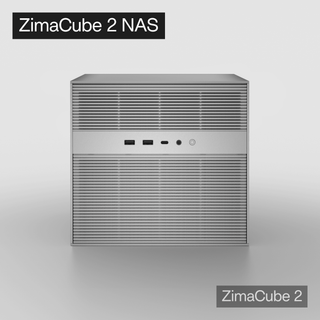
Follow the Mercury latency measurement guide. A ZimaCube 2 can retain inputs and results while a client uses the remote service; this does not imply a supported local Mercury deployment.
Frequently asked questions
Is Mercury 3 a locally installed NAS application?
The referenced offering is a model service. Do not infer local weight availability or a ready-made NAS package from the announcement.
Does high token throughput mean every task finishes faster?
No. Network time, input processing, tool calls, retries, and review can dominate end-to-end completion.
Can diffusion models be used with agent tools?
Use the capabilities documented for the actual model and API. Architecture alone does not establish a particular tool interface.
What is the most useful speed metric?
Time to an accepted task result, accompanied by correctness and the intermediate timing measurements needed to explain it.
Related reading
- How to Measure Mercury 3 Latency Beyond Tokens per Second
- Diffusion vs Autoregressive LLMs: Which Fits Your Personal AI Workflow?
Sources
- Official announcement and model documentation — www.inceptionlabs.ai
- Technical documentation and reference — docs.inceptionlabs.ai
Cover: Mercury 3 official announcement image. Image source.

Recommended products
Tech & AI HUB
More to Read
LFM2.5-24B-A2B Explained: What Total and Active Parameters Mean for Local AI Agents
LFM2.5-24B-A2B combines 24B total and 2B active parameters. Understand memory, agent tooling, local execution, and how a NAS fits the workflow.

IBM Granite Speech 5.0 Explained: What Compact ASR Means for Private Audio Archives
Granite Speech 5.0 TurboCTC is a compact ASR model with a multilingual update. Learn how local transcription can fit a NAS-backed audio archive.

Claude Duet Explained: Proactive Tasks, Connected Apps, and Personal Files
Claude Duet is a proactive-agent research preview. Learn about background tasks, connected accounts, review boundaries, and NAS-backed personal files.


