
MiniMax M3.1 Flash vs DeepSeek V4.1-Flash-1017: Which Fits Your Agent Workflow?


Choose between MiniMax M3.1 Flash and DeepSeek V4.1-Flash-1017 by testing the work your agent actually performs. Prioritize correct artifacts, compatible tools, and manageable costs over unrelated benchmark rankings. Neither model’s release announcement establishes which will be better for your repository or browser workflow.
A NAS-backed agent can use either supported remote provider while retaining its original files locally. The model choice changes inference behavior and service terms; it does not automatically change the client’s file permissions or make uploaded task inputs private to your home network.
What should the comparison hold constant?
| Dimension | Compare the same thing |
|---|---|
| Task | Identical issue, input files, and acceptance criteria |
| Harness | Same supported tools and execution environment |
| Effort | Record each provider’s actual configuration |
| Output | Correctness and completeness of the final artifact |
| Cost | Usage, retries, tools, and manual correction |
| Data | The exact content sent to each provider |
Do not treat similarly named effort settings as scientifically identical. Record them as configurations and compare the observed outcome.
Which model is better for coding?
There is no justified universal winner from the release descriptions alone. Test a task relevant to your codebase: a small bug, a constrained refactor, or an explanation tied to source files. Review whether the patch preserves expected behavior and stays within scope.
Read the DeepSeek 1017 release explanation and MiniMax M3.1 Flash overview for the claimed improvements, then separate those claims from your own observations.
How much does API and tool compatibility matter?
It can determine whether the agent works at all. Verify the route, authentication, model identifier, streaming behavior, tool arguments, and output schema supported by the client. An OpenAI-compatible route can still require provider-specific handling for optional features.
Use the harness checklist before blaming a model for a tool integration failure. The same model can behave differently under different prompts, tool descriptions, or stopping rules.
Which one costs less for a completed job?
Use current pricing and observed billable usage for the accepted artifact. Include retries and any paid tool services. A cheaper request is not necessarily a cheaper completed task if the agent revisits files repeatedly or produces a diff requiring manual repair.
The cost-per-accepted-result guide gives a practical accounting method. Avoid converting vendor speed or savings claims into a guarantee for a different workload.
What is the practical choice for a home-server workflow?
Start with the provider supported by your current client and test one copied project. Choose the other when the pilot exposes a concrete need, such as better handling of your task or a required integration. Keep the storage layout and recovery copies independent of the provider.
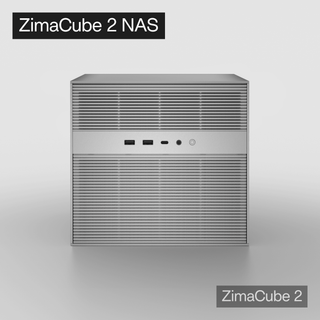
The MiniMax pilot guide and DeepSeek workflow test guide provide comparable starting points. ZimaCube 2 can hold the task files and records without dictating which cloud model you call.
Frequently asked questions
Can I rank them using different benchmark charts?
Different harnesses, tasks, settings, and evaluation methods can make headline scores unsuitable for a direct ranking.
Are both models available through exactly the same API?
Check the current provider routes and your client’s documented support. Similar request conventions do not guarantee complete feature parity.
Which is more private for NAS documents?
Compare actual service terms and the content transmitted. Local file storage alone does not determine the privacy of remote inference.
What should decide the winner?
The model that produces the required artifact with acceptable data handling, compatibility, cost, and review effort for your workload.
Related reading
- MiniMax M3.1 Flash Explained: Coding, Computer Use, and Agent Workflows
- How to Test MiniMax M3.1 Flash for Coding and Computer Use
Sources
- Official announcement and model documentation — www.minimax.io
- Technical documentation and reference — platform.minimax.io
- Technical documentation and reference — api-docs.deepseek.com
Cover: Photo by Rohan on Unsplash. Image source.

Recommended products
Product Comparisons
More to Read
LFM2.5-24B-A2B vs DeepSeek API: Which Fits Your Home Server Agent Workflow?
Compare LFM2.5-24B-A2B local inference with the DeepSeek API for home-server agents: privacy boundaries, hardware, maintenance, quality, and costs.
Granite Speech 5.0 vs Cloud Transcription: Privacy, Hardware, and Accuracy Compared
Compare local Granite Speech 5.0 with cloud transcription for audio privacy, setup, hardware, accuracy, maintenance, and NAS archive workflows.

Claude Duet vs ChatGPT Dots: Ongoing Work, File Access, and Approvals Compared
Compare Claude Duet and ChatGPT Dots for ongoing tasks, connected apps, computer access, file boundaries, and review controls in personal-cloud workflows.


