
What Configuration Factors Determine Home Assistant Scalability?


Home Assistant scalability is determined mainly by event rate, Recorder scope, automation fan-out, integration behavior, dashboard subscriptions, and competition for host resources.
Two installations with the same entity count can behave very differently: one may hold mostly idle switches, while another streams power sensors, templates, statistics, and camera events every second. Configuration controls how many events become database writes, listener evaluations, client updates, and external calls. Hardware sets the ceiling, but configuration decides how quickly the workload approaches it.
Entity Churn Matters More Than Entity Count Alone
Each entity adds some registry and state overhead, but quiet entities rarely create continuous work. Frequently changing sensors produce events that can trigger templates, automations, statistics, Recorder writes, and dashboard messages, multiplying the effect of one source.
A large-installation discussion involving roughly fifteen thousand entities shows why large entity population must be separated from update frequency and integration quality before drawing a capacity conclusion.
Count state changes per minute and listeners per change, not just registry entries. If a large inactive group can be disabled without changing CPU, writes, or latency, total entity count was a weak predictor for that system.
Recorder Scope and Retention Turn Events Into Storage Work
Recorder determines which state transitions become persistent rows and how long they remain. Broad inclusion, noisy attributes, long retention, statistics, and frequent purge work increase database size, write amplification, query cost, and backup duration.
A practical database-control guide connects exclusion and retention choices to growth, making Recorder inclusion and retention a direct configuration lever rather than a fixed property of Home Assistant.
Reducing recorded noise can increase headroom without changing live control. The tradeoff is historical visibility: exclude an entity only when losing its detailed history does not break analysis, troubleshooting, or an automation dependency.
Automations and Integrations Define Fan-Out and Blocking
A single state event may launch several automations, render templates, call devices, and wait on third-party APIs. Complex chains, broad templates, aggressive polling, or blocking integration libraries can consume the event-loop time that unrelated control also needs.
A detailed concurrency analysis explains how shared execution and resource coordination shape automation concurrency, especially when multiple tasks target the same device or data structure.
More automation rules are not automatically worse; trigger selectivity and action cost decide. Scalability improves when work is bounded, slow I/O is asynchronous, and repeated transformations are not launched for every irrelevant state update.

Dashboards and Co-Hosted Services Consume the Same Budget
Every open dashboard subscribes to state and may request history, charts, cameras, or custom-card computations. Databases, media servers, backups, local AI, and other containers can simultaneously compete for CPU, memory, storage latency, and network bandwidth.
A server-selection discussion emphasizes matching the machine to the complete workload, which makes whole-host workload part of configuration capacity even when Core itself is lightly loaded.
The model fails if hardware faults or a broken integration dominate performance. When one process leaks memory, a disk is failing, or a network dependency times out, tuning normal fan-out does not restore predictable scaling.
Build a Workload Budget Before Adding Capacity
Measure events per minute, Recorder writes and size, database query latency, automation execution time, connected clients, CPU, memory, storage latency, and restart duration during a representative busy period. Change one configuration dimension at a time.
The reliable-control dependency map maps the components that can preserve or weaken reliable control, helping convert raw utilization into a dependency-aware capacity decision.
Keep the configuration when p95 control latency, restart time, backup duration, and recovery tests remain inside household targets with headroom. Reduce noisy recording or fan-out when one metric scales with it; move services or upgrade hardware only after the limiting shared resource is identified.

Recommended products

Tech & AI HUB
More to Read
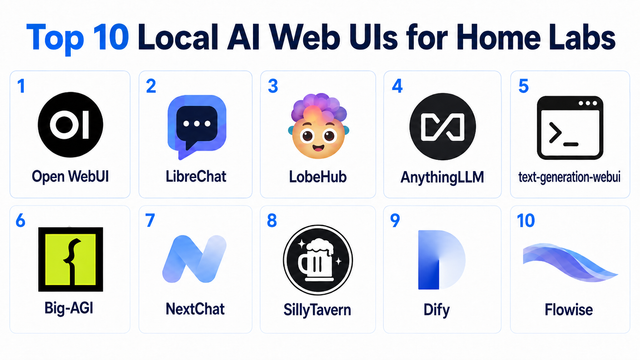
Top 10 Local AI Web UI for Home Labs In 2026
Compare 10 self-hosted local AI web UIs for home labs, covering Ollama support, RAG, agents, multi-user access, setup effort, and ideal use cases.
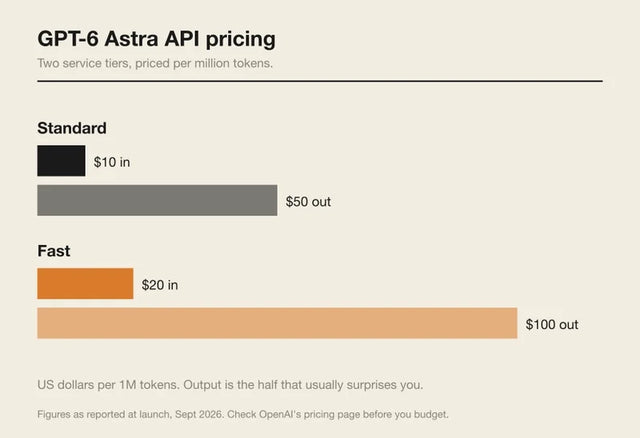
How Much Does GPT-6 Astra Cost Over Time? When Cloud AI Makes Sense vs Local AI
A practical GPT-6 Astra cost guide covering token usage, long-term AI workloads, cloud vs local tradeoffs, and why hybrid AI infrastructure matters.
GPT-6 Astra vs Local AI: Which Parts of an Agent Should Stay on Your Home Server?
GPT-6 Astra can stay in the cloud while your home server keeps files, memory, RAG, tools, permissions, and durable agent state local.


