
Claude Fable 5.1 Is Cheaper for AI Agents—Does That Change the Case for Local AI?


Claude Fable 5.1 makes frontier cloud agents materially cheaper, but it does not remove the case for local AI. Anthropic kept Fable's $10-per-million input and $50-per-million output prices unchanged while cutting cache reads to $0.25 per million tokens, 75% below Fable 5. That matters disproportionately for agents that repeatedly reuse tool definitions, repository context, project instructions, documents, and conversation history. The result is not "cloud wins." It is a stronger economic case for using frontier AI selectively.
That distinction matters because Fable 5.1 is a premium, hosted model rather than an open-weight model you can install on a home server. It makes the most sense for difficult coding, research, and long-horizon work where better reasoning can justify the API cost. Repetitive extraction, local RAG, private file processing, indexing, memory, logs, and always-on automation still have very different economics. For many agent systems, the more interesting architecture is therefore local infrastructure underneath a frontier reasoning layer.

What Changed in Claude Fable 5.1 and Mythos 5.1?
Anthropic released Claude Fable 5.1 and Claude Mythos 5.1 on September 1, 2026. Fable 5.1 is the generally available version of Anthropic's newest Mythos-level intelligence, while Mythos 5.1 exposes the same underlying model through more restricted trusted-access programs for approved cybersecurity and life-science organizations.
The official Claude Fable 5.1 overview positions the model around demanding reasoning and work that may continue for hours: large coding projects, multi-stage research, browser work, enterprise documents, managed agents, and workflows spanning several applications.
| Claude Fable 5.1 | Current Specification |
|---|---|
| Context window | 1 million tokens |
| Maximum output | 128K tokens |
| Standard input | $10 / 1M tokens |
| Standard output | $50 / 1M tokens |
| 5-minute cache write | $12.50 / 1M tokens |
| 1-hour cache write | $20 / 1M tokens |
| Cache read | $0.25 / 1M tokens |
| Thinking | Adaptive, always on |
The model is not simply a cheaper Fable 5. Standard input and output rates have not fallen at all. What changed dramatically is the price of reusing previously processed context.
Anthropic estimates that the new cache pricing lowers total cost by roughly 25% for typical Fable workloads and by as much as approximately 45% for highly agentic workloads. Those are Anthropic's estimates rather than universal savings guarantees, because the actual result depends on how much context is cacheable, how often it is reused, output volume, tool calls, reasoning effort, and whether the workflow repeatedly hits the same prompt prefix.
Why Is Claude Fable 5.1 Cheaper for AI Agents?
Fable 5.1 is cheaper for agents primarily because cached input became four times cheaper than it was on Fable 5. Fable 5 charged $1 per million cache-read tokens. Fable 5.1 charges $0.25.
That might sound like a narrow pricing change until you examine how an agent consumes tokens. A normal chatbot exchange may see a prompt once. An agent can repeatedly revisit the same large block of information while it plans, calls tools, evaluates results, fixes mistakes, and continues working.
Repeated agent context

System instructions
Tool definitions
Repository map
Project requirements
Persistent rules
Conversation history
       |
       v
     CACHE
       |
  +----+----+----+----+
  |    |    |    |    |
Step 1 2    3    4    5...
  |    |    |    |    |
Tool  Tool Verify Retry Final
The Claude prompt-caching documentation explains that caching can reuse stable prompt prefixes instead of processing the same large system prompts, documents, or growing conversation history at the full input rate on every request.
This fits agent workloads unusually well. Tool schemas often remain unchanged. Project instructions remain unchanged. Large portions of a codebase summary or research corpus remain unchanged. The conversation grows, but much of the beginning remains reusable.
Fable 5.1 also allows effort to be adjusted per message without necessarily throwing away the useful cached prefix. That creates another economic lever: the system can spend deeper reasoning on the steps that deserve it rather than treating every turn of a long agent trajectory identically.
Why Does Prompt Caching Matter More for Agents Than Chat?
A useful way to think about agent cost is that one user request can become many model requests.
Suppose a coding agent begins with 100,000 tokens of stable system instructions, tools, repository context, and project guidance. It then performs 20 model turns while inspecting files, changing code, testing, and verifying the result.

If that same 100K prefix is read from cache 20 times, the workflow generates about two million cache-read tokens.
| Cache Read Example | Fable 5 | Fable 5.1 |
|---|---|---|
| Repeated cached context | 2M tokens | 2M tokens |
| Cache-read rate | $1 / MTok | $0.25 / MTok |
| Cache-read cost | $2.00 | $0.50 |
This example deliberately isolates cache reads. It does not include the initial cache write, newly added input, generated output, search, tool infrastructure, or other charges. Its purpose is to show why the pricing change compounds when an agent repeatedly returns to the same context.
Now extend that pattern from one task to hundreds of coding jobs, research runs, document workflows, or autonomous agents. A relatively small change in one part of the token bill can become meaningful at scale.
This is also why cost per million tokens is increasingly a weak way to compare AI agents.
The more useful metric is cost per completed task.
Why Is Cost per Completed Task More Important Than Token Price?
A cheaper model is not necessarily cheaper if it needs more attempts to finish the work. Agent workflows amplify mistakes because a poor decision can produce additional tool calls, more context, retries, debugging steps, and another round of reasoning.
A more capable but more expensive model can sometimes win economically by finishing the task in fewer steps.
| Agent Behavior | Effect on Total Cost |
|---|---|
| Correct plan on first attempt | Fewer downstream calls |
| Good tool selection | Less unnecessary execution |
| Finds root cause rather than symptom | Fewer repair loops |
| Maintains long-task coherence | Less repeated analysis |
| Fails and retries | More input, output, and tool usage |
| Reads excessive context | Larger recurring token footprint |
Anthropic is explicitly positioning Fable 5.1 around this type of long-running efficiency. Its own launch material highlights multi-hour agent work, large codebase changes, research, document-heavy workflows, recovery after failed steps, and unattended managed agents.
Early customer comments published by Anthropic also repeatedly emphasize lower cost per completed task, fewer tokens, or reduced supervision. Those reports are useful signals, but they are vendor-selected customer evidence rather than independent benchmarks and should be interpreted accordingly.
The deeper implication is that a local-versus-cloud comparison cannot simply divide a GPU price by an API token price. You need to understand the shape of the work.
Does Cheaper Cache Make Fable 5.1 Cheaper Than Local AI?
For occasional high-value reasoning, it can make cloud AI much more attractive. For high-volume routine work, local AI can still have the stronger cost structure. The answer depends less on the model name than on how often the job runs, how private the data is, how much context it carries, and whether a frontier model materially improves the final result.
| Workload | Likely Starting Point | Why |
|---|---|---|
| Difficult one-off coding problem | Fable 5.1 / cloud | Frontier capability can outweigh API cost |
| Complex research synthesis | Fable 5.1 / cloud | High-value reasoning and large context |
| Rare architecture review | Cloud | Hardware would otherwise sit idle |
| Daily document classification | Local | Repeated predictable workload |
| Embedding generation | Local | Does not normally need frontier reasoning |
| Private RAG retrieval | Local | Keep retrieval close to private files |
| Routine metadata extraction | Local | High volume, relatively simple inference |
| Long-running coding agent | Hybrid | Local context and tools plus frontier escalation |
| Always-on personal agent | Hybrid | Persistent local state with selective cloud reasoning |
This is consistent with the workload-first approach in our local and cloud AI cost analysis. A few expensive requests each week and millions of repetitive inference steps every month produce completely different break-even calculations.
Fable 5.1 shifts that boundary toward the cloud for some agent tasks. It does not erase the boundary.
Which AI Agent Workloads Still Make More Sense Locally?
Local AI remains strongest when the work is frequent, private, relatively predictable, or tightly connected to files and services already inside the local environment.
Most agent workflows also contain many steps that do not require a frontier model at all.
| Agent Step | Local Model / Server Fit |
|---|---|
| Watch a folder for new files | Strong |
| OCR and preprocess documents | Strong |
| Create embeddings | Strong |
| Retrieve relevant RAG chunks | Strong |
| Classify and tag files | Strong |
| Extract structured fields | Strong |
| Summarize routine records | Strong with an appropriate local model |
| Manage agent state and logs | Strong |
| Solve unusually difficult reasoning problem | Frontier API often stronger |
| Final high-stakes verification | Frontier model may justify the cost |
That distinction becomes especially important in RAG. The expensive reasoning call is only the final layer. Before it happens, the system may need to monitor directories, parse PDFs, OCR scans, generate embeddings, update a vector database, enforce permissions, retrieve candidate chunks, and build a smaller context package.
A private AI assistant built around local files and retrieval can keep all of that data-side work under local control and call a frontier model only when the final question actually warrants it.
Cheaper Claude inference makes that architecture easier to justify, not harder.
What Should Stay on a Home Server When Claude Does the Hard Reasoning?
If a frontier model is better at difficult reasoning, the home server does not need to compete with it. Its role can be to own the persistent environment surrounding the model.
LOCAL SERVER / NAS

Private files
Document archive
RAG index
Embeddings
Agent memory
Credentials
Task state
Logs
Artifacts
Backups
       |
       | selected context
       | difficult task
       v

CLAUDE FABLE 5.1

Deep reasoning
Complex coding
Research synthesis
Root-cause analysis
Final verification
       |
       v

LOCAL SERVER / NAS

Store result
Update state
Preserve artifacts
Continue workflow
This architecture separates intelligence from state.
The frontier model can change next month. The local files do not have to. Fable can be replaced by a future Claude model, a different API provider, or a local model that eventually becomes capable enough. The agent's project files, indexes, task history, credentials, tool configuration, generated artifacts, and backups remain durable assets.
That is also why recent local-first agent systems are paying much more attention to persistent state. Our look at Perplexity Portable Computer's local agent architecture covers the same shift from thinking only about model placement toward thinking about the entire environment in which an agent works.
For ZimaSpace, this is the durable role of local infrastructure. A personal server does not need to replace Claude Fable 5.1. It can own everything that should remain stable when the reasoning model changes.
How Can a Local Agent Gateway Use Fable 5.1 Only When Needed?
A hybrid agent becomes more efficient when model selection is a routing decision rather than a permanent commitment.
A local gateway can classify incoming work and decide whether a task needs an inexpensive local model or a premium frontier model.
Incoming task
     |
     v
Local agent gateway
     |
     +-- Simple / repetitive?
     |       |
     |       v
     |   Local model
     |
     +-- Private preprocessing?
     |       |
     |       v
     |   Local model + local files
     |
     +-- Difficult reasoning?
     |       |
     |       v
     |   Fable 5.1
     |
     +-- Final result
             |
             v
       Local state / storage
The exact routing policy can consider complexity, privacy, context size, latency, user importance, budget, or the consequences of getting an answer wrong.
This is one reason a self-hosted agent gateway is increasingly useful. Our guide to running OpenClaw as an AI agent gateway shows how an always-on local service can connect agent workflows to multiple model providers rather than treating one model as the entire system.
The strategy can be simple:
| Routing Rule | Execution |
|---|---|
| Routine file classification | Local |
| Private retrieval | Local |
| First-pass summary | Local |
| Hard debugging problem | Fable 5.1 |
| Novel architecture decision | Fable 5.1 |
| Final verification of important work | Fable 5.1 or another frontier model |
Fable 5.1's lower cache-read cost makes the premium escalation path less expensive when the agent needs to remain in a long-running context. The local layer keeps the high-volume base load from becoming premium-model usage in the first place.
Does Fable 5.1 Make Cloud AI More Private?
Fable 5.1 is still a hosted model, so it should not be described as a local privacy solution. Anthropic does, however, appear to be moving its enterprise data architecture toward more customer-controlled options.
The Fable product page says use of Fable requires 30-day data retention for safety monitoring by default. Eligible Enterprise customers can currently receive zero-data-retention treatment while Anthropic prepares Enterprise Frontier Safeguards.
Anthropic says that under the planned Enterprise Frontier Safeguards model, eligible customers will be able to keep data in customer-controlled cloud infrastructure, with human review performed by the customer by default rather than by Anthropic.
This creates a broader continuum rather than a binary privacy choice:
Most local control
      |
      v
Fully local
      |
Private LAN / home server
      |
Customer-controlled cloud
      |
Managed cloud AI
      |
      v
Most provider-managed
These approaches solve different problems. A local NAS is useful when files should stay inside a private environment and remain available to local applications. Customer-controlled cloud infrastructure is more relevant to organizations that want frontier-scale managed models while keeping stronger control over data residency and review.
Fable 5.1 does not make those architectures interchangeable. It does show that the cloud side is also evolving in response to demands for greater control.
Why Are Fable 5.1 and Mythos 5.1 the Same Model With Different Access?
Claude Fable 5.1 and Claude Mythos 5.1 share the same underlying model and core specifications. The important difference is the safeguard and access environment around that intelligence.
Claude Mythos 5.1 is currently available only to vetted organizations through trusted-access programs aimed at advanced cybersecurity and life-science work. Fable 5.1 exposes the same underlying capabilities more broadly but adds safeguards that restrict or reroute certain high-risk requests.
| Fable 5.1 | Mythos 5.1 | |
|---|---|---|
| Underlying model | Same | Same |
| General availability | Yes | No |
| Cyber / biology safeguards | Broader safeguards | Reduced for approved use cases |
| Access model | Normal eligible Claude users / developers | Vetted organizations |
| Base API pricing | $10 input / $50 output per MTok | Starts at the same rates |
This is relevant beyond Anthropic because it demonstrates another important AI-infrastructure principle: model capability and access policy are separate layers.
The same model can be exposed differently depending on who is using it, what tools are connected, what the environment allows, and what safeguards are required.
Local agent systems face a similar problem. Running a model locally should not automatically give every agent unrestricted access to shell commands, credentials, backups, cameras, or every file on a NAS. The model is one layer; permissions and policy are another.
Do Long-Running Frontier Agents Still Need Local Infrastructure?
Probably more than ordinary chatbots do.
Anthropic is explicitly positioning Fable 5.1 for work that can continue for hours or longer. A long-running agent naturally produces more state than a question-and-answer interface:
- working files,
- tool outputs,
- checkpoints,
- logs,
- test results,
- generated artifacts,
- task history,
- retrieval indexes,
- credentials and configuration,
- and backups.
The API model does not need to own those assets.
A local server or NAS can provide a stable workspace and storage layer even when the reasoning engine is remote. That separation becomes more valuable as agents grow more autonomous because the user needs somewhere independent of the model provider to inspect what happened, preserve outputs, restore previous states, and continue the task after an outage or model change.
This also avoids tying the whole system to whichever frontier provider happens to have the best model this month.
Does Claude Fable 5.1 Change the Future of Local AI?
Yes—but mainly by weakening the idea that every inference step needs to be local to make a local-first system worthwhile.
The lower cache-read price makes Fable 5.1 more economical for exactly the workflows that have historically been expensive in the cloud: long-running agents carrying large amounts of repeated context. Better agent performance can also reduce retries and supervision, pushing the cost-per-task equation further toward frontier APIs for difficult work.
But inference is only one layer of an agent.
The user may still want to own:
- private documents,
- code repositories,
- RAG indexes,
- local model runtimes,
- agent memory,
- credentials,
- task state,
- automation schedules,
- logs,
- artifacts,
- and backups.
This is why cheaper cloud intelligence can actually make local AI infrastructure more useful. Once high-quality reasoning becomes easier to rent on demand, there is less reason for every local machine to reproduce frontier intelligence—and more reason to design a stable local environment that can use whichever intelligence is best for the task.
A practical hybrid stack can therefore treat local inference as the base load and Fable 5.1 as a premium reasoning layer:
LOCAL INFRASTRUCTURE
Files
RAG
Memory
Routine AI
Tools
State
Backups
      |
      | escalate only when useful
      v
FRONTIER AI
Fable 5.1
Hard reasoning
Complex coding
Research
Verification
      |
      v
LOCAL INFRASTRUCTURE
Persist result
Update memory
Continue automation
The long-term value of a home server is not that it permanently saves more money than every API. API prices will continue to fall, and frontier models will continue to improve.
Its more durable value is that it gives the agent a place to live that you control.
Models can become cheaper, stronger, or interchangeable. Your files, memory, tools, permissions, and accumulated agent state are much harder to replace.
FAQ: Claude Fable 5.1, Agent Costs, and Local AI
Is Claude Fable 5.1 cheaper than Claude Fable 5?
The standard input and output prices remain $10 and $50 per million tokens. The major reduction is cache reads, which fell from $1 per million tokens on Fable 5 to $0.25 on Fable 5.1. Anthropic estimates that this lowers typical workload costs by about 25% and highly agentic workloads by up to approximately 45%.
Why are Fable 5.1 cache reads so important for AI agents?
Agents repeatedly reuse large prompt prefixes such as system instructions, tool definitions, project context, codebase information, and conversation history. Prompt caching lets those repeated sections be read at a much lower rate instead of paying normal input pricing every time they appear.
Can Claude Fable 5.1 run locally?
No. Claude Fable 5.1 is a hosted Anthropic model and is not an open-weight model that can be downloaded into Ollama or llama.cpp. Local systems can still use Fable through a hybrid architecture where files, retrieval, state, and routine inference remain local while selected tasks go to the Claude API.
Is Claude Fable 5.1 cheaper than running a local LLM?
There is no universal answer. Fable can be economically attractive for occasional difficult tasks where frontier capability avoids retries or expensive hardware. A local model can be cheaper for high-volume, repetitive, always-on, or private workloads after the hardware has already been purchased.
What workloads should stay local even if Fable 5.1 gets cheaper?
Document indexing, embeddings, local retrieval, routine extraction, tagging, file monitoring, agent memory, logs, credentials, backups, and other high-volume or private tasks are strong candidates for local execution. Difficult reasoning and verification can then be escalated selectively.
What is the difference between Claude Fable 5.1 and Mythos 5.1?
They use the same underlying model. Fable 5.1 is generally available with additional cybersecurity and biology safeguards. Mythos 5.1 is restricted to vetted organizations through trusted-access programs that allow reduced safeguards for approved defensive security and life-science work.
Does Claude Fable 5.1 have a 1M-token context window?
Yes. Anthropic currently lists a one-million-token context window and a maximum output of 128K tokens. A large context window does not make every million-token request inexpensive, which is one reason prompt caching matters for workloads that reuse substantial context.
Should a coding agent use Fable 5.1 or a local model?
A hybrid approach can be stronger than choosing only one. A local model can handle repository retrieval, simple edits, classification, preprocessing, or repeated low-risk steps, while Fable 5.1 can be reserved for difficult debugging, architecture decisions, complex changes, or final verification.
Can OpenClaw use a local model and Claude in the same agent setup?
A self-hosted agent gateway can connect workflows to both local and cloud models, allowing routing based on complexity, privacy, or cost. The exact configuration depends on the gateway and model providers, but the architectural idea is to avoid sending every task automatically to the most expensive model.
Why would an AI agent still need a NAS or home server if Claude runs in the cloud?
The model is only the reasoning layer. A persistent local system can store private files, RAG data, agent memory, task state, credentials, outputs, logs, and backups. This lets the reasoning model change without forcing the user to move or rebuild the rest of the agent environment.

Recommended products

Tech & AI HUB
More to Read
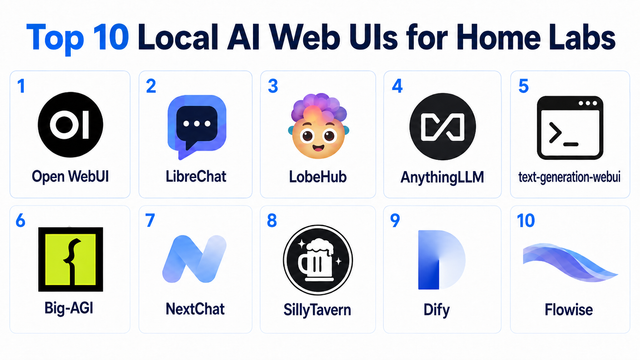
Top 10 Local AI Web UI for Home Labs In 2026
Compare 10 self-hosted local AI web UIs for home labs, covering Ollama support, RAG, agents, multi-user access, setup effort, and ideal use cases.
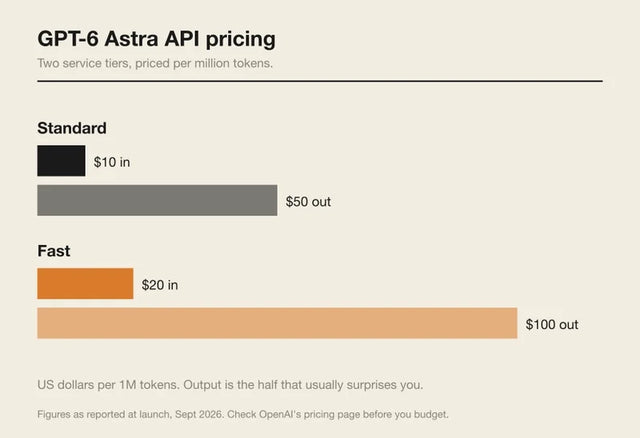
How Much Does GPT-6 Astra Cost Over Time? When Cloud AI Makes Sense vs Local AI
A practical GPT-6 Astra cost guide covering token usage, long-term AI workloads, cloud vs local tradeoffs, and why hybrid AI infrastructure matters.
GPT-6 Astra vs Local AI: Which Parts of an Agent Should Stay on Your Home Server?
GPT-6 Astra can stay in the cloud while your home server keeps files, memory, RAG, tools, permissions, and durable agent state local.


