
When Should Plex Use a Separate Storage or Database Host?


Use a separate host when storage capacity, maintenance, or failure isolation needs to scale independently from Plex compute; do not move the database merely for neatness.
Bulk media is naturally separable because it needs capacity and sequential throughput, while the Plex database and metadata are latency-sensitive state. A second host also introduces network reachability, permissions, and recovery ordering. The architecture is justified when those added dependencies solve a measured constraint that cannot be handled cleanly on one server.
Separate Bulk Media Before Latency-Sensitive State
Media files can live on NAS storage while Plex compute remains elsewhere, provided the network path has enough sustained throughput and reliable mounts. This is a lower-risk split than remote app data.
Storage should follow workload-specific storage choices, which supports keeping high-capacity sequential media separate from state that depends on low-latency random access.
Measure media throughput during peak playback and one large transfer. If the networked media path remains stable with headroom, the split has earned its complexity.
Keep the Plex Database Close to Compute by Default
Remote database or metadata storage adds network latency and another outage point to every state access. That can be a poor trade when the local SSD is not the bottleneck.
Database latency can change with performance sensitivity to storage latency, which is a reason to benchmark the state path before placing it behind a network filesystem.
Keep app data local to the Plex compute host unless a measured requirement outweighs the latency and recovery cost. The NAS media-center topology can still centralize bulk media without centralizing every state file.
Use a Separate Host When Failure Domains Must Differ
A storage host can be maintained or expanded independently, and a compute host can be replaced without moving the media pool. That separation is valuable when each role has a clear recovery procedure.
Splitting roles helps only when service dependencies are explicit enough to restart or replace one host without creating hidden state ownership across the network.
Document startup order, mount dependencies, and what local playback should do when the storage host is unavailable. If recovery requires manual path surgery, simplify the split.

Do Not Confuse a Separate Host With a Backup
Moving media to a NAS does not create a second copy. The remote storage can still be the only copy and therefore remains a single data-loss point.
Backup design should separate protection storage from primary storage, so design an off-device or independent recovery copy in addition to the topology split.
Test restore of Plex state and at least one representative media path without relying on the live storage host. The architecture is resilient only when storage separation and backup are both explicit.

Recommended products

NAS & Server Setup
More to Read
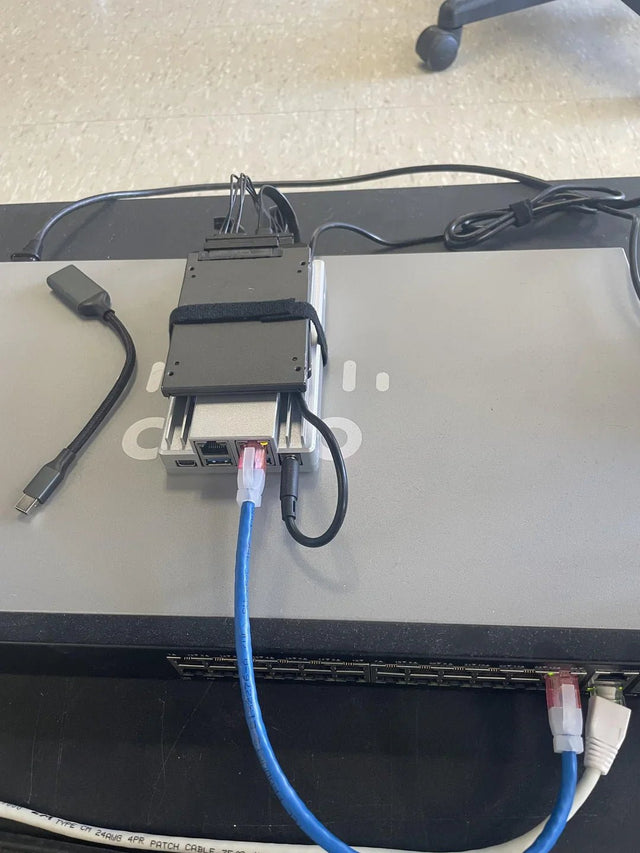
How AI-Like Analysis and Automation Change Jellyfin Storage and Compute Needs
Automation and adjacent AI analysis add scans, derived data, CPU/GPU work, cache, scratch space, and background scheduling beyond ordinary Jellyfin playback.
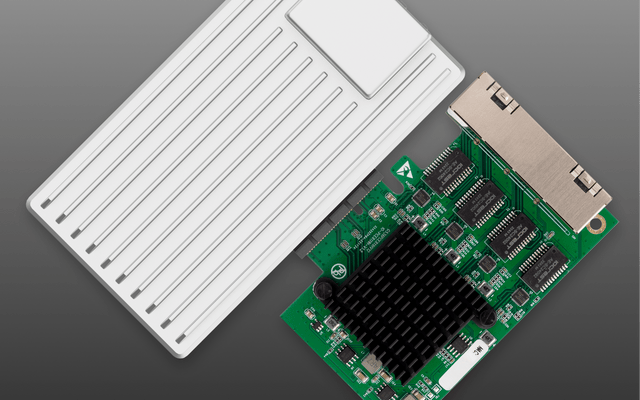
How to Integrate Jellyfin Into a Small Apartment or Rental Network
Build a rental-friendly Jellyfin network around stable local addressing, minimal wiring, quiet hardware, CGNAT-aware remote access, and reversible changes.
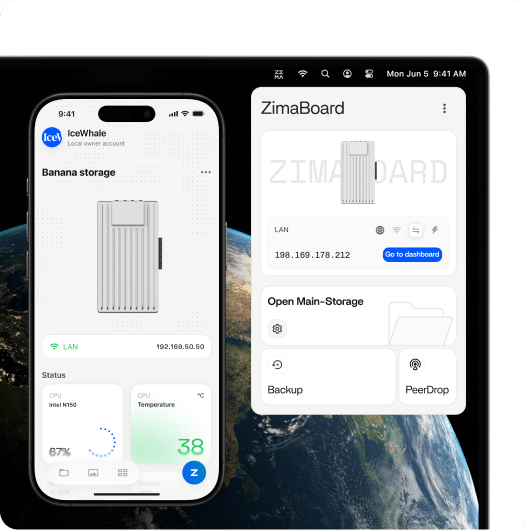
How Many Users and Background Jobs Should One Jellyfin Host Support?
Treat Jellyfin users and background jobs as one shared workload budget; capacity ends when playback latency, queues, or resource pressure becomes repeatable.


