
How to Build a Plex Setup for a Small Apartment or Rental Network


Build a rental-friendly Plex setup around one wired server path, quiet placement, separated data roles, and remote access that survives router limitations.
In a small apartment, the server shares space, power, Wi-Fi, and sometimes an ISP gateway with everyday life. The design should work without drilling, long cable runs, or risky changes to landlord-managed equipment. Start with the network controls you actually possess, then place compute and storage so local playback remains predictable, recovery stays possible, and every future addition has a named role.
Map the Rental Boundaries Before You Place the Server
Begin with the limits that cannot be solved by a faster server. Record who controls the ISP gateway, whether you can change DHCP or port-forwarding rules, where wired Ethernet is available, which outlets share a circuit, and how much continuous fan or drive noise the room can tolerate. Add lease restrictions on drilling, wall mounting, and permanent cable routes to the same list.
Classify the network as fully controlled, partly controlled, or effectively fixed. Full control means you can administer the primary router. Partial control often means your own router sits behind an ISP or building gateway. A fixed network may provide only Wi-Fi credentials. This classification determines whether the server can use a normal wired path, whether a second router would create an extra translation layer, and whether remote access must avoid inbound configuration.
Choose a stable shelf, cabinet edge, or small stand near the primary gateway, but do not trade quiet for trapped heat. The location passes only if power, ventilation, a short data cable, and routine access are available without turning a walkway into a cable route. If no location meets those conditions, reduce the hardware footprint or keep the system local-only rather than forcing a fragile installation.
Keep Plex on One Predictable Local Network Path
Connect the Plex host by Ethernet to the primary router or to one small switch attached to it whenever the rental allows. Let phones, tablets, streaming boxes, and laptops join through the nearest stable access point. This keeps the server side of every stream fixed, so a weak client connection can be separated from server or storage problems instead of being hidden inside an all-wireless path.
Avoid building the main route from a chain of wireless repeaters, powerline adapters, and a second routing layer unless a measured test proves that the compromise is necessary. If you add your own router, use access-point or bridge behavior when the upstream equipment and lease rules permit it. Otherwise, keep one routing boundary and accept the controls it provides rather than creating a double-NAT design that complicates discovery and remote reachability.
Validate the path during the apartment's busiest hour. Test a high-bitrate local stream while other residents are on calls or downloading, then repeat from the room farthest from the access point. Record playback starts, buffering, and link rate rather than relying on a speed test beside the router. The path passes when normal client locations remain stable without moving the server or restarting network equipment.
Separate Media, Plex State, and Temporary Work
Treat the Plex application state, media library, and temporary transcode directory as different data roles. Application state changes frequently and benefits from responsive storage because it contains the database, metadata, preferences, and history that make the server feel like the same installation after recovery. Media needs capacity and predictable reads. Transcode output is scratch data that can be recreated and should not consume the backup budget.
Keep the Plex service account read-only on finished media wherever the surrounding automation allows it. Give write permission only to designated import or maintenance workflows, ideally through a staging folder before files enter the main library. This reduces the chance that one automated task, container mount, or user mistake changes the only copy of a large media collection.
Back up irreplaceable personal videos and the application state according to their loss impact. Re-downloadable media can use a different protection level if the household accepts the rebuild time. Do not describe mirrored disks as the backup: redundancy may keep the service online after a drive failure, while a backup must also survive deletion, corruption, or a mistake on the primary system.

Choose Remote Access Based on the Router You Control
Remote playback is a network-ownership decision before it is a Plex setting. If you control the public-facing router and the ISP provides a reachable address, a carefully limited inbound rule may be possible. If the building gateway, carrier-grade translation, or lease policy blocks that route, repeated port changes will not create ownership you do not have.
Use an outbound-initiated private tunnel or overlay network only when every remote client that matters can use it and the account boundary is clear. Keep administrative access separate from ordinary viewing access, require distinct user identities, and avoid exposing a general management interface merely to make media playback convenient. If the client mix cannot support the private path, define the system as local-first instead of weakening the boundary.
Test from a genuinely external connection, not from the apartment Wi-Fi. Confirm sign-in, library loading, playback start, bitrate adaptation, and reconnection after the client changes networks. The remote path passes when it works without a manual router reset and without granting broader access than the viewer needs.
Validate Noise, Heat, Power, and Daily Apartment Use
Run the finished system through an evening that represents normal life: streaming, a library scan, other household network use, and closed windows or doors. Listen from the bed, couch, and work area. Check that exhaust air has room to leave and that the enclosure does not turn a quiet device into a warm, high-speed fan source after several hours.
Keep power and network cables against furniture edges or inside removable channels that do not damage the rental. A small battery backup can protect the application state from brief interruptions, but it needs ventilation and a load that matches its role. Do not place storage where a spill, kicked plug, or moved piece of furniture can disconnect it during a write.
The physical setup fails if routine cleaning requires unplugging the server, if drive vibration transfers into shared furniture, or if the heat is tolerable only with a door left open. Fix the topology by moving or separating roles before buying more performance. A slightly smaller server in the right location is more dependable than a powerful box the household keeps switching off.
Expand Only When the Apartment Workflow Demands It
Expand storage when free-space forecasts and media growth show a real capacity date, not when an empty bay looks available. Add compute when measured transcoding, library work, or another service repeatedly competes with playback. Improve the client network only after tests show that the bottleneck lives on that segment rather than at the server or storage tier.
A second box should introduce a durable role such as media storage, backup destination, or separate compute worker. It should not exist merely to move the same uncertainty into another corner of the apartment. Document its power, network, noise, permissions, and recovery dependency before it joins the system.
Stop expanding when the lease prevents a safe cable path, the router boundary blocks the required service, or the room cannot absorb additional heat and noise. At that point, change the operating promise—fewer simultaneous users, local-only access, scheduled heavy work—or move part of the workload outside the apartment rather than treating physical limits as a hardware-shopping problem.
Final Setup Rule
A rental-friendly Plex setup is complete when local playback, recovery, and normal apartment use remain stable without permanent building changes; expansion begins only after a measured trigger names a new role.

Recommended products

NAS & Server Setup
More to Read
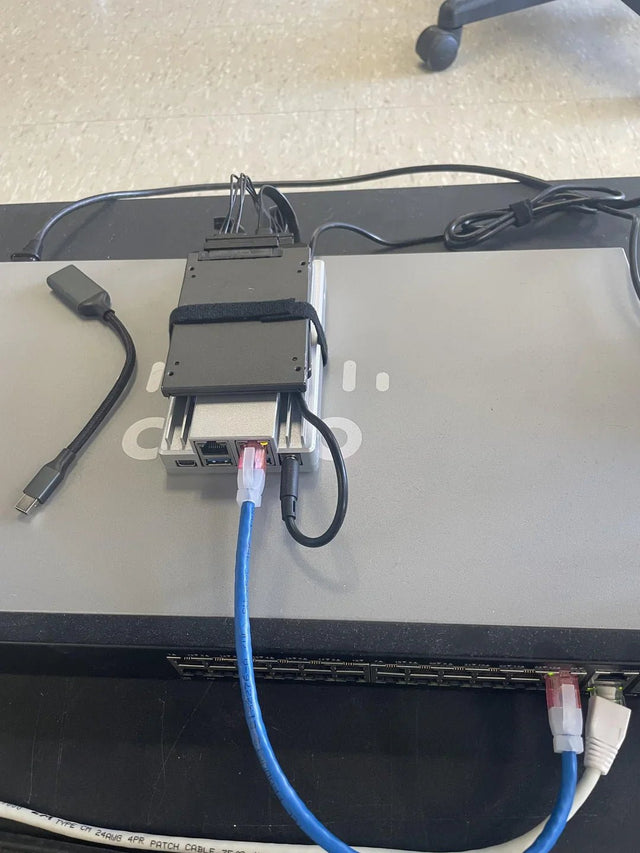
How AI-Like Analysis and Automation Change Jellyfin Storage and Compute Needs
Automation and adjacent AI analysis add scans, derived data, CPU/GPU work, cache, scratch space, and background scheduling beyond ordinary Jellyfin playback.
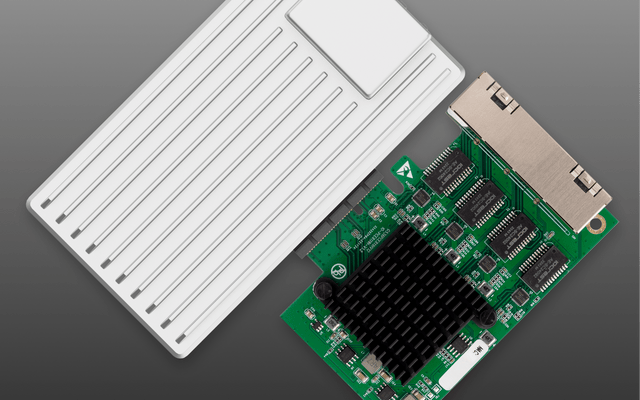
How to Integrate Jellyfin Into a Small Apartment or Rental Network
Build a rental-friendly Jellyfin network around stable local addressing, minimal wiring, quiet hardware, CGNAT-aware remote access, and reversible changes.
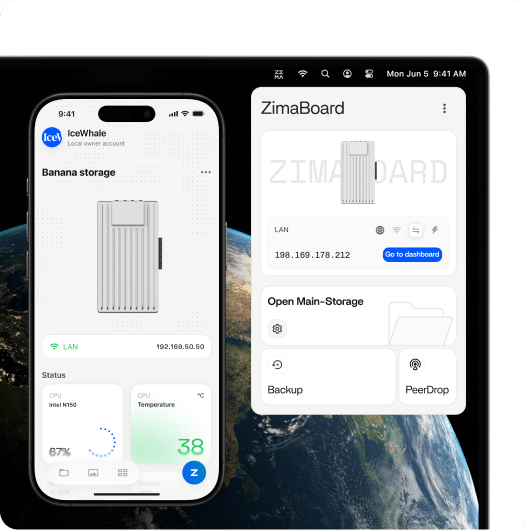
How Many Users and Background Jobs Should One Jellyfin Host Support?
Treat Jellyfin users and background jobs as one shared workload budget; capacity ends when playback latency, queues, or resource pressure becomes repeatable.


