
The Beginner Home Server Setup That Still Works After the First Drive Upgrade


A beginner home server survives its first drive upgrade when storage can grow without changing the paths, ownership, or recovery plan applications already use.
The first disk often begins as one convenient location for downloads, app databases, media, backups, and shared files. That layout works until capacity runs low or redundancy becomes necessary. An upgrade-ready setup separates these roles before the second drive arrives, so adding capacity becomes a controlled storage change rather than a server rebuild that breaks mounts, permissions, containers, and household access.
Define What the First Drive Upgrade Must Accomplish
“Add another drive” can mean three different things: increase usable capacity, add protection against one disk failure, or move an active workload onto faster storage. One new disk cannot always deliver all three. A mirror may improve availability but not double usable capacity; a separate archive disk adds capacity but does not protect the first disk; an SSD tier improves latency but does not replace backup.
A NAS buying guide recommends deciding around capacity, bay count, networking, application support, and future growth as connected choices. That whole-system growth model is the right first step because the upgrade method must match the reason storage is changing.
Write one upgrade contract before buying the drive: the new storage must provide a named amount of usable space, preserve the current app paths, tolerate a defined failure, and finish within an acceptable maintenance window. If those requirements conflict, the server needs a larger architectural change rather than one extra disk.
Use Stable Mount Points Instead of Disk-Specific App Paths
Applications should refer to a storage role, not to whichever device happened to be called /dev/sdb during the first installation. Device names may change after a reboot, controller change, or new disk connection. A service mapped directly to an unstable device path can open the wrong filesystem or start against an empty folder.
A Linux storage guide recommends mounting filesystems by UUID because raw device names are not guaranteed to remain stable when several disks or USB devices are present. Its persistent UUID mount workflow lets a role such as /srv/media remain consistent even when the kernel discovers drives in a different order.
Create role-based paths such as /srv/appdata, /srv/shared, /srv/media, and /srv/backups. The ZimaSpace explanation of UUID mounts and stable app paths adds the next requirement: the expected filesystem must mount before the application starts, and failure should be visible rather than silently redirected to the boot disk.
Separate the Boot System, App State, and User Data
The boot drive should contain the operating system and replaceable application code. Persistent app state includes databases, configuration, indexes, account records, and secrets. User data includes the files people recognize and cannot simply regenerate. These layers may begin on one physical SSD, but they should not share one undocumented directory tree.
Better Stack explains that persistent container data must outlive replacement of the container itself. That independent data-lifecycle principle makes the first drive upgrade easier because the app can keep using the same host path while the underlying dataset is copied, mounted, or moved.
| Layer | Initial location | Upgrade-safe rule |
|---|---|---|
| Operating system | Internal boot SSD | Reinstallable without moving household data |
| Application state | Dedicated persistent path | Backed up consistently before migration |
| User files | Named capacity path | Move behind the same stable mount point |
| Cache and temporary files | Limited fast-storage path | Rebuildable and excluded from migration where possible |
| Backup copies | Separate disk or system | Still available if the live upgrade fails |

Choose an Expansion Model Before the Initial Pool Is Created
The first pool design determines which upgrades remain simple. Some layouts grow by adding another disk to the existing group. Others grow by adding a complete new group, replacing every disk with a larger model, or rebuilding and restoring onto a new layout. A single-disk filesystem has a different path from a mirror, parity array, pooled independent disks, or separate app and archive volumes.
An independent storage guide outlines three common ZFS growth paths: add another vdev, replace drives with larger ones, or widen a supported RAIDZ vdev. Its multiple expansion-path comparison illustrates the broader rule: “expandable” is not one universal operation, and the first topology must support the upgrade the beginner is most likely to perform.
Document whether the next drive will join an existing pool, become an independent dataset, receive a replicated copy, or replace a smaller disk. Do not let an app installer create the only copy of persistent data inside a pool whose future expansion behavior has not been checked.
Reserve Free Space and Temporary Capacity for the Migration
A drive upgrade may need more working space than the final data size suggests. Copying data safely can require the old and new versions to coexist. Pool expansion may trigger balancing, parity work, metadata updates, or long rebuild activity. Nearly full source and destination filesystems also make troubleshooting harder.
A RAID expansion article compares adding disks, replacing drives, and expanding different array types, showing that capacity may remain unavailable until the required rebuild or final replacement completes. That delayed-capacity expansion behavior is why a beginner should not wait until the original disk has no practical free space.
Set an upgrade trigger before the server becomes urgent to use. Begin planning around 70–75 percent sustained use, then calculate current data, expected growth during the migration, snapshots or versions, application databases, and a working reserve. The exact threshold depends on the filesystem and workload, but emergency expansion is always the least forgiving option.
Make the Upgrade a Tested Maintenance Event
Before changing storage, stop unnecessary writes, export the storage map, record disk identities, and create a fresh independent backup of critical data and app state. Restore at least one representative file and one application configuration before trusting the copy. Then make one storage change at a time.
TechTarget’s backup-testing tutorial emphasizes restoring data and checking that the resulting workload actually functions, because the presence of backup files alone does not prove recovery. That restore-and-function test should be completed before a drive is reformatted, removed, or made part of a new pool.
After the change, verify the expected mount, ownership, free space, app data, shared folders, backup schedules, and restart behavior. Keep the old drive unchanged until the server has completed multiple reboots and normal household use from the new layout. The ZimaSpace safe NAS storage expansion guide covers the later rebuild and expansion stage.
Know Whether to Add a Drive, Replace One, or Move to a Storage-First NAS
Add a separate drive when one dataset needs more capacity and independent failure is acceptable. Replace drives when the existing topology supports capacity growth after sequential replacement. Add bays or a larger pool when redundancy and usable capacity must grow together. Move storage into a dedicated NAS when applications and household data now need different maintenance, cooling, and recovery boundaries.
ServeTheHome demonstrates how a compact one-liter PC can operate as a dedicated server with planned memory, storage, and networking rather than as a general personal computer. That dedicated-node model supports a two-stage upgrade: preserve the original compute node while a storage-first system takes ownership of larger datasets.
| Upgrade signal | Likely next move | Stop boundary |
|---|---|---|
| One replaceable media folder is growing | Add an independent capacity disk | Do not treat it as redundant storage |
| The current protected pool needs more capacity | Use its supported add-or-replace expansion path | Do not improvise across unsupported controllers or enclosures |
| Apps are stable but family storage is growing | Keep compute and move data to a storage-first NAS | Do not make app maintenance the storage maintenance window |
| The boot disk contains apps and irreplaceable files | Separate layers before adding capacity | Do not expand the undocumented layout in place |
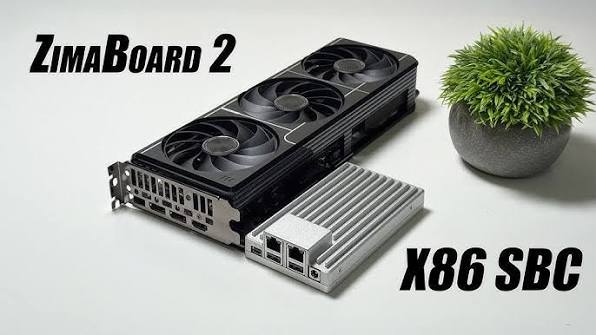
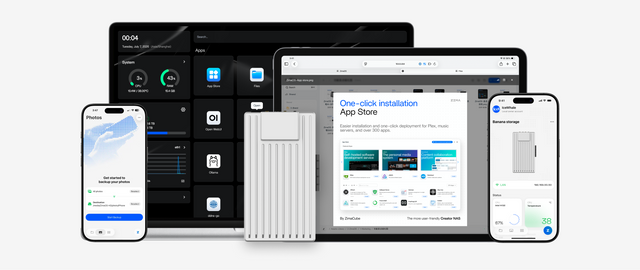
The ZimaSpace guide on building a first server around three services helps identify which data roles must remain stable. A ZimaBoard 2 Mini Home Server fits a compact app-first beginning with deliberate attached storage. A ZimaCube 2 AI NAS is the clearer next architecture when integrated multi-drive capacity and storage-first recovery have become permanent requirements.
The upgrade-safe setup is not the one that predicts every future disk. It is the one that lets storage change while application paths, household access, and the recovery plan remain understandable.

Recommended products

NAS & Server Setup
More to Read
A Local RAG Setup for Research Papers, Notes, and Private Documents
Keep original documents authoritative, make indexing repeatable, require citations, and separate replaceable models from private source data.
Why Are Developers Using a Gateway Node for Private DNS, VPN, and Test Apps?
A gateway node gives private apps one controlled name and access path, while compute nodes stay unexposed and replaceable.
How to Build a Reproducible App Stack With Compose Files, Secrets, and Persistent Data Separated
Keep Compose definitions portable, secrets protected, and app data independently backed up so the stack can be rebuilt on a clean host.


