
Thanksgiving Family Media Server: Share Old Photos and Home Videos on the Big Screen


Build the Thanksgiving viewing experience around a curated access library, a tested TV client, and a server that keeps original family media separate.
Thanksgiving brings several generations into one room, making it a natural time to revisit photographs and home videos that usually remain scattered across phones, laptops, old drives, and cloud accounts. The practical goal is not to digitize an entire family history before dinner. It is to prepare a small, private collection that plays reliably on the big screen, lets relatives add missing context, and can later grow into a recoverable family archive.
Why Thanksgiving Is a Good Time to Revisit Family Photos and Home Videos
Old family media becomes more useful when the people who recognize it are present. A photograph may have a date but no names; a home video may show a house, celebration, or relative that younger family members cannot identify. Watching together gives the family a chance to recover those details while the story is still available.
That does not mean placing every scanned photograph and raw video transfer into one endless slideshow. Build a short viewing collection around material that can start a conversation: earlier Thanksgivings, grandparents and great-grandparents, childhood scenes, weddings, graduations, family trips, and relatives who cannot attend this year.
Treat the gathering as an access event rather than a preservation deadline. The family should be able to watch the selected copies without risking the only version of an irreplaceable file.
Start With a Small Thanksgiving Collection, Not the Entire Archive
Begin by deciding how the collection will be used. A television playlist shown after dinner has a different job from a complete historical archive. It should be short enough to hold attention, understandable without someone navigating folders, and safe to leave on the shared screen.
A practical first collection might include 50 to 100 photographs and 20 to 40 minutes of video. Those numbers are not preservation limits; they are a way to keep the event manageable. Prioritize material that is unique, emotionally important, easy to explain, or likely to help relatives identify people and places.
Create a simple selection sheet with four fields: filename, approximate date, people or event, and whether the file is ready for the television. This separates the editorial decision from the technical work. If a file is damaged, private, too long, or still needs conversion, leave it out of the event playlist without removing it from the archive plan.
Gather Media Without Turning the Holiday Project Into a Digitization Marathon
Collect existing digital files from phones, computers, external drives, USB devices, scanned-photo folders, and earlier video transfers. Copy them into a temporary intake folder rather than moving the originals. Each source should have its own subfolder so a duplicate or mislabeled file can still be traced back to the device or person that supplied it.
THANKSGIVING_INTAKE/
├── parents-phone/
├── grandparents-scans/
├── old-laptop-export/
├── vhs-transfers/
└── relatives-upload/
If most of the collection still exists only on VHS, MiniDV, film, or paper, treat digitization as a separate project. The ZimaSpace guides to digitize old family videos and preserve old photos and tapes cover safe handling, preservation masters, and access copies in greater depth.
Do not force fragile media through failing equipment simply to meet the Thanksgiving date. Use the material that is already safely accessible, then continue the preservation work after the holiday. Independent preservation guidance also emphasizes making digital copies of photographs, film, audio recordings, and videotapes rather than relying on aging physical formats alone; Consumer Reports summarizes that broader family-media preservation process.
Separate the Durable Archive From the Thanksgiving Viewing Library
The server needs at least two data roles. The durable archive holds the best available originals, preservation masters, and identifying notes. The viewing library holds copies prepared for browsing, slideshows, and television playback. A third area can hold unreviewed contributions from relatives.
FAMILY_MEDIA/
├── ARCHIVE/
│   ├── PHOTO_MASTERS/
│   ├── VIDEO_MASTERS/
│   └── NOTES_AND_METADATA/
├── ACCESS_LIBRARY/
│   ├── FAMILY_PHOTOS/
│   └── HOME_VIDEOS/
├── THANKSGIVING_2026/
│   ├── PHOTO_SELECTION/
│   └── VIDEO_PLAYLIST/
└── CONTRIBUTIONS_PENDING/
This separation prevents an edited clip, compressed television copy, or accidental deletion from replacing the best source file. It also keeps the media application from treating a temporary upload folder as an authoritative library. The broader family media archive can remain stable even if the household later changes its photo or streaming software.
Give each data role its own protection rule. Archive masters need independent backup and restricted write access. Access copies can be regenerated from the masters. Temporary uploads can be deleted after review. Media-server thumbnails, transcode caches, and downloaded artwork are rebuildable application data and should not receive the same retention priority as family originals.
Organize the Selection So the Big Screen Tells a Story
A television audience cannot comfortably browse a deep folder tree. Arrange the Thanksgiving selection in a sequence that makes sense without an administrator explaining every click. Chronological order works well for a family timeline, while event-based groups work better for holidays, weddings, school years, and trips.
Rename only the curated copies if the archive names already follow a preservation system. Short titles such as 1978 Grandparents' First House or 1996 Thanksgiving Dinner are easier to read on a television than camera-generated filenames. Keep uncertain information visible with labels such as circa 1980 or person unknown instead of inventing precision.
Use a notes file or metadata field to record who identified a person, place, or date during the gathering. After Thanksgiving, promote confirmed details into the durable archive. This turns the shared viewing session into a controlled metadata workflow rather than leaving new information in handwritten notes or chat messages.
Create TV-Friendly Access Copies Without Replacing the Masters
Televisions and streaming clients differ in the containers, codecs, audio formats, resolutions, and orientations they can play directly. A file that works on a laptop may fail on a television or force the server to transcode it during playback. Build a representative test set before converting the whole collection.
For older or unusual home-video files, an MP4 access copy using H.264 video and AAC audio is a practical compatibility starting point, not a replacement for the original. H.264 can be carried in MP4 and is commonly paired with AAC audio, as explained in Videomaker's overview of the H.264 video format. Actual support still depends on the television or client, so test the exact device.
Check portrait phone videos, old 4:3 footage, quiet audio, clips with unusual frame rates, and any file that previously failed to open. If the client can direct play them, preserve that path. If it cannot, create a separate access copy or allow the server to transcode, then verify that playback starts quickly and remains synchronized.
Choose USB, Casting, HDMI, or a Home Media Server
The simplest topology that reliably serves the event is usually the best choice. A one-time slideshow does not automatically justify a permanent server, while a growing multi-user archive should not depend on one phone remaining connected to the television all evening.
| Playback path | Best fit | Validate before Thanksgiving | Stop boundary |
|---|---|---|---|
| USB drive to TV | Small, fixed selection | File system, codec support, order, remote control | Stop using it when updates and multiple viewers become difficult |
| Phone or tablet casting | Photos already organized in one compatible app | Same network, app support, battery, interruption behavior | Stop when the phone becomes the only controller or source |
| Laptop over HDMI | Fast local presentation with manual control | Adapter, audio output, display scaling, power | Stop when the library needs to remain available after the event |
| Home media server | Growing archive, repeat viewing, several clients or users | Library scan, direct play, permissions, network, recovery | Split compute and storage only when measured workloads require it |
Casting and cable connections are both valid short-term paths. Lifewire's comparison of ways to stream photos and video to a TV shows why the available app, television, adapter, and network determine which path works.
If the family wants the same collection available after Thanksgiving, a server becomes the more durable role. The detailed ZimaSpace guide to build a home media server covers the full storage-to-screen path, including app state, folders, clients, transcoding, permissions, and recovery.
Build the Private Library Around Plex or Jellyfin
Install one media service and give it read access to the access library, not unrestricted access to every archive and backup location. Keep its configuration, database, artwork, and user state on persistent application storage. Keep temporary transcode files in a rebuildable cache area so a busy viewing session cannot fill the archive volume.
Create a dedicated library for family photos and home videos rather than mixing them with commercial movies and television shows. Add the curated Thanksgiving folder as a collection or playlist inside that library. The exact naming depends on the chosen application, but the topology should remain the same:
ARCHIVE MASTERS ──create copies──> ACCESS LIBRARY
                                      │
                                      ▼
                               PLEX OR JELLYFIN
                                      │
                         local network / user profile
                                      │
                                      ▼
                              LIVING-ROOM TV
Start with local playback. Confirm that the television can open the library, display the intended titles, resume video, and move through the playlist without administrator access. Remote sharing can be added later as a separate identity and network decision; it should not delay the local Thanksgiving setup.
Test the Big-Screen Path Before Guests Arrive
A successful library scan does not prove that the event will work. Test the entire path from storage to server, network, client app, television, and speakers. Run the test from the same seat, remote control, and household network that will be used during the gathering.
- Open the television app with an ordinary viewing account.
- Play the first, middle, and last items in the collection.
- Check portrait photos, 4:3 video, modern widescreen clips, and long filenames.
- Confirm that voices are audible at the normal room volume.
- Test pause, skip, resume, and return-to-library behavior.
- Run a background library scan or backup and watch for stuttering.
- Keep a fallback path, such as a laptop and HDMI cable, ready.
Connect the server by Ethernet where practical, then test the television on its real connection. If one client fails while other devices play correctly, fix or replace that client path before redesigning the server. The ZimaSpace setup for a family media server with multiple clients explains how to keep the television as a replaceable endpoint instead of the center of the archive.
Let Relatives Contribute Without Opening the Whole Archive
Family contributions should enter through a controlled intake path. Give relatives an upload folder, shared album, or temporary transfer method that does not expose archive masters, backups, application settings, or other private household files.
Use separate identities for administrators, ordinary viewers, children, and contributors. A shared television should open with a limited viewing profile, not the server owner's administrator account. The ZimaSpace explanation of Plex family users and permissions provides a deeper route for households using Plex.
Review every contributed file before promoting it into the access library. Check duplicates, dates, people, privacy, and whether the uploader intended the item for the shared screen. Record the source, then move approved media into the durable archive and generate a viewing copy if required.
Protect Private Media Before It Appears on the Television
The television is a shared display, so permission mistakes become visible immediately. Do not point its account at the entire photo directory. Use a dedicated Thanksgiving collection and preview every item in playback order.
Keep financial documents, medical records, screenshots, private albums, raw phone imports, and unreviewed child photos outside the media application's visible paths. If the same server stores family documents and media, separate them by dataset, permission group, and service access rather than relying on a folder name alone.
Remote access should remain off unless the family has a defined reason, individual accounts, and a tested private connection. A service that works locally does not need to expose its administration interface to the public internet merely so one distant relative can watch a video.
When the Thanksgiving Playlist Becomes a Permanent Family Archive
A USB drive or laptop may be enough for one evening. Central storage becomes useful when the collection no longer fits comfortably on one computer, several relatives need access, preservation masters and access copies require separate protection, or the media service should remain available across televisions, phones, tablets, and browsers.
At that point, define the roles before choosing capacity. The storage tier owns irreplaceable photos, video masters, and access copies. Persistent application storage owns the media database and user state. A backup destination protects the archive independently. The television remains only a client.
For families turning a one-night playlist into a long-term, multi-user archive, a ZimaCube 2 Home Media NAS can serve as a multi-bay storage node for the larger shared data role while also hosting the household's self-hosted media workflow. Choose the configuration only after measuring archive size, expected growth, client compatibility, and whether real playback tests require server-side transcoding.

Expansion should answer a measured limit. Add capacity when retention forecasts show the current pool will fill. Add a separate compute node only when concurrent conversion or other services degrade playback. If the family cannot name the continuing role of a new component, the existing topology is not yet asking for it.
A Family Media Server Is Still Not the Only Backup
Centralizing the archive makes it easier to manage, but it also concentrates family value. Drive redundancy can maintain availability through some disk failures; it does not create an independent copy that survives deletion, malware, theft, fire, or a mistake made with administrator permissions.
Keep at least one additional copy outside the primary server. The most valuable photos and videos should also have an off-site path. The Washington Post recommends keeping a local copy of valued images instead of trusting a third-party account as the only keeper; the reverse is also true—a home server should not be the only location.
Apply a 3-2-1 backup strategy according to data value. Back up archive masters and identifying notes first. Include the media application's configuration if rebuilding profiles and playlists would be costly. Exclude transcode caches and thumbnails when they can be regenerated.
Test recovery with one photograph, one home video, one notes file, and the Thanksgiving playlist definition. A backup is ready only when the family can restore the important data without depending on the failed server or the television client.
A Simple Thanksgiving Family Media Server Checklist
One week before
- Collect existing digital photos and videos into source-specific intake folders.
- Select a short, family-appropriate viewing collection.
- Separate archive masters, access copies, and pending contributions.
- Create television-friendly copies only where testing shows they are needed.
One day before
- Scan the curated library in Plex, Jellyfin, or the chosen playback system.
- Test the exact television, account, network path, audio output, and remote control.
- Remove private or unreviewed media from the visible collection.
- Prepare an HDMI or local-file fallback.
During Thanksgiving
- Use a limited viewing profile on the shared television.
- Record names, dates, places, and stories supplied by relatives.
- Send new files into the contribution area, not directly into the archive.
After Thanksgiving
- Review, deduplicate, rename, and classify contributed media.
- Promote confirmed information into the durable archive.
- Update the access library and complete independent backups.
- Document the server address, administrator, recovery path, and next capacity trigger.
The setup is complete when the family can find and play the selected memories from the television without exposing the archive, while the original files, context, and recovery copies remain independent from the event playlist.
Thanksgiving Family Media Server FAQ
How can I show old family photos on a smart TV?
For a small one-time collection, use a TV-compatible USB drive, phone casting, or a laptop connected by HDMI. Use a home media server when the collection will keep growing or should remain available on several household devices.
What video format works on most smart TVs?
An MP4 access copy using H.264 video and AAC audio is a practical compatibility starting point, but television support varies by model, resolution, bitrate, and audio profile. Test the exact TV and retain the original high-quality file separately.
Do I need internet access to stream family videos at home?
Local playback can run across the home network without sending the media over the internet. However, some applications may still use internet access for sign-in, metadata, updates, or optional remote features, so test the intended offline behavior in advance.
Can Plex or Jellyfin organize personal photos and home videos?
Both can present personal media, but their photo browsing, metadata, library types, and television clients differ. Create a small test library before importing the complete archive, and keep the durable folder structure independent from the application.
Is a USB drive easier than building a family media server?
Yes, for a small and fixed Thanksgiving slideshow. A server becomes more useful when files change regularly, several users need access, the family wants persistent television and mobile playback, or permissions and backups need centralized management.
How can relatives contribute photos without accessing everything?
Give them a separate upload or contributions folder with limited permissions. Review filenames, duplicates, privacy, and ownership before moving approved items into the permanent archive or visible media library.
How do I keep private photos from appearing on the television?
Use a dedicated Thanksgiving folder or playlist and a limited television profile. Do not let the media application scan raw phone imports, personal documents, private albums, archive masters, or unreviewed contribution folders.
Can relatives watch the library from another home?
Yes, but remote viewing should be a separate setup decision involving individual identities, upload bandwidth, stream quality, and a secure access path. Do not expose storage folders or the server administration interface directly to the public internet.
Does storing family photos on a NAS automatically back them up?
No. A NAS is still one primary location. Irreplaceable photos, video masters, and family context need at least one independent copy, with an off-site copy for material the family cannot recreate.
Should I keep the original files after making TV-friendly copies?
Yes. Television-friendly files are access copies. Keep the highest-quality practical originals or preservation masters separately so future editing, restoration, or conversion does not depend on a compressed viewing version.

Recommended products

Zima Campaign Hub
More to Read

OCP Global Summit 2026: What Open Infrastructure Means for Home Servers
OCP Global Summit 2026 puts AI infrastructure in focus. Explore what its theme means for home server users, from workload planning and local AI...
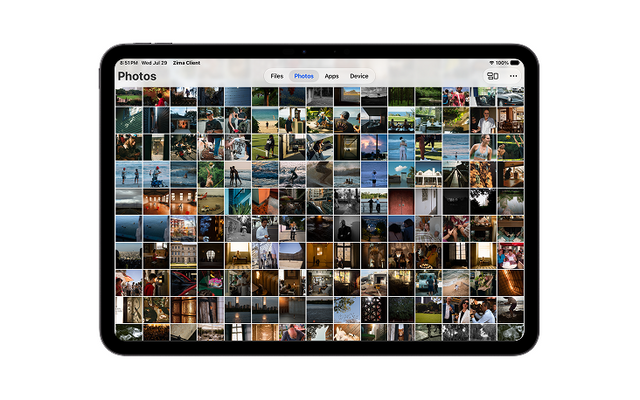
Best Photo Management Software for NAS in 2026: 10 Tools Compared
Compare 10 NAS photo managers by folder handling, mobile backup, search, sharing, privacy, and maintenance to choose a library for your home server.
Self-Hosting Day 2026: Why September 25 Belongs to the Self-Hosting Community
Discover what Self-Hosting Day 2026 is, why September 25 matters, what people self-host, and how to share your own server story.


