
How to Set Up a Family Media Server Without Making the Living-Room TV the Only Client


A family media server should treat every television, phone, tablet, and browser as a client rather than making the living-room TV the system’s control center.
The server owns the files, app state, users, and recovery path; playback devices are replaceable endpoints with different codec, network, and interface limits. Designing around a client matrix prevents one television app, remote control, Wi-Fi location, or account from defining the experience for everyone else.
Design the Server Around a Client Map, Not the Living-Room Television
List every likely client before installing the media application: living-room television, bedroom television, phones, tablets, laptops, browsers, and remote relatives. Record the operating system, connection type, user, screen size, and whether the device can run a native app or only a browser.
Lifewire’s Plex overview separates the central media server from playback applications on computers, phones, tablets, televisions, streaming devices, and game consoles. That server-and-client separation prevents the main television from defining the entire household architecture.
Choose the server because it can serve the client mix, not because one television app happens to work today. Keep at least one browser or mobile path for administration and testing, and avoid storing the only recovery instructions on the television interface.
Include future replacement risk in the map. Television platforms and app availability change faster than the media archive, so the household should be able to replace a television, streaming stick, or tablet without migrating the server. A browser fallback and documented direct server address also help distinguish a client outage from a library outage.
Test Direct Playback on Every Important Device
Different clients support different containers, codecs, resolutions, audio formats, and subtitle methods. A file that plays directly on one television may require audio conversion or full video transcoding on a tablet or older bedroom device. The server workload therefore comes from the client matrix, not only the file library.
TechRadar’s 2026 NAS guidance evaluates media systems across network speed, processing capability, capacity, and multi-device use. That multi-client playback test supports testing representative files on each client before estimating server performance.
Build a test set containing common video codecs, high-bitrate files, subtitles, multichannel audio, and family-phone videos. Record direct play, remux, transcode, startup time, and failures. Prefer compatible clients and files before buying hardware solely to compensate for one weak television app.
Repeat the test with two or three simultaneous clients because one successful stream proves only the easiest case. Include a backup job or library scan in the background. The resulting matrix reveals whether the bottleneck is storage, network, client compatibility, or server-side conversion rather than encouraging an oversized server for every possible problem.
Keep Browsers, Phones, and Tablets as First-Class Clients
Mobile and browser access provide more than convenience. They create alternate paths for checking library state, helping another user, viewing family videos away from the television, and confirming whether a playback problem belongs to the server or one client device.
CordCutting’s Plex review describes access across televisions, streaming devices, browsers, and mobile platforms. That cross-device media access model supports a setup where no single screen becomes the only practical client.
Create one ordinary user and test sign-in on a phone, tablet, and browser. Confirm resume state, subtitles, profile switching, and bandwidth behavior. A living-room failure should reduce convenience, not remove access to the entire family library.

Use Separate Profiles and Curated Libraries for Each Viewer
The television may be shared, but watch history, content access, favorites, and parental boundaries belong to individuals. Give regular viewers separate profiles and make the television open into an appropriate household or child profile instead of an unrestricted administrator account.
Common Sense Media recommends individual child profiles, age-based restrictions, and profile locks for shared streaming devices. That profile-and-content boundary translates directly to a self-hosted family library.
Curate library access at the server, not only through television menus. A child profile may see approved movies and family videos without seeing adult media, raw uploads, deletion controls, or server settings. Keep the media administrator account off daily playback devices where possible.
Treat Remote Playback as a Different Network Workflow
Remote clients depend on home upstream bandwidth, mobile or hotel networks, authentication, and a private access path. A library that works flawlessly over wired Ethernet may need lower-bitrate versions, bandwidth limits, or selective remote availability when used away from home.
Cloudwards’ NAS and cloud comparison highlights the trade-off between local control and the easier remote reach of managed cloud services. That local-control-versus-remote-access trade-off explains why remote media should be tested independently from living-room playback.
Test from mobile data and a second external network. Measure album or library loading, playback start, seeking, and concurrent home use. Preserve local access when the internet fails, and do not expose the administration interface merely to make streaming easier.
Decide which libraries are allowed remotely and which remain local-only. Family videos may deserve remote access, while high-bitrate replaceable media may not. Set a practical quality limit and test one low-bandwidth path. Remote availability should be intentional, not a side effect of exposing every local library through the same account.
Build a Network Path That Does Not Favor One Room
The server should connect by Ethernet where practical, while clients may use wired Ethernet or Wi-Fi according to location. A television beside the router can hide weak coverage in bedrooms, patios, or travel clients. The household network must support the client map, not just the easiest screen.
Puget Systems’ NAS guide treats network bandwidth and concurrent access as part of storage-system planning. That network-and-storage planning model supports testing several rooms and users together.
Run simultaneous playback and backup tests during normal household use. If only one device fails, improve that client or network segment before redesigning the server. If every client slows during scans or backups, separate schedules or storage workloads.
Document the expected path for each client: wired server to switch, Wi-Fi access point to tablet, or external network to remote user. Then test the path during normal evening traffic. This turns a vague playback complaint into a specific client, radio, route, or server condition and prevents the living-room connection from masking weaker parts of the household network during real family use.
Keep Media Files and App State Recoverable Without Any Client
Televisions and mobile apps are views into the library, not the authoritative archive. The server must preserve media paths, profile databases, watch history, artwork choices, permissions, and application definitions independently from any client installation.
Backblaze’s 3-2-1 framework separates the working system from additional recovery copies. That client-independent recovery copy is especially important for irreplaceable family videos and the database that organizes them.
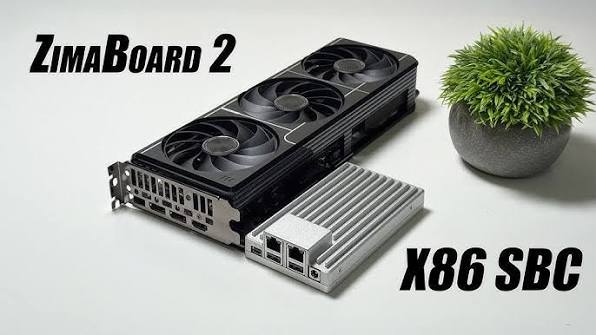
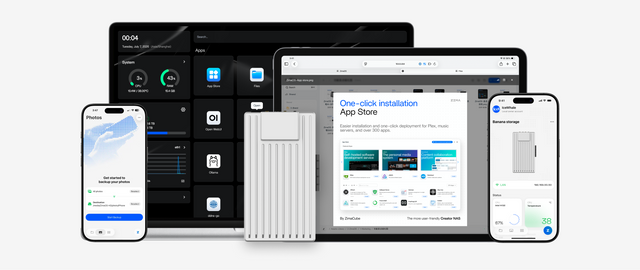
The ZimaSpace guide on building a home media server for several client types covers the broader storage-to-screen path. A ZimaBoard 2 Mini Home Server fits a compact compute-first setup with deliberate attached storage. A ZimaCube 2 AI NAS is the clearer base when several users, multi-drive capacity, longer retention, and storage-first recovery define the household system. The setup is complete when losing or replacing the living-room client changes only that client, not the library or recovery plan.
The living-room television is successful when it is the easiest client for that room, not when it is the only device capable of finding, playing, or recovering the family library.

Recommended products

NAS & Server Setup
More to Read
A Local RAG Setup for Research Papers, Notes, and Private Documents
Keep original documents authoritative, make indexing repeatable, require citations, and separate replaceable models from private source data.
Why Are Developers Using a Gateway Node for Private DNS, VPN, and Test Apps?
A gateway node gives private apps one controlled name and access path, while compute nodes stay unexposed and replaceable.
How to Build a Reproducible App Stack With Compose Files, Secrets, and Persistent Data Separated
Keep Compose definitions portable, secrets protected, and app data independently backed up so the stack can be rebuilt on a clean host.


