
What Is a File Server and When Do You Still Need One?


A file server is a computer, NAS, or personal server that stores files in one central place and lets other devices access them over a network. It can be as simple as a shared folder on a home network or as advanced as a multi-drive NAS with users, permissions, backups, media apps, and self-hosted services.
Cloud storage is convenient, but it has not made file servers obsolete. You still need one when local speed, large files, shared folders, permissions, backups, media libraries, private data, or self-hosted apps matter more than simple sync.
A File Server Is a Role, Not One Specific Box
The phrase “file server” can sound old-fashioned, but the role is still simple: one machine stores files, and other devices connect to it over the network. The hardware can be a Windows PC, a Linux box, a NAS, a mini PC, a compact personal server, a virtual machine, or a business server.
What matters is not the shape of the box. What matters is that it provides central file storage, network access, and rules for who can read, write, edit, or delete data.
| File Server Form | Typical Use | Main Limit |
| Shared folder on a PC | Very simple home or office sharing | Depends on that PC staying on |
| NAS | Backups, shared folders, media, home storage | CPU and app support vary by model |
| Mini PC | Lightweight file server or home lab | Storage expansion may be limited |
| Personal server | File sharing plus Docker, apps, media, private cloud | Needs setup choices |
| Enterprise server | Centralized business storage and permissions | Higher cost and administration |
| Self-hosted cloud | Private sync and remote access | Needs maintenance and backup planning |
A file server is best understood as a storage role. NAS, home server, and self-hosted cloud are different ways to build that role.
The Real Job Is Shared Storage With Control
A file server is not just a place to dump files. Its real job is to make files accessible in a controlled way. That means shared folders, users, groups, permissions, network protocols, backup targets, and sometimes remote access.
This is why a file server is different from an external drive. An external drive expands one computer. A file server gives many devices a common place to store and access files.
| File Server Function | What It Solves |
| Shared folders | One central place for files |
| User accounts | Different people get different access |
| Permissions | Read-only, read-write, private, or admin control |
| Network protocols | SMB, NFS, WebDAV, SFTP, or app-based access |
| Backup target | Computers and phones can back up to one location |
| Storage expansion | More drives or larger pools can be added over time |
If files are scattered across laptops, phones, old USB drives, cloud folders, and one person’s desktop, a file server creates a clearer source of truth.
File Server vs NAS vs Cloud Storage
A file server is the role. A NAS is one of the most common hardware forms built for that role. Cloud storage is a hosted service that solves some of the same access problems from outside your network.
A useful NAS vs file server comparison explains the practical difference: NAS is usually easier and more storage-focused, while a traditional file server can be more flexible but may require more setup and administration.
| Need | File Server | NAS | Cloud Storage |
| Local speed | Strong | Strong | Depends on internet |
| Simple setup | Depends on system | Usually strong | Strong |
| Privacy control | Strong | Strong | Limited by provider and settings |
| Remote access | Needs setup | Needs setup | Strong |
| Large media library | Strong | Strong | Cost can grow |
| Backup target | Strong | Strong | Depends on plan |
| Self-hosted apps | Strong if configured | Depends on NAS hardware | Not the same role |
A NAS is one of the easiest ways to get a file server at home or in a small office. A personal server is a better fit when you want file sharing plus Docker, media services, private cloud, or local AI data storage.
SMB and NFS Are How Devices Reach the Files
Most file servers expose shared folders through network file protocols. SMB is common for Windows, macOS, and mixed home networks. NFS is common in Linux, Unix, server, and virtualization workflows.
AWS’s guide to the difference between NFS and SMB describes both as file access protocols that let client devices access files stored on a remote server. In practical home and small-team setups, SMB is often the easiest default, while NFS is useful for Linux servers, containers, and performance-sensitive internal workflows.
| Protocol | Best Fit | Typical Use |
| SMB | Windows, macOS, mixed-device homes and offices | Shared folders, media libraries, backup folders |
| NFS | Linux, Unix, servers, Docker, virtualization | Mounted folders, app data, server-to-server storage |
| WebDAV / private cloud apps | Remote access and sync | Browser or app-based file access |
| SFTP | Secure file transfer | Admin access, remote file movement |
The protocol should match the devices and workload. A family media folder is usually fine over SMB. A Docker host or Linux server may be cleaner with NFS or local volumes.
Cloud Sync Did Not Kill the File Server
Cloud storage is excellent for remote access, sharing links, collaboration, and offsite copies. It is not always the best place for large local datasets, media libraries, private archives, backups, or files that many devices need to access quickly on a LAN.
A comparison of on-premises, cloud, and hybrid storage frames the real decision well: local storage gives control and performance, cloud gives scalability and offsite access, and hybrid setups combine both.
| Need | Cloud Storage | File Server / NAS |
| Easy remote access | Strong | Needs secure setup |
| Large local file speed | Depends on internet | Strong on LAN |
| Predictable cost for many TB | Subscription-based | Hardware-based |
| Private local control | Limited | Strong |
| Backup target | Depends on service | Strong |
| Media library | Limited for local playback | Strong |
| Offline LAN access | Weak | Strong |
The stronger modern setup is often hybrid: cloud for offsite access and sharing, file server or NAS for local speed, backup, media, private data, and app storage.
You Still Need One When Large Files Are Local Work
A file server becomes useful when files are too large or too active for simple cloud sync. Video projects, CAD files, RAW photos, 4K media, camera footage, datasets, ISO archives, and local AI models can be slow, expensive, or awkward to move through consumer cloud accounts.
Local network storage keeps those files close to the devices that use them. That can matter more than cloud convenience when the work happens at home, in a studio, in a lab, or inside a small office.
| File Type | Why a File Server Helps |
| 4K videos | Large files move faster over LAN than repeated cloud downloads |
| RAW photos | Central archive outside laptop SSDs |
| Design and CAD projects | Shared access without sending copies around |
| Backups | Stable local destination for multiple devices |
| Media libraries | Plex, Jellyfin, and TVs can read from one place |
| AI models and datasets | Local storage avoids repeated downloads and cloud upload risk |
If every file is small and already lives comfortably in cloud apps, you may not need a file server. If your files are measured in hundreds of gigabytes or terabytes, local storage starts to matter again.
You Still Need One When Multiple Devices Need One Source of Truth
Without a file server, files often spread across devices. One version is on a Mac. Another is on a Windows PC. Photos are on phones. Media is on an external drive. Backups are somewhere else. Nobody knows which copy is current.
A file server fixes that by creating a central place for shared folders. The family, team, or studio can agree where files live instead of passing around copies.
| Without File Server | With File Server |
| Files scattered across devices | Central shared folder |
| Multiple outdated copies | One organized version |
| Hard to back up everything | One main backup target |
| Family photos split across phones | Shared family archive |
| Media copied to many drives | One media library |
| Project folders live on one person’s laptop | Team-accessible project storage |
This is why file servers still appear in homes, creative studios, small offices, classrooms, and homelabs. The value is not only storage. It is shared structure.
You Still Need One When Permissions Matter
Permissions are one of the biggest differences between a file server and a simple external drive. A file server can separate what parents, children, staff, clients, guests, apps, and backup tools can access.
That matters even in small environments. A family may want kids to view media but not delete photo archives. A small team may want a client folder limited to one project. A business may need finance files restricted to owners only.
| Folder Type | Permission Example |
| Family photos | Family read access, parents write access |
| Media library | Everyone read-only |
| Finance folder | Owner only |
| Client project | Specific users only |
| Team documents | Team read/write |
| Backup folder | Device or backup account only |
Cloud platforms can also manage permissions, but a local file server gives more control when the workflow is mostly inside your home, office, lab, or studio network.
You Still Need One When Backups Need a Stable Home
A file server is often the easiest local backup target. Macs, Windows PCs, phones, cameras, and project folders can all send copies to one storage system instead of relying on scattered drives.
The ZimaSpace guide to 3-2-1 backup for home NAS users explains the safer structure: keep multiple copies, use more than one storage type, and keep at least one copy away from the main device. A file server can be a strong local layer, but it should not be the only layer.
| Backup Source | File Server Role |
| Mac | Time Machine or archive folder |
| Windows PC | File History or backup software destination |
| Phone | Photo and video import folder |
| Camera | Master archive for originals |
| Docker apps | App data and configuration backup |
| Family documents | Central backup folder |
A good file server should be backed up too. Snapshots, versioning, external backup, and offsite copies are what turn central storage into a safer system.
You Still Need One When Media Libraries Keep Growing
A home media server needs stable storage. Plex, Jellyfin, Emby, music libraries, family videos, photo archives, subtitles, posters, and metadata all work better when the media files live in one predictable place.
This is where a file server becomes more than a folder share. It becomes the base layer for the home media library. The media app reads from the storage, the TVs or phones stream from the app, and backups protect the original files.
| Media Data | Why Central Storage Helps |
| Movies and TV shows | One library for all playback devices |
| Family videos | Long-term archive outside phones and laptops |
| Music | Central library for local playback |
| Photos | Shared archive and backup target |
| Posters and metadata | Media apps can organize one source |
For larger media workflows, a ZimaCube 2 NAS is a stronger fit than a basic file share. ZimaCube 2 benchmark data shows 4K60 H.264 VAAPI hardware transcoding at 68 fps and 1.13x processing speed, which makes it relevant for media server, Jellyfin, and Plex NAS discussions.
You Still Need One When Self-Hosted Apps Need Persistent Data
Modern file servers often support more than SMB folders. They can also store persistent data for self-hosted apps: Nextcloud, Immich, Jellyfin, Home Assistant, Vaultwarden, databases, dashboards, logs, and Docker stacks.
A practical guide to using NAS storage with Docker Compose explains common storage approaches such as NFS mounts, SMB mounts, and local volumes. The key idea is simple: containers are temporary, but app data must live somewhere stable.
| App Type | Storage Need |
| Nextcloud | User files, database, previews, app data |
| Immich | Photos, thumbnails, metadata, machine learning data |
| Jellyfin | Media library, posters, subtitles, metadata |
| Home Assistant | Configuration, history, backups |
| Vaultwarden | Small but critical database |
| Docker stack | Volumes, logs, configs, secrets, databases |
| Local AI tools | Models, datasets, embeddings, vector data |
For this kind of setup, HDD storage is fine for archives and large files. SSD storage is better for databases, thumbnails, metadata, logs, and active app volumes.
You Still Need One When Privacy and Local AI Data Matter
Private documents, contracts, family photos, business files, research notes, AI datasets, and internal knowledge bases do not always belong only in public cloud accounts. A local file server gives you a private data layer under your own control.
This becomes more important as local AI and private RAG workflows grow. Models need storage. Documents need organization. Embeddings and vector databases need persistent data. Backups need a place to land. A file server or NAS becomes the storage base for the private AI workspace.
| Private Data Type | Why Local Storage Helps |
| Personal documents | Control over local copies and access |
| Family photos | Private archive outside phone-only storage |
| Business files | Local permission and backup control |
| AI datasets | Large local data without repeated cloud upload |
| Model files | Reusable local storage for AI tools |
| Vector databases | Persistent app data for private RAG |
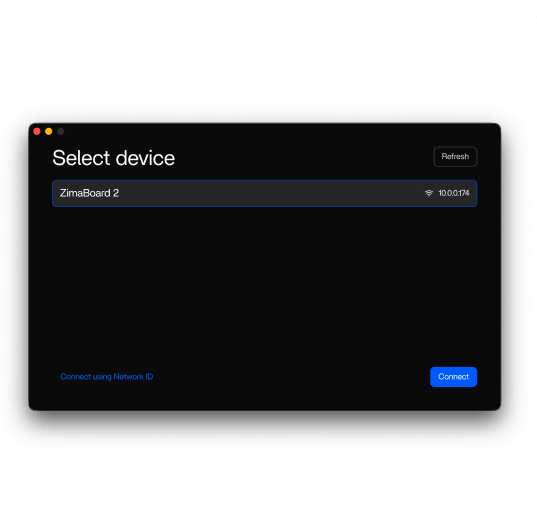
A ZimaBoard 2 compact x86 personal server fits lightweight file serving, Docker, private cloud, and media workflows. Its benchmark profile includes Intel N150, dual 2.5GbE, dual SATA 6Gbps, USB 10Gbps, PCIe 3.0 x2, and QSV 4K transcoding at 134 fps in a Jellyfin test environment, making it more than a simple network share box.
When You Probably Do Not Need a File Server
A file server is useful, but not everyone needs one. If you are a single user, mostly work with small documents, already live inside cloud apps, and do not need local sharing, permissions, large media, or backup targets, a dedicated file server may be unnecessary.
| Situation | Better Fit |
| One laptop and a few documents | Cloud storage or external SSD |
| Mostly Google Docs or Microsoft 365 files | Cloud-first workflow |
| No large local files | Simple sync may be enough |
| No shared users or permissions | External drive or cloud folder |
| No interest in maintaining hardware | Managed cloud backup or cloud storage |
The best file server is the one that solves a real workflow problem. If there is no shared storage problem, no local speed problem, no backup target problem, and no privacy problem, simpler tools may be better.
What Hardware Can Act as a File Server?
Almost any computer can act as a file server, but not every option is equally good. The right hardware depends on whether you only need basic sharing or also want NAS storage, Docker apps, media streaming, backups, and private cloud.
| Hardware | Best For | Main Limit |
| Router USB storage | Very basic sharing | Slow and limited |
| External drive | One-computer storage | Not network-native |
| Old PC | DIY file server and lab use | Power draw and maintenance |
| Mini PC | Lightweight home server | Storage expansion varies |
| NAS | Backup and shared folders | App performance depends on hardware |
| Personal server | File sharing, Docker, media, private cloud, AI data | Needs setup choices |
For beginners, a guide like home NAS setup guide for beginners is a better starting point than building a full custom server immediately. If you want to choose between NAS-focused systems, Docker-friendly systems, and remote access workflows, the ZimaSpace guide to choosing a home server OS for NAS, Docker, and remote access is a natural next step.
A Practical File Server Setup for Home or Small Teams
A file server should be organized before it becomes full. Start with folders by purpose, not by random device. Then add users, permissions, backup, and remote access rules.
| Folder | Suggested Use |
| /Family Photos | Shared photo and video archive |
| /Media | Movies, music, TV, home videos |
| /Backups | Time Machine, PC backups, phone archives |
| /Projects | Work, studio, or team folders |
| /Apps | Docker app data and service folders |
| /Private | Restricted personal or business files |
| /Archive | Old but important data |
Remote access should be handled carefully. Do not expose SMB directly to the public internet. Use safer options such as a VPN, Tailscale-style private networking, or a private cloud app with proper authentication.
Final Takeaway
File servers are not outdated. They have changed shape. The old office file server has become the home NAS, personal server, private cloud, media archive, backup target, and self-hosted app data layer.
Cloud storage is still useful for remote access, sharing, collaboration, and offsite copies. But when you need local speed, large file storage, shared folders, permissions, backups, media libraries, Docker app data, or private AI storage, a file server still has a clear job. The strongest modern setup is often hybrid: cloud for access and offsite recovery, file server or NAS for local control, speed, backups, media, and private data.
FAQ
What is a file server?
A file server is a computer, NAS, or storage device that lets other devices store, access, and share files over a network.
Is a NAS the same as a file server?
A NAS is one common type of file server. File server is the role; NAS is a storage-focused device built to make that role easier.
Do I still need a file server if I use cloud storage?
Yes, if you need local speed, large file storage, private control, backups, media libraries, shared folders, permissions, or self-hosted app data.
Can I use an old PC as a file server?
Yes. An old PC can work as a file server, but it may use more power and require more maintenance than a NAS or compact personal server.
Is a file server good for backups?
Yes. A file server can be a strong local backup target, but it still needs another copy, offsite backup, snapshots, or versioning for better protection.
Should a file server be exposed to the internet?
No. Do not expose SMB or basic file shares directly to the internet. Use VPN, private networking, or a secure private cloud workflow for remote access.

Recommended products

Support & Tips
More to Read

How to Turn Existing NAS Folders Into a Searchable Photo Library Without Moving Your Originals
Learn how to index existing NAS photo folders with ZimaOS Photos, Immich, or PhotoPrism while preserving original files, metadata, and recovery options.
NAS Share Shows Old Files After Storage Replacement: Checks and Fixes
Compare local storage with the active share and a clean client. Repair only the layer proven stale, then verify the result survives reconnect and...
Mini PC Cooling Maintenance Guide for Fans, Vents, and Thermal Baselines
Use repeatable idle and load readings. Clean external airflow first, confirm fan behavior, and open the chassis only when evidence survives a controlled retest.


