
Turnkey NAS OS vs Modular Linux for a First-Time Builder


A turnkey NAS OS is the safer default for a first-time builder who primarily wants reliable storage. Modular Linux is better when learning and custom service design are central goals.
Both can serve files, run containers, and protect data. The difference is who integrates disks, shares, permissions, monitoring, and updates. A turnkey system presents those jobs as one product; modular Linux exposes them as components whose interfaces, upgrade order, and recovery records belong to the builder.
Compare Operating Models, Not Feature Checklists
A turnkey NAS OS turns common storage actions into guarded workflows: creating a pool, publishing a share, scheduling health checks, and viewing alerts. The value is not that Linux disappears, but that the common path has fewer independent choices.
Modular Linux starts with a general operating system and lets the builder select the filesystem, file server, container runtime, web interface, and monitoring stack. That freedom removes vendor workflow constraints while increasing the number of contracts the owner must understand.
A broader account of the home-server movement describes the appeal of building, upcycling, and self-hosting; read it as evidence that learning and control are real goals, not free side benefits.
Count the Decisions Required for a Safe First Share
Before copying data, either route needs disk identification, a filesystem or pool, user identities, share permissions, health alerts, and a separate backup. Turnkey software usually sequences these tasks and warns about obviously incomplete states.
On modular Linux, every choice can be sound, yet combinations create risk. A share may work while SMART alerts are absent, a container may start before its mount exists, or an update may change a configuration file that no one tracks.
Choose the route whose unglamorous tasks you will actually complete. A polished application catalog does not compensate for missing alerts, restore credentials, or a tested backup.
Maintenance Ownership Decides Long-Term Difficulty
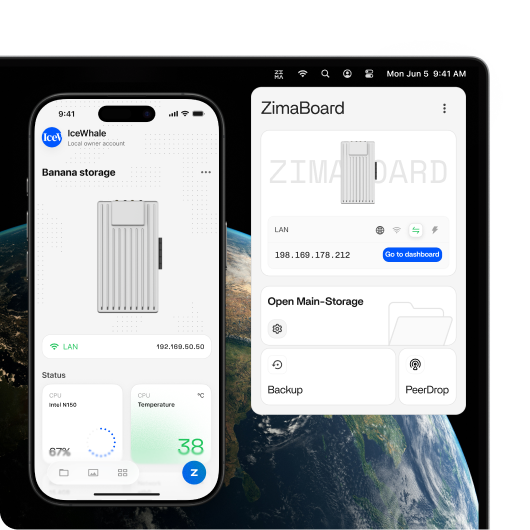
Turnkey systems concentrate updates, service status, and storage warnings in one interface. The trade-off is a stronger dependency on that platform's release cadence, supported hardware, and configuration model.
Modular Linux can be upgraded component by component, automated with configuration files, and migrated without a platform-specific interface. It also makes the owner responsible for package compatibility, service ordering, and documenting local changes.
Independent build guidance comparing DIY and packaged NAS approaches consistently frames the choice around customization versus ongoing effort. Use that ownership trade-off to estimate years of maintenance, not only installation day.

Recovery Should Be Understandable Without the Original Interface
For a turnkey OS, export configuration where supported, record the platform version, and learn how the data disks are imported after a boot-device failure. For modular Linux, keep package lists, Compose files, share definitions, mount units, and secrets in a protected recovery bundle.
Run a disposable recovery rehearsal. Reinstall the OS, reconstruct one share, restore one application configuration, and read a known file from backup. The exercise reveals whether convenience is backed by portable state or only by a familiar dashboard.
The ZimaSpace guide to choosing a home server OS for NAS and Docker can help narrow the next software-level decision after the operating model is clear.
Conditional Verdict: Optimize for the Work You Want to Own
Choose a turnkey NAS OS when storage availability is the outcome, the builder wants guided defaults, and custom services can fit inside the supported extension model.
Choose modular Linux when the server is also a learning environment, infrastructure can be declared in files, and the builder accepts responsibility for monitoring and compatibility.
If neither recovery rehearsal succeeds, pause the migration. The correct first platform is not the one with the longest feature list; it is the one the owner can update, explain, and rebuild without gambling with the only copy of the data.

Recommended products

Product Comparisons
More to Read
LXC vs Docker on Proxmox for App Updates and Rollbacks
Docker gives app-level version control; LXC gives guest-level rollback. The better fit follows the smallest state unit you can restore safely.
Docker vs LXC Security Boundaries for Privileged Home Services
Docker fits narrowly packaged apps; LXC fits fuller Linux services, but neither replaces a VM when shared-kernel risk is unacceptable.

Does a NAS Web Interface Reduce Recovery Work Over Plain Linux?
A NAS interface reduces routine recovery work only when its configuration export, pool import, and supported workflows survive the failed system.


