


One Powerful Plex Server vs Two Smaller Hosts: Which Setup Fits Better?


Choose one powerful Plex server when simplicity and a single recovery path matter most; choose two smaller hosts only when each machine has a clear persistent role such as storage, applications, or fail-isolated heavy workloads.
Replacement Gate: Two Hosts Are Not Automatically Redundant
Splitting Plex across machines does not create high availability by itself. If both hosts depend on the same app data, storage, router, or manual recovery process, the second box may add complexity without removing the failure that matters.
Without explicit container resource limits, a neighboring service can consume CPU, memory, or storage I/O during the same peak window and change Plex behavior; that is the baseline to establish for one-host-versus-two-host topology.
One Powerful Server Wins on Simplicity and State Ownership
A single host gives Plex one app-data path, one update target, one set of device mappings, and one place to inspect logs. That is easier to back up and reason about, especially for households that do not need separate storage and application failure domains.
When measuring one-host-versus-two-host topology, a consistent SQLite backup should come from a safe backup or snapshot workflow rather than an uncontrolled copy of active database files during writes.
Two Smaller Hosts Win When Roles Can Be Cleanly Separated
A split design is useful when one machine owns protected storage and another runs Plex plus other apps, or when a heavy compute workload should not interfere with the media service. Independent maintenance windows can also reduce household disruption.
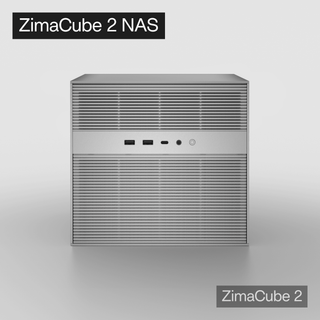
At the failure boundary for one-host-versus-two-host topology, nAS storage adds shared capacity and centralized access, but networking, backups, and mount availability become part of the service path.

A Third Option Is One Plex Host Plus Separate Backup
You may not need two live service hosts at all. One well-sized Plex server plus an independent backup target can improve recovery more than a second active machine that shares the same data and configuration mistakes.
A repeatable DAS versus NAS role split gives the benchmark a stable reference for storage paths, playback mode, and network assumptions.
Conditional Verdict and Flip Conditions
Choose one server when the workload fits, storage expansion is adequate, and you value a simple state and recovery model. Choose two hosts when storage, heavy applications, or maintenance need clear separation and the network path between roles is reliable.
The verdict flips when the second host cannot be assigned a durable role or when its extra dependencies outweigh the interference it removes. Do not count a second machine as resilience unless you have tested what happens when either host is actually offline.
- Name the persistent role of each host before buying it
- Map which failures affect storage, app data, and playback
- Test the design with one host powered off
- Keep an independent backup even if you run two live hosts

Recommended products
Product Comparisons
More to Read

Ripple-65B vs Qwen3.8-27B for Local Coding: What Fits Your Machine?
Compare local hardware and runtime choices for Ripple-65B Preview and Qwen3.8-27B, with a controlled test plan for coding agent workloads.
LFM2.5-24B-A2B vs DeepSeek API: Which Fits Your Home Server Agent Workflow?
Compare LFM2.5-24B-A2B local inference with the DeepSeek API for home-server agents: privacy boundaries, hardware, maintenance, quality, and costs.

Granite Speech 5.0 vs Cloud Transcription: Privacy, Hardware, and Accuracy Compared
Compare local Granite Speech 5.0 with cloud transcription for audio privacy, setup, hardware, accuracy, maintenance, and NAS archive workflows.


