


Dedicated Jellyfin Server vs a Shared App Host: Which Boundary Fits?


A dedicated Jellyfin host fits predictable playback and recovery requirements; a shared app host fits light workloads only when resource contention and failure coupling stay measurable.
The candidates are not identical products. They are two placement boundaries for the same service. Compare the boundary—what can compete, fail, or be restored together—before comparing CPU names.
Run the isolation gate first
List the other apps on the shared host: databases, downloaders, automation, VMs, and backup jobs. If one workload can saturate CPU, memory, disk I/O, or the network during playback, the shared option starts with a failed gate. A dedicated host is not automatically better when its storage or backup path is weaker.
Axis: Resource contention during the real peak
Measure direct play, transcode, library scans, thumbnail generation, and backup windows together. A shared host wins when the media workload is small, the competing services have clear limits, and cgroups or equivalent controls preserve a playback margin. Dedicated wins when mixed-client concurrency is predictable but non-negotiable.
Axis: Failure and recovery scope
On a shared host, a kernel update, disk failure, or misconfigured container can affect several services at once. On a dedicated host, the blast radius is smaller but the operator must still protect application state and media separately. Test a restore of the Jellyfin data volume and a rebuild from the deployment definition; whichever option cannot reproduce the service should not be the production choice.

Axis: Maintenance and expansion
Shared hosting reduces idle hardware and can simplify updates, but every added app consumes the same capacity and increases ordering constraints. Dedicated hosting costs another power and maintenance path, yet expansion is easier to reason about: add storage, a transcode node, or a separate backup destination without renegotiating every neighbor’s limit.
Conditional verdict and a middle path
Choose a dedicated Jellyfin server when playback reliability, household concurrency, or independent recovery is the hard gate. Choose a shared app host when usage is light, limits are enforced, and a tested restore keeps the blast radius acceptable. The third option is split placement: keep Jellyfin and its database on one small host while bulk media and backups live on a separate storage node. Stop the comparison if neither topology has a persistent path and a recovery test.

Recommended products
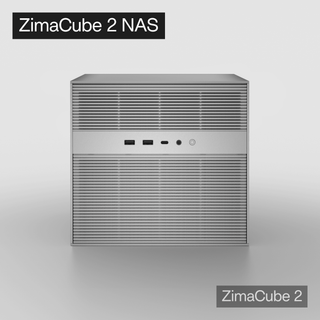
Product Comparisons
More to Read

Ripple-65B vs Qwen3.8-27B for Local Coding: What Fits Your Machine?
Compare local hardware and runtime choices for Ripple-65B Preview and Qwen3.8-27B, with a controlled test plan for coding agent workloads.
LFM2.5-24B-A2B vs DeepSeek API: Which Fits Your Home Server Agent Workflow?
Compare LFM2.5-24B-A2B local inference with the DeepSeek API for home-server agents: privacy boundaries, hardware, maintenance, quality, and costs.

Granite Speech 5.0 vs Cloud Transcription: Privacy, Hardware, and Accuracy Compared
Compare local Granite Speech 5.0 with cloud transcription for audio privacy, setup, hardware, accuracy, maintenance, and NAS archive workflows.


