
Backup Server Buying Guide for Users Moving Beyond External Drives


A backup server is worth considering when external drives are no longer being connected consistently, copies are scattered across several disks, or you cannot tell which backup is current. If a single external drive is automated, verified, and paired with an independent off-site copy, you may not need a server yet. The decision changes when central scheduling and easier multi-device recovery remove repeated manual work rather than merely moving the same backup risk into a network box.
Identify the Failure in the External-Drive Routine Before Replacing It
External drives are not automatically a bad backup method. They can be fast, portable, inexpensive to reuse, and easy to keep offline. The problem is usually operational: the drive is unplugged when the backup should run, multiple people do not know which disk belongs to which computer, or old copies accumulate without a reliable retention rule.
ZimaSpace’s troubleshooting article on external drive disconnects during long copies also shows a hardware boundary. A USB backup path depends on the drive, enclosure bridge, cable, port, and power remaining stable through sustained transfers; a short test can pass even when a long backup later fails.
Write down why you are leaving the current method. If the answer is “I forget to plug the drive in,” automation is the core requirement. If it is “we have several computers and phones,” centralized device coverage matters. If it is “restores are confusing,” version history and recovery tooling matter more than raw capacity.
Do not buy a server merely to avoid seeing USB cables. If your current process is reliable and you intentionally keep the backup offline between runs, that separation is valuable. A networked server is justified when always-available backup meaningfully increases completion and visibility.
Use the Backup Server as One Copy, Not the Whole Backup Strategy
A central server can become the easiest place for every laptop, desktop, and phone to send backups, but that convenience makes it dangerous to treat the box as the only protected copy. Fire, theft, ransomware, administrator error, or storage corruption can affect the server and every backup stored on it.
The 3-2-1 backup strategy provides a useful minimum: keep the original plus additional copies on separate devices or media, with one off-site. Moving from external drives to a server should therefore reorganize your copies, not eliminate independence between them.
Your old external drives can still be useful after migration. One can become an offline rotation, a periodic local export, or a copy stored somewhere physically separate from the server. That is often better than retiring every drive on day one and discovering later that all copies now share the same power, network, and administrator account.
ZimaSpace’s home NAS 3-2-1 guide is the right ownership check: RAID availability, snapshots, and backup copies solve different failure modes. A server purchase is stronger when each layer has a defined role.
Size the Server From Protected Devices, Change Rate, and Retention
Do not add the labels printed on your external drives and call that the required server capacity. First measure the actual protected data on each device, then add shared folders and the amount of historical versions you want to keep. A backup server that stores many revisions can grow faster than the live data set even when users delete old local files.
Backblaze’s NAS buying guide recommends planning for growth rather than current usage alone. For a home backup server, your own annual data growth is the better input: photos, game captures, project files, virtual machines, and phone libraries can expand at very different rates.
Device count changes scheduling even when total capacity is modest. Two laptops that back up overnight are easy to serialize; several PCs, phones, and a shared media machine can create overlapping writes, retention pruning, verification, and restore traffic. That is when memory, storage layout, and network throughput begin to matter alongside drive capacity.
Choose more than two drive bays only when your usable-capacity target, redundancy plan, or expansion horizon requires them. A two-drive server can be an excellent first backup target for a controlled household, while a multi-bay system is easier to justify when several large devices, long version history, or years of growth would otherwise force early drive replacement.

Judge the Purchase by Restore Confidence, Not Backup Completion
A green “backup completed” message is not the same as a usable recovery. The server should make it easy to find the correct machine, date, and version, then restore enough data to be useful without manually reconstructing which external disk held which copy.
ZimaSpace’s backup NAS guide for several PCs is a useful comparison point because multi-device backup shifts the decision from a single drive to shared capacity, retention, and recovery. The more devices depend on the server, the more important it becomes to test restores before the next hardware failure.
Run three restore tests before declaring the migration complete: one recently changed file, one older version that is no longer on the source device, and one larger folder that represents a realistic failure. Record how long each takes and whether permissions, metadata, and application-specific files return as expected.
Restore speed also sets a hidden capacity boundary. A huge archive reachable only through a slow path may technically preserve data but keep a failed workstation out of service for days. If recovery time matters, plan the local network and storage layout around the restore workload rather than optimizing only nightly backup speed.
Choose a Zima Backup Server by Scale, Then Preserve an Independent Copy
If you are still unsure whether centralized backup will improve the routine, a stable old PC can be the lowest-cost validation path. Reuse it with storage you already own, automate a few devices, and prove that scheduling and restores are actually better. If that experiment removes the manual friction, a dedicated low-power server becomes easier to justify.
For a first dedicated backup server covering a few devices with a controlled two-drive capacity target, ZimaBoard 2 832 is the natural baseline. Its dual SATA ports support a direct two-drive layout, and the platform is capable of running the backup, file-sharing, and light container services that usually accompany a home backup target.
Move to ZimaBoard 2 1664 when the same box must also run more applications, indexing, media, or virtual machines; the backup workload alone does not automatically require the higher model. Step up to ZimaCube 2 Standard when more than two drive bays, a much larger retained data set, or longer multi-device growth is the actual constraint.
Whichever server you choose, keep one recovery copy outside that chassis. The upgrade from external drives should reduce missed backups and make restores easier; it should not turn several independent disks into one always-online failure domain.
Final Migration Check
Before buying, inventory protected devices, live data, annual growth, version-retention goals, restore-time expectations, and the independent copy that will survive loss of the server. ZimaSpace’s guide to sizing home NAS storage with retention is a useful check before converting that inventory into a drive target. If you cannot name the last item, the design is incomplete.
During migration, keep the old external backup until the server has completed multiple scheduled runs and passed restore tests. A new backup target should earn trust before the previous copy is erased or repurposed.
A compact two-drive server is enough for many households; a multi-bay NAS becomes worthwhile when retained capacity or device count creates a real expansion problem. Extra compute is secondary unless the backup box also has substantial application duties.
The purchase succeeds when backups happen with less human effort, restore confidence improves, and your copies become more intentionally separated. If those three outcomes do not change, replacing an external drive with a server is mostly a hardware swap rather than a better backup system.

Recommended products

Buying Guide
More to Read
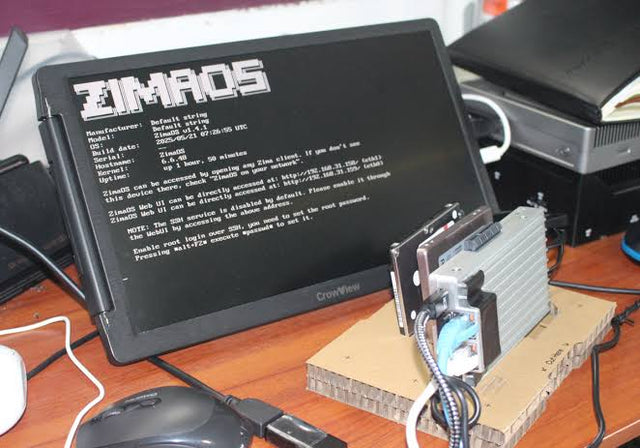
Local AI Server Checklist Before Buying a GPU
A pre-purchase checklist for avoiding a fast but incompatible, under-cooled, or VRAM-limited GPU in a home AI server.
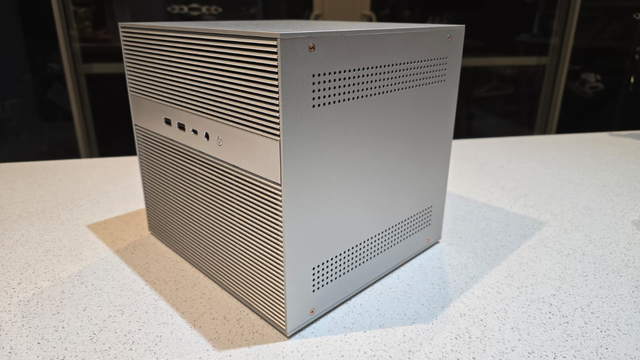
Container Server Storage Checklist Before One Large Pool
A storage design checklist that prevents one convenient container pool from becoming one shared capacity and recovery failure domain.
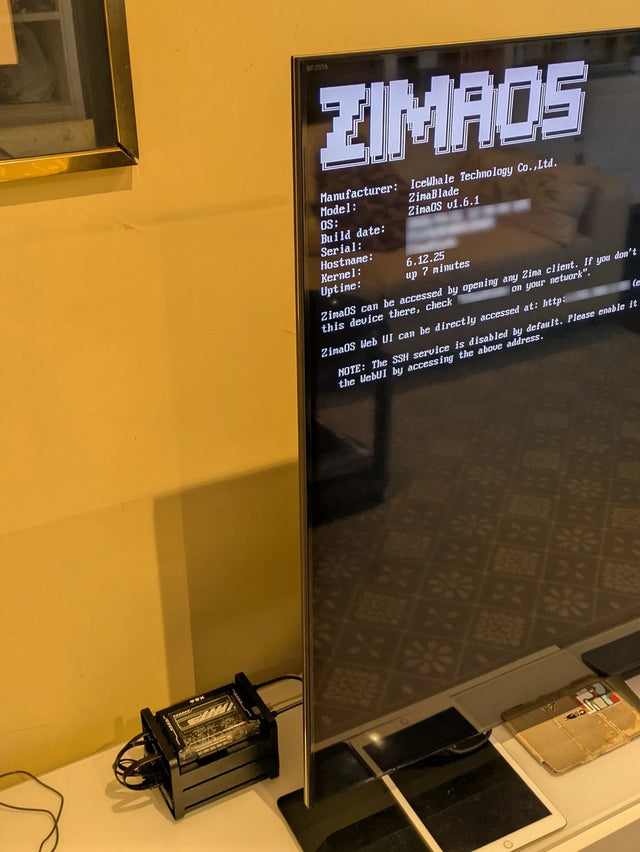
NAS Drive Mixing Checklist Before Combining Capacities
A pre-purchase and pre-deployment checklist for mixed NAS disks that prevents hidden capacity waste and unpredictable recovery behavior.


