
10 Best MCP Servers for Web Search and Research in 2026


The best MCP servers for web search in 2026 solve different parts of the research workflow. Firecrawl combines search with scraping and crawling, Exa focuses on semantic discovery, Tavily is built around AI retrieval, while Perplexity can handle longer research tasks and return synthesized answers.
The right choice depends on what your agent needs after finding a result. Some workflows only need fresh URLs. Others need full pages, site crawling, structured data, or multi-source research. We ranked these servers by search quality, research depth, retrieval capability, MCP maturity, and active maintenance.
Top 10 MCP Servers for Web Search and Research
| Rank | MCP Server | Best For | Core Capability |
|---|---|---|---|
| 1 | Firecrawl MCP | End-to-end web research | Search, scrape, crawl, interact and extract |
| 2 | Exa MCP | Semantic and technical research | AI-native search, content retrieval and research |
| 3 | Tavily MCP | Agent and RAG search | Search, extract, map and crawl |
| 4 | Perplexity MCP | Deep synthesized research | Search, answers, reasoning and research |
| 5 | Brave Search MCP | Independent general web search | Web, news, image, video and local search |
| 6 | Bright Data MCP | Difficult or blocked websites | SERP search, scraping, extraction and browser automation |
| 7 | Apify MCP | Structured public web data | Crawlers and extraction Actors |
| 8 | Parallel Search MCP | Fast agent web retrieval | Hosted search and page fetching |
| 9 | Kagi MCP | Focused search and extraction | Search, filters, lenses and page extraction |
| 10 | Linkup MCP | Multi-source deep research | Search, fetch and asynchronous research |
How We Ranked Web Search MCP Servers
Most search MCP servers expose a similar search tool, but their differences become clearer once an agent needs to work with the results.
We compared five areas: discovery, page retrieval, research depth, coverage, and MCP maturity. GitHub popularity can indicate adoption, but it does not outweigh whether a server actually fits the research workflow.
1. Firecrawl MCP — Best Overall for End-to-End Web Research
Firecrawl ranks first because one MCP connection can cover search, page reading, crawling, extraction, and deeper investigation.
Firecrawl MCP exposes web search, scraping, crawling, mapping, structured extraction, browser interaction, and batch operations.
That makes it useful when research continues beyond the first search result. An agent can discover a source, read the page, inspect related pages, and extract useful information without switching between several unrelated tools.
Best for: research agents that regularly move from search to full-page reading, site crawling, and extraction.
Not ideal for: simple workflows that only need URLs and snippets. In that case, Firecrawl's broader toolset may be unnecessary.
2. Exa MCP — Best for Semantic Web Search
Exa is strongest when the agent needs to find pages by meaning rather than exact keyword overlap.
Exa MCP provides semantic web search, content retrieval, and research tools designed for AI agents.
It works particularly well for research questions where relevant pages may use different wording from the original query. The server can also return page content, reducing the need for a separate fetch step in many workflows.
Best for: technical research, company research, related-page discovery, and questions where semantic relevance matters more than exact keywords.
Not ideal for: users who mainly need conventional local, image, video, or broad consumer-search results.
3. Tavily MCP — Best for AI Agent and RAG Search
Tavily packages the main steps of an AI retrieval workflow into a small set of focused tools.
Tavily MCP provides search, extract, map, and crawl capabilities.
An agent can search for current information, retrieve useful content from selected pages, inspect a site's structure, and crawl related URLs. That makes it a practical option when search results are meant to become context for another AI task.
Best for: RAG pipelines, research assistants, current-information tasks, and agents that need both discovery and extraction.
Not ideal for: workflows that require heavy browser automation or difficult anti-bot websites.
4. Perplexity MCP — Best for Deep Research and Synthesized Answers
Perplexity MCP is useful when you want the search layer to perform more of the research itself.
Perplexity MCP exposes tools for direct search, web-grounded answers, deeper research, and reasoning.
For complex questions, the research tool can investigate multiple sources and return a synthesized result instead of requiring the calling agent to manually orchestrate every search and retrieval step.
Best for: market research, current-topic research, comparative questions, and workflows that want a finished research answer.
Not ideal for: researchers who want full control over which pages are selected and how every retrieval step is performed.
5. Brave Search MCP — Best Independent General Web Search
Brave Search MCP is a good choice when the agent primarily needs broad, fresh search results from an independent search index.
Brave Search MCP exposes web, news, image, video, place, and local search capabilities.
Its strength is straightforward discovery. An agent can quickly locate current sources without introducing a large crawling or browser-automation stack.
Best for: general web research, news discovery, source diversification, and agents that mainly need search results.
Not ideal for: workflows that need deep crawling, structured extraction, or full control over difficult pages after discovery.
6. Bright Data MCP — Best for Difficult or Blocked Websites
Bright Data becomes useful when ordinary search and page fetching cannot reliably reach the information.
Bright Data MCP combines search results, scraping, structured extraction, browser automation, and access infrastructure for difficult websites.
It is particularly useful for pages that rely on heavy JavaScript, anti-bot systems, regional access, or structured platform data.
Best for: competitive research, e-commerce data, social platforms, geo-specific research, and websites that normal fetch tools struggle to access.
Not ideal for: ordinary documentation or simple web research where Brave, Exa, or Tavily can retrieve the information with less complexity.
7. Apify MCP — Best for Structured Web Data
Apify MCP is better suited to collecting repeatable datasets than reading individual articles one at a time.
Apify MCP Server gives agents access to task-specific crawlers and extraction Actors for search engines, maps, stores, social platforms, directories, and other public sources.
This lets an agent select a specialized extraction tool instead of asking one generic scraper to understand every site.
Best for: structured research, product listings, business datasets, repeated crawling, and site-specific extraction.
Not ideal for: users who only want a simple search box and a few relevant articles.
8. Parallel Search MCP — Best Lightweight Hosted Search for Agents
Parallel Search MCP offers a simple hosted retrieval layer without requiring users to operate their own search infrastructure.
Parallel Search MCP provides hosted search and page fetching for MCP-compatible agents.
Its appeal is low setup friction. An agent can add web retrieval without deploying a separate crawler or search backend.
Best for: coding agents and research assistants that need straightforward hosted search and page fetching.
Not ideal for: users who require a fully self-hosted search backend or extensive crawling and browser-control features.
9. Kagi MCP — Best for Focused Search and Page Extraction
Kagi MCP is useful when search quality and filtering matter more than having the widest possible toolset.
Kagi MCP exposes web, news, image, video, podcast search, and page extraction.
Kagi's filtering and lens system can help narrow research toward specific parts of the web without repeatedly building complicated queries.
Best for: focused research, cleaner search results, news and media discovery, and existing Kagi users.
Not ideal for: users looking for a free search backend or a crawler for large numbers of pages.
10. Linkup MCP — Best Emerging Option for Multi-Source Research
Linkup is interesting because it exposes deeper research as a dedicated workflow rather than only returning search results.
Linkup MCP supports real-time search, page fetching, domain and date filtering, and asynchronous research.
For larger questions, its research workflow can investigate multiple sources and return a cited result while the calling agent handles less of the search orchestration itself.
Best for: comparative research, current-information reports, and questions that require more than one search pass.
Not ideal for: users prioritizing the largest ecosystem or the longest record of MCP adoption. It remains less mature than the projects above it.
Which Web Search MCP Server Should You Choose?
| If You Need... | Start With |
|---|---|
| Search plus full-page research | Firecrawl MCP |
| Semantic discovery | Exa MCP |
| Agent or RAG-oriented retrieval | Tavily MCP |
| A synthesized research report | Perplexity MCP |
| Independent general web search | Brave Search MCP |
| Difficult or blocked webpages | Bright Data MCP |
| Structured site-specific data | Apify MCP |
| Simple hosted retrieval | Parallel Search MCP |
| Focused search and filtering | Kagi MCP |
| Multi-source research | Linkup MCP |
Search, Fetch, Crawl, or Research?
These capabilities solve different stages of the same workflow.
| Capability | What It Does | Typical Options |
|---|---|---|
| Search | Find relevant URLs and current sources | Brave, Exa, Tavily |
| Fetch | Read useful content from a selected URL | Firecrawl, Exa, Kagi |
| Crawl | Explore many related pages from one site | Firecrawl, Tavily, Apify |
| Browser Automation | Interact with dynamic or difficult pages | Bright Data, Firecrawl |
| Deep Research | Run multiple retrieval steps and synthesize evidence | Perplexity, Linkup |
For many agents, search plus page retrieval is enough. Add crawling, browser automation, or deeper research only when the task actually requires it.
Do You Need More Than One Search MCP Server?
Usually not. Start with one server that covers the majority of your research workflow.
A second server becomes useful when it solves a clear gap. Exa can handle semantic discovery while Firecrawl reads and crawls the resulting pages. Brave can supply broad search while Bright Data handles sites that are difficult to retrieve normally.
Running several overlapping search servers without a clear role can increase tool-selection complexity without improving the final research.
What About Self-Hosted Search With SearXNG?
SearXNG remains useful when controlling the search backend itself is important. Multiple community MCP servers can connect an agent to a private SearXNG instance.
It is not in this Top 10 because the MCP layer remains fragmented across community implementations rather than one dominant maintained server. If you already run SearXNG, evaluate the specific MCP connector's maintenance and feature set before adding it to an agent.
Web Search MCP Servers Create a Security Boundary
Web content is untrusted input. Search results and retrieved pages can contain misleading instructions, prompt injection, malicious links, or content designed to influence automated agents.
The risk increases when the same agent also has access to shell commands, files, browsers, databases, or credentials. Treat retrieved content as evidence rather than instructions, and keep destructive permissions separate from research tools when possible.
Frequently Asked Questions
What is the best MCP server for web search?
Firecrawl is the strongest general option when the workflow needs search plus page retrieval and crawling. Exa is stronger for semantic discovery, while Brave is a simpler choice for broad general search.
Which MCP server is best for deep research?
Perplexity and Linkup expose dedicated research workflows. Firecrawl, Exa, and Tavily are better when you want the calling agent to control more of the retrieval process.
Which MCP server is best for RAG?
Tavily and Exa are strong starting points because they combine search with AI-oriented content retrieval. Firecrawl is useful when the workflow also needs larger-scale site crawling.
Can MCP web search run locally?
The MCP process can run locally while still calling a hosted search API. If the search backend itself must remain under your control, a private SearXNG deployment is a more appropriate option.
Do I need both a search MCP server and a browser MCP server?
Not usually. Search is better for discovering sources quickly. Browser automation becomes useful when pages require interaction, authentication, JavaScript execution, or navigation that normal retrieval cannot handle.

Aanbevolen producten

Tech & AI HUB
Meer om te lezen
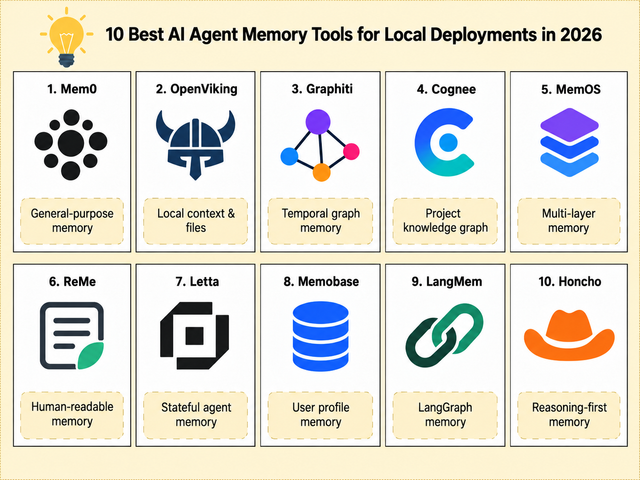
Top 10 AI Agent Memory Tools for Local Deployments in 2026
Compare 10 AI agent memory tools for local deployment, persistent context, files, graphs, user profiles, and stateful agents.
Top 10 open-source AI-codeerassistenten in 2026
Vergelijk 10 open-source AI-codeerassistenten voor IDE's, terminals, lokale modellen, zelfhosting, Git-workflows en autonome ontwikkeling.
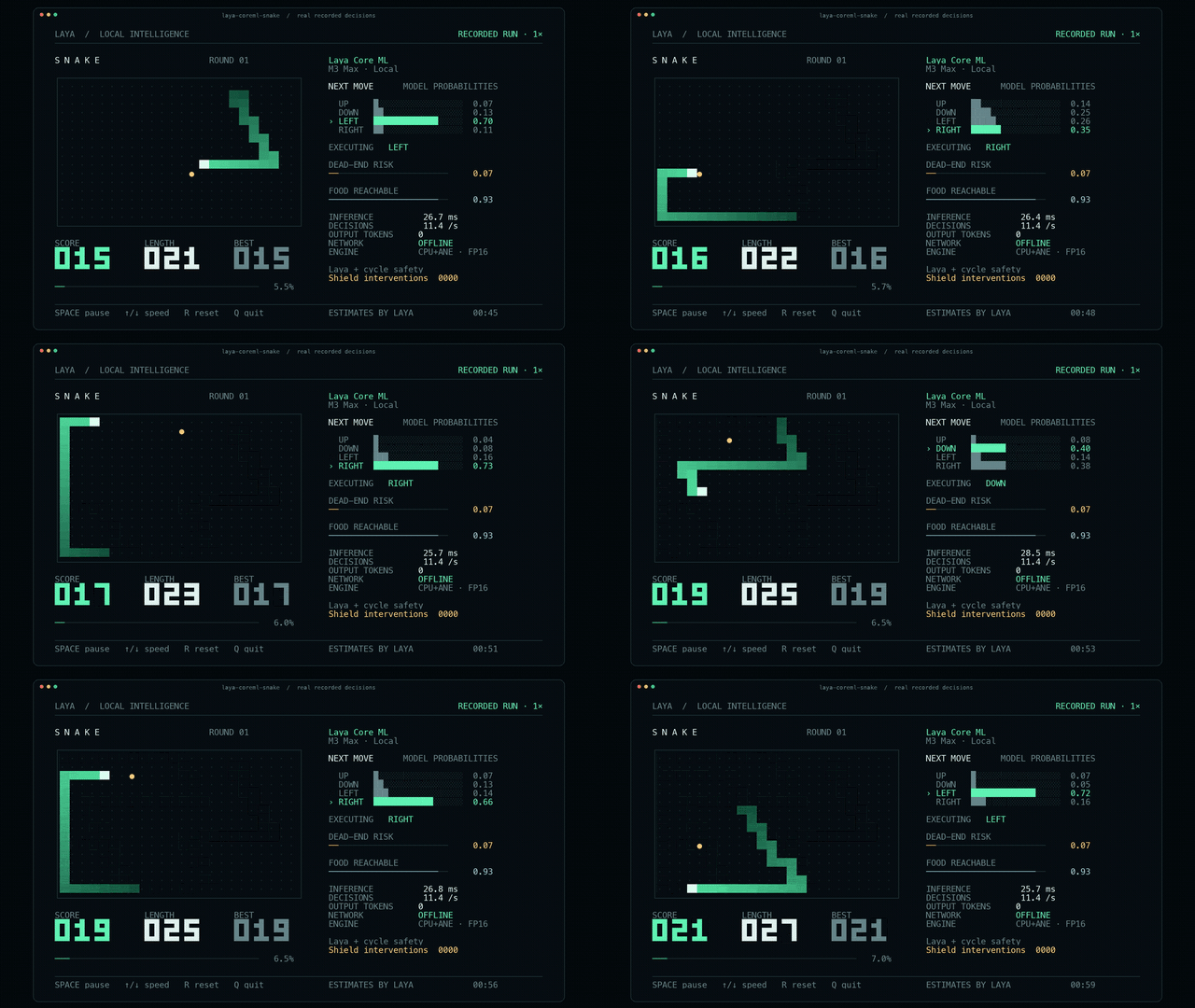
Laya-model uitgelegd: het open-sourcebeslismodel dat je lokaal kunt uitvoeren
Laya is een open beslissingsmodel van 421 miljoen parameters voor snelle lokale routering en scoring, en biedt een zelfgehost alternatief voor cloudgebaseerde beslissings-API's.


