


A ZimaBlade Family Server for Minecraft, Audiobooks and Recipes


Thank you to u/Nice_Day7655 for sharing a ZimaBlade family server with a clear household purpose. Minecraft supports a son’s games with friends, an audiobook library serves another family member, and recipes, media and personal files give the owner more reasons to keep the system running.
The original Reddit account identifies ZimaOS 1.6.1 Plus on a ZimaBlade E3950. ZimaBlade has since been renamed ZimaBoard SE; this story retains the hardware name and software version reported for that installation.
The Household’s Needs Explain the Application Choices
The creator’s application list begins with people and activities. Crafty Controller manages Minecraft servers, Audiobookshelf serves ebooks and audiobooks, and Mealie is being used to build a cookbook. Plex and ownCloud cover additional media and data needs.

| Application or component | Reported purpose |
|---|---|
| ZimaBlade E3950 | Host for the family server |
| ZimaOS 1.6.1 Plus | Operating system and application management |
| Crafty Controller | Minecraft servers for the creator’s son and friends |
| Audiobookshelf | Ebooks and audiobooks for the creator’s wife |
| Mealie | A growing personal cookbook |
| Plex and ownCloud | Movies, television and personal data |
That gives each service a reason to exist. It also provides a practical order for maintenance: the service someone expects to use tonight may deserve attention before an experiment that can wait until the weekend.
A family server becomes easier to explain when its owner can say which person depends on each application, where its data lives and what would be interrupted by a change. Those questions remain useful even as individual apps are replaced.
Minecraft Turns Availability into a Shared Expectation

Hosting a world for a child and friends gives a home server a social schedule. A restart during an active session has a different effect from a quiet update when nobody is playing. The owner describes the use case but does not publish a player-count benchmark or full network configuration.
For readers operating a similar service, the Crafty backup manager documentation explains backup locations, retention and restoration options. It also describes stopping a game server during a file-copy backup so the world is not changing while its files are collected.
A useful maintenance routine therefore includes more than pressing a backup button. Decide when a brief interruption is acceptable, keep enough previous copies to recover from a mistake discovered later, and test a copy of the world separately from the live server.
These are operational considerations for readers. The post does not establish that the creator follows a particular retention schedule or has completed a restoration test.
The Audiobook Library Has Two Kinds of Data
The source identifies Audiobookshelf as a practical part of the family setup. For a reader building the same kind of library, distinguish the actual books from the application information that makes them convenient to use.
Audiobookshelf’s backup documentation explains that its database backups include database information and certain cover images, while media files need a separate backup method. A successful application backup therefore does not by itself preserve the audio collection.
This distinction helps turn a vague instruction to “back up the server” into identifiable work. Locate the library files, locate the application’s persisted state, and record which backup task protects each. Then check that a restored service can still find its library.
The original story gives a reason for the library to matter to the household. The supporting documentation explains what another owner should investigate before depending on a similar installation.
A Cookbook Gives an Experiment a Lasting Purpose

Mealie is introduced as an experiment that has become useful for collecting recipes. That is a different kind of success from demonstrating a maximum workload: the application earns its place because the owner returns to it for an ordinary activity.
For a similar household deployment, make the route to that useful information obvious. Test the application on the device used in the kitchen or living room, and keep its access details understandable to the person who will actually use it.
The creator also values being able to correct an application setting without reinstalling the entire operating system. That supports experimentation, while leaving a separate question about the application’s own stored information. Replacing a container and restoring its data are different operations.
When deciding what to preserve, consider the effort that went into the information. A carefully organized cookbook or library may become harder to recreate than the original application installation.
The Backup Screen Starts a More Specific Conversation

The integrated backup experience is one of the creator’s favorite parts of ZimaOS. The useful next question for anyone following this example is what a particular task includes and where its destination is located.
Write down the files, databases and settings needed for the services the family uses. Confirm that the destination is sufficiently separate from the failure being planned for. Finally, retrieve a small sample and verify that the appropriate application can use it.
Our family photo server troubleshooting story explores a related problem: an archive can exist while important application data is still missing. The ZimaBlade product page identifies the historical hardware family used in this account.
FAQ
Which hardware and ZimaOS version does the source report?
ZimaBlade E3950 and ZimaOS 1.6.1 Plus. These are the details of the original installation, rather than a statement of today’s latest version.
How many Minecraft players can this build support?
The creator does not publish a controlled player-count test. World settings, mods and concurrent workloads would affect a similar system.
Does an Audiobookshelf database backup contain all the books?
No. The project documentation explicitly separates its database backup from the media files, which need their own protection.
Does the backup screenshot prove a full server restore?
No. It shows configured tasks. The post does not document recovery onto a replacement host or a complete restore test.
Conclusion
This ZimaBlade has a recognizable role in family life: games with friends, books, recipes, media and personal files. The story’s strength is that every important application connects to someone’s routine. Understanding and protecting those routines is the next part of keeping a household server useful.
Welcome to the ZimaSpace community! Share your setup, ask questions, and explore practical build guides, real user stories, and product updates with fellow self-hosters.

Zima Campaign Hub
More to Read
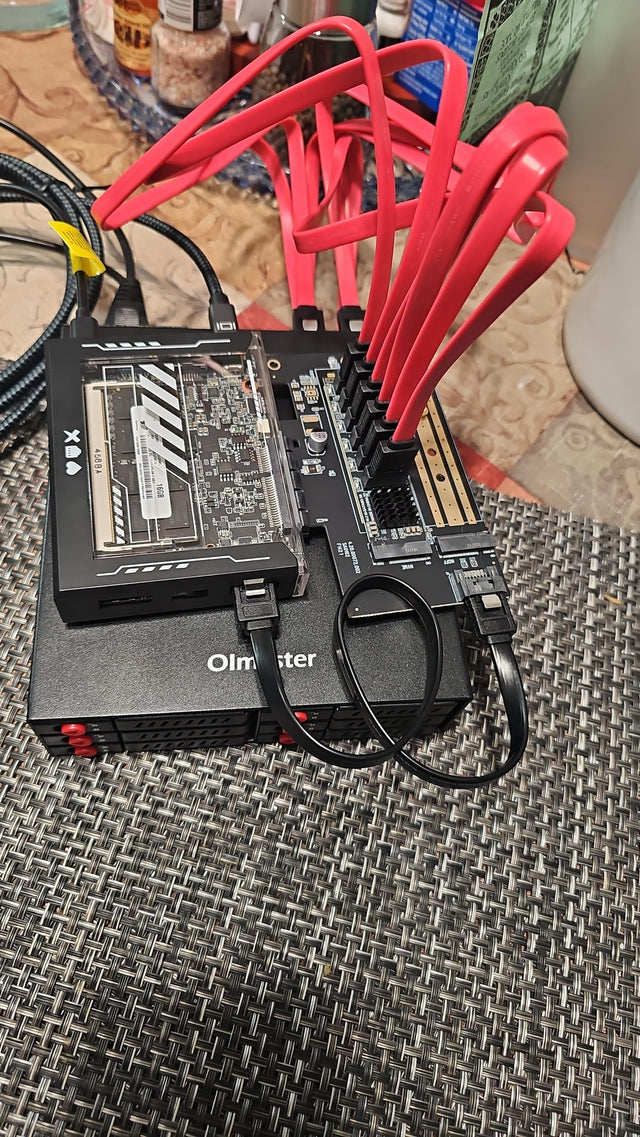
Before First Boot: A ZimaBlade 7700 NAS Plan with Six Drives
A first ZimaBlade 7700 assembly pairs a six-drive cage with plans for TrueNAS, Jellyfin and Minecraft, before power and storage configuration are verified.
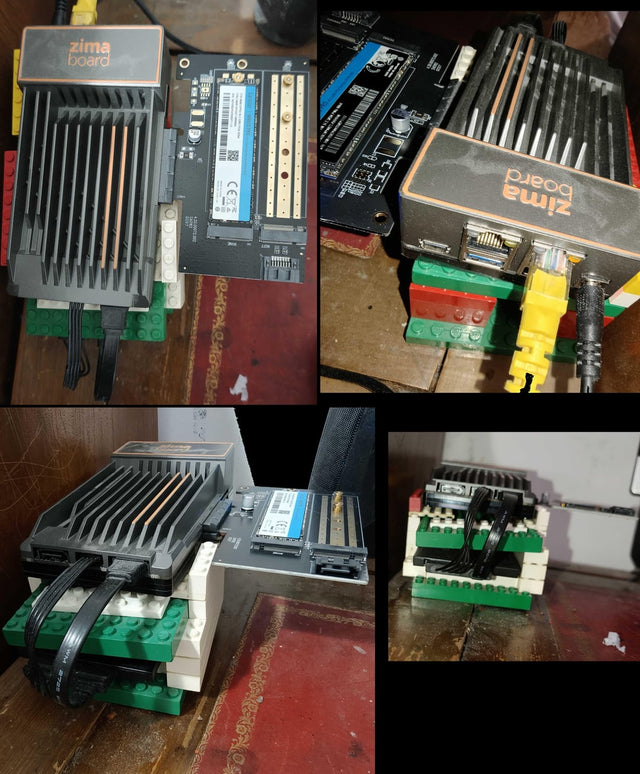
A ZimaBoard LEGO Prototype Looking for a Permanent Enclosure
A temporary LEGO support holds a ZimaBoard and NVMe card while the owner plans a low-cost enclosure for two extra SSDs without a 3D...
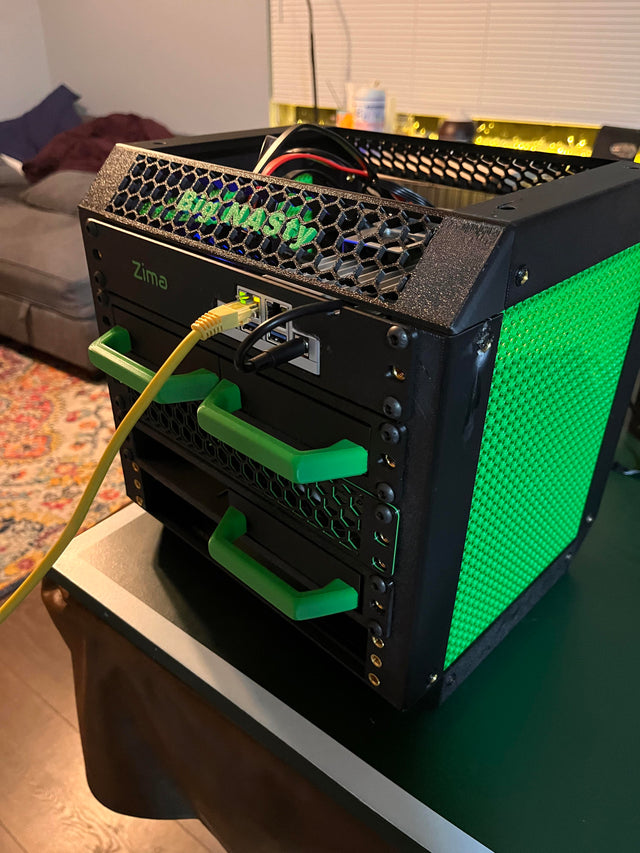
A Printed Ten-Inch ZimaBoard 2 Rack with Four Drive Trays
Gerrit3D documents a printed ZimaBoard 2 rack from threaded rails to drive trays and cabling, with original construction photographs and clear limits.


