
Top 10 Open-Source AI Coding Assistants in 2026


The best open-source AI coding assistants in 2026 can do much more than autocomplete code. Leading projects can inspect repositories, edit multiple files, run commands, test changes, use external tools, and work through complete development tasks.
This ranking focuses on active development, coding capability, model flexibility, self-hosting options, and project maturity. It also stays separate from our broader comparison of CLI AI coding tools, which includes both open-source and proprietary options.
Top 10 Open-Source AI Coding Assistants at a Glance
| Rank | AI Coding Assistant | Best For | Interface | Key Advantage |
|---|---|---|---|---|
| 1 | OpenCode | Provider-independent coding | Terminal / Desktop | Broad model choice and open architecture |
| 2 | Cline | Agentic IDE coding | IDE / CLI / SDK | Deep editor integration |
| 3 | OpenHands | Autonomous software engineering | Web / Self-hosted | Repository agents and sandboxes |
| 4 | Goose | Local tool-driven agents | Desktop / CLI / API | Model flexibility and MCP support |
| 5 | Aider | Terminal pair programming | CLI | Mature Git-aware workflow |
| 6 | Gemini CLI | Gemini development workflows | CLI | Strong tooling and sandbox controls |
| 7 | Tabby | Private self-hosted coding | IDE / Server | On-premise inference |
| 8 | Qwen Code | Qwen-based coding | CLI | Open terminal agent with MCP |
| 9 | SWE-agent | Repository issue fixing | CLI / Agent | Research-backed issue resolution |
| 10 | Open SWE | Asynchronous coding agents | Web / GitHub | Persistent tasks and PR delivery |
How We Ranked These Open-Source Coding Assistants
GitHub popularity matters, but historical stars alone do not make a project a good recommendation. We prioritized projects that remain relevant in 2026 and can do meaningful repository work beyond basic code completion.
We looked at five factors: maintenance, repository-level coding, model freedom, local or private deployment options, and workflow integration. Projects whose main repositories are archived or no longer the recommended maintained path were not prioritized.
1. OpenCode — Best Overall Open-Source AI Coding Assistant

OpenCode is the strongest general choice if you want an open coding agent without committing to one model provider.
OpenCode combines a terminal-first workflow with broad provider support, language-server integration, subagents, project instructions, and extensible tooling.
Its main advantage is model independence. Developers can change inference providers without replacing the coding workflow around them, which is useful when mixing commercial APIs, private endpoints, and local models.
Best for: developers who want a mature, provider-independent coding agent.
2. Cline — Best for Agentic Coding Inside an IDE

Cline is a strong choice when you want the coding agent to stay inside the editor.
Cline can inspect files, edit code, execute commands, and work through multi-step development tasks. Its broader CLI and SDK direction also makes it useful outside an interactive editor session.
Cline supports multiple inference providers, giving developers more control over models and costs than assistants tied to one vendor.
Best for: IDE-centered developers who want agentic editing and tool execution.
3. OpenHands — Best for Autonomous Software Engineering

OpenHands is closer to a self-hostable software-engineering agent platform than a conventional coding copilot.
OpenHands can work with repositories, execute commands, modify code, and run inside isolated development environments.
That makes it suitable for longer tasks such as issue resolution, dependency updates, testing, and repository automation. It also has a clear path toward private deployment and local model endpoints.
If autonomous development is the main goal, our broader guide to open-source local AI agent projects compares OpenHands with agents built for browser control, memory, automation, and multi-agent workflows.
Best for: autonomous repository tasks and self-hosted software-engineering agents.
4. Goose — Best for Extensible Local Developer Agents

Goose combines coding with local execution and external tool access.
Goose is available through desktop, CLI, and API interfaces. It can write and execute code, debug failures, and connect to external tools through MCP.
It also supports different inference providers, including local-model paths. That makes it especially useful when coding is only one part of a larger tool-driven workflow.
Best for: developers who want coding, MCP tools, and local-model flexibility in one agent.
5. Aider — Best Lightweight Terminal Pair Programmer

Aider remains one of the simplest mature ways to bring AI coding into an existing terminal workflow.
Aider works closely with Git: add files, request a change, inspect the diff, and commit when the result is ready.
It supports multiple model providers and can also work with local-model endpoints. Unlike larger autonomous platforms, Aider keeps the developer visibly involved in the edit-review-commit loop.
Best for: developers who want a lightweight Git-aware terminal assistant.
6. Gemini CLI — Best Open-Source Assistant for Gemini Users

Gemini CLI is a strong terminal agent for developers already using Google's Gemini ecosystem.
Gemini CLI combines repository access, shell tools, extensions, automation, and sandbox controls in a terminal workflow.
Its main trade-off is model freedom. The client is open source, but the experience remains centered on Gemini, so developers prioritizing provider independence may prefer OpenCode, Cline, Goose, or Aider.
Best for: Gemini users who want an actively developed terminal coding agent.
7. Tabby — Best for Self-Hosted Coding Assistance

Tabby stands out when private infrastructure matters more than maximum agent autonomy.
Tabby is designed around self-hosted coding assistance and can run inference on infrastructure you control.
It is particularly relevant for private repositories, home labs, and teams that want code completion and chat without sending source context to an external coding service.
For more tools built around this deployment model, compare the existing guide to self-hosted GitHub Copilot alternatives.
Best for: private repositories and on-premise coding assistance.
8. Qwen Code — Best for Qwen-Based Coding Workflows

Qwen Code is an open terminal coding agent built around the expanding Qwen developer ecosystem.
Qwen Code supports terminal coding, MCP integrations, reusable skills, and increasingly independent development beyond its original roots.
It is most compelling for developers already experimenting with Qwen coding models or custom inference endpoints.
Best for: developers using Qwen models who want an open terminal agent.
9. SWE-agent — Best for Automatically Fixing Repository Issues

SWE-agent is a specialized option for repository-level issue resolution rather than daily autocomplete.
SWE-agent can take a repository issue, inspect the codebase, modify files, run commands, and attempt to produce a working fix.
Its research background makes it especially useful for SWE-bench-style evaluation and experiments around automated software repair.
Best for: automated GitHub issue resolution and software-engineering-agent research.
10. Open SWE — Best for Asynchronous Coding Agents

Open SWE targets teams that want coding agents to work asynchronously rather than remain attached to one editor session.
Open SWE can receive engineering work through connected workflows, operate inside isolated environments, modify repositories, validate changes, and deliver pull requests.
Its persistent task model makes it more relevant to team automation than interactive pair programming, although the project is still evolving quickly.
Best for: asynchronous engineering tasks and automated PR workflows.
Which Open-Source AI Coding Assistant Should You Choose?
| If You Want... | Start With |
|---|---|
| Provider-independent coding | OpenCode |
| An IDE-native coding agent | Cline |
| Autonomous repository work | OpenHands |
| Local agent plus MCP tools | Goose |
| A lightweight terminal workflow | Aider |
| A Gemini-centered CLI | Gemini CLI |
| Private self-hosted coding | Tabby |
| A Qwen-focused terminal agent | Qwen Code |
| Automated repository fixes | SWE-agent |
| Asynchronous team agents | Open SWE |
Open Source Does Not Automatically Mean Local
An open-source coding assistant can still send prompts and repository context to an external model API. Privacy depends on three separate layers: where the assistant runs, where model inference runs, and which external tools the agent can access.
Tabby is designed around self-hosted inference. OpenCode, Cline, Goose, and Aider can also work with local or private model endpoints depending on configuration. OpenHands can be self-hosted, but its privacy boundary still depends on the model and sandbox infrastructure you choose.
How Much Autonomy Should a Coding Agent Get?
The more capable the assistant becomes, the more important permissions become. Modern coding agents may read entire repositories, run shell commands, install dependencies, access Git credentials, or call external tools.
Use containers or sandboxes for autonomous execution, keep production credentials outside development environments, and review diffs before important changes are merged. For a separate quality layer, reusable AI Agent Skills for code review can add explicit verification, security, and review steps after the coding agent finishes its implementation.
Frequently Asked Questions
What is the best open-source AI coding assistant in 2026?
OpenCode is the strongest general starting point for developers who want active development, broad model support, and a mature terminal coding workflow. Cline is a better fit when IDE integration is the priority.
Which open-source coding assistant works with local LLMs?
Tabby is designed specifically around self-hosted inference. OpenCode, Aider, Goose, and Cline can also use local or compatible private endpoints depending on configuration.
What is the best open-source coding assistant for the terminal?
OpenCode is the broader agentic option, while Aider is better for developers who want a simpler Git-centered pair-programming workflow. Gemini CLI and Qwen Code are strong choices for their respective model ecosystems.
Which open-source AI coding assistant is best for private code?
Tabby is a strong starting point because it is built around self-hosted coding assistance. Other assistants can also be private when both the agent and model endpoint run on infrastructure you control.
Can open-source coding agents replace code review?
No. Coding agents can implement and test changes, but they can still make incorrect assumptions or introduce regressions. Important changes should pass deterministic tests and an independent review step before merging.

Recommended products

Tech & AI HUB
More to Read
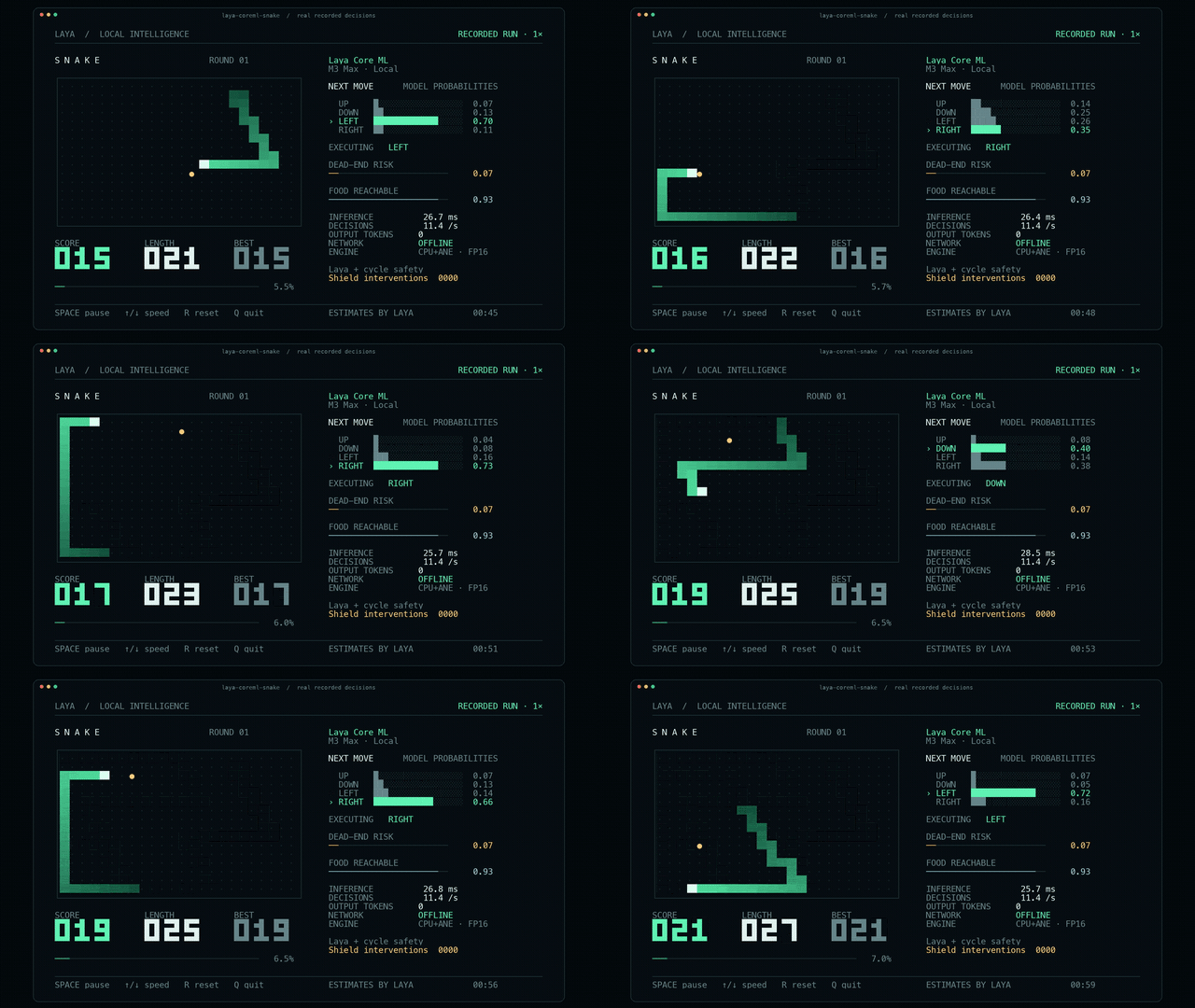
Laya Model Explained: The Open-Source Decision Model You Can Run Locall
Laya is a 421M open decision model for fast local routing and scoring, offering a self-hosted alternative to cloud-based decision APIs.
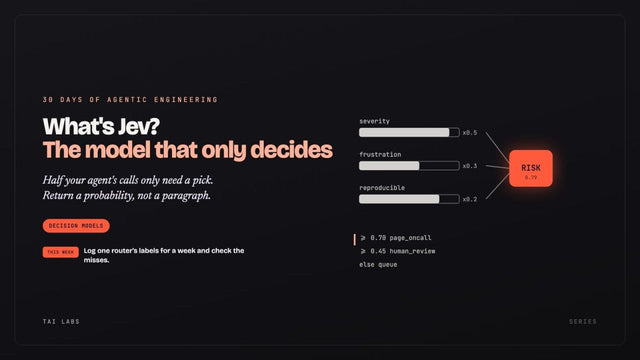
Jev Use Cases: 7 Things People Are Already Building With TypeSafe’s Decision Model
Seven real Jev builds show where decision models fit: routing, browser actions, scoring, filtering, games, content analysis, and research triage.
Why Is Home NVR AI Shifting From Frame Detection to Event Understanding in 2026?
Understand how tracks become events, why temporal context reduces repetitive alerts, and where event-aware video AI still fails.


