
How Does Home Assistant Protect Consistency During Concurrent Changes?


Home Assistant limits concurrent-change conflicts through event-loop scheduling, state-machine updates, automation modes, integration coordination, and transactional database writes.
Those mechanisms keep internal structures coherent, but they do not infer which of two valid household intentions should win. A motion automation can turn a lamp on while a bedtime automation turns it off, and both service calls may be correctly executed. Consistency therefore spans two layers: Core must preserve valid state transitions, while configuration must define ordering, cancellation, or precedence for competing actions.
The Event Loop Serializes Critical In-Process Work
Home Assistant Core uses asynchronous scheduling so many tasks can wait on I/O without each owning a thread. Code running on the event loop advances cooperatively, which keeps central state operations ordered when integrations follow the asynchronous contract.
A detailed discussion of Home Assistant concurrency explains how event-loop serialization coordinates callbacks and tasks while blocking code must be moved away from the loop.
Serialization at this layer prevents simultaneous mutation of some internal structures, but it does not make an entire multi-step automation atomic. A task can await device I/O while another valid task advances.
Automation Modes Define Admission and Ordering
Single mode rejects a new run while one is active; restart cancels the earlier run; queued preserves order; parallel allows overlap. Selecting a mode is therefore a policy decision about what concurrent triggers mean for that automation.
A race-condition discussion involving conflicting automations shows why conflicting automation writes must be chosen around the controlled resource and desired precedence.
Queued mode can preserve arrival order inside one automation, but separate automations can still conflict. Consolidating ownership or adding an explicit arbiter is necessary when several rules write the same entity.
Integrations Reconcile Desired and Observed Device State
A service call expresses desired action, while later device feedback supplies observed state. Integrations may use locks, coordinators, optimistic updates, polling, or acknowledgments to avoid overlapping protocol operations and reconcile differences.
Automation-mode examples clarify how queued and parallel execution alter execution ordering, but the device protocol may still reorder or reject commands after Core dispatches them.
Internal order does not guarantee physical order across a lossy radio, cloud service, or sleeping device. The authoritative result should come from confirmed device state when the protocol supports it, not solely from the order in which service calls were issued.

Transactions Protect Storage, Not Household Intent
Recorder transactions keep related database changes valid across commits and recovery. They protect the stored representation from partial writes, but historical persistence happens after state decisions and cannot resolve contradictory commands.
A practitioner guide warns that the default automation mode may not match desired behavior, reinforcing that automation intent policy is separate from database consistency.
This is the failure boundary: if two correct rules encode incompatible goals, Core can remain internally consistent while the device oscillates. Add ownership, precedence, cooldown, or a shared state machine; database tuning cannot repair ambiguous intent.
Test One Conflict With a Deterministic Schedule
Choose a harmless entity and trigger the competing paths at controlled offsets: simultaneously, one second apart, and during a deliberate device delay. Capture automation trace order, service calls, acknowledgments, state events, and final physical state.
The input-to-control boundaries follows a local automation from inputs to control, providing the boundaries needed to distinguish Core ordering from device reconciliation.
Pass only when the declared winner and final device state match in repeated trials, including restart and unavailable-device cases. If results vary, assign one automation ownership and route other intentions through it; do not add arbitrary delays until traces identify the contested boundary.

Recommended products

Tech & AI HUB
More to Read
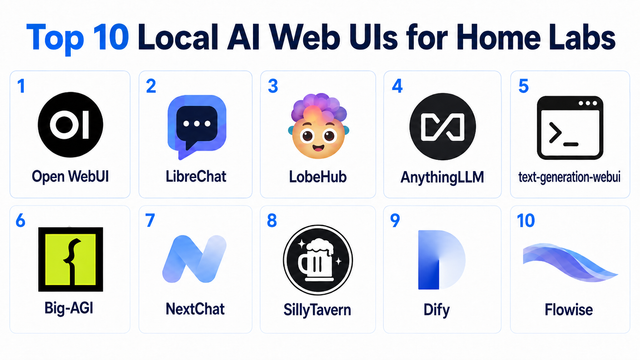
Top 10 Local AI Web UI for Home Labs In 2026
Compare 10 self-hosted local AI web UIs for home labs, covering Ollama support, RAG, agents, multi-user access, setup effort, and ideal use cases.
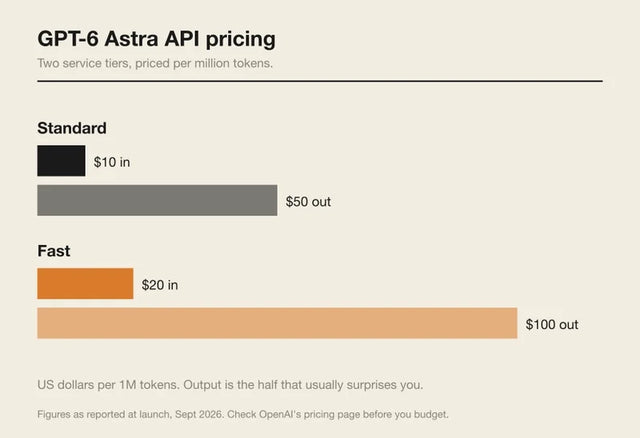
How Much Does GPT-6 Astra Cost Over Time? When Cloud AI Makes Sense vs Local AI
A practical GPT-6 Astra cost guide covering token usage, long-term AI workloads, cloud vs local tradeoffs, and why hybrid AI infrastructure matters.
GPT-6 Astra vs Local AI: Which Parts of an Agent Should Stay on Your Home Server?
GPT-6 Astra can stay in the cloud while your home server keeps files, memory, RAG, tools, permissions, and durable agent state local.


