
A Two-Drive Starter NAS for People Who Want Simple Backups, Not a Rack


A two-drive starter NAS works best when it has one clear job: receive household backups reliably without becoming a miniature data center.
The goal is not to reproduce a rack, run every self-hosted app, or design for hypothetical enterprise growth. It is to give laptops, phones, and a few shared folders a predictable local destination, protect that data against ordinary mistakes and one failed drive where appropriate, and preserve a separate recovery copy outside the NAS. Simplicity comes from limiting roles, not from ignoring failure boundaries.
Define the NAS as a Backup Appliance Before Choosing the Drives
Start by naming what the NAS will protect. Typical starter roles include laptop backups, phone photo uploads, family documents, and a small shared folder. These workloads need dependable capacity, permissions, version history, and restore access; they do not automatically need virtual machines, local AI, camera recording, or a rack-mounted network stack.
Puget Systems describes a NAS as a central network storage system that can expand home storage and provide a destination for computer backups. That centralized backup-and-file role is the correct scope for this design.
Write a one-sentence service contract: the NAS receives backups from named household devices, keeps selected shared files available on the local network, and sends critical data to an independent destination. Any planned workload that does not support that contract should be deferred until the backup system is stable and tested.
Choose Between a Mirror and Two Independent Volumes Deliberately
Two drives can be combined as a mirror or kept as separate filesystems. A mirror presents one usable volume and can keep the NAS available after one member fails, but both disks contain the same live state. Two independent volumes provide separate capacity and can support a scheduled copy, yet both drives still share the same enclosure, power supply, administrator account, and physical location.
Backblaze explains that two drives can form a RAID 1 mirror, writing the same data to both members so one disk can fail without immediate data loss. That availability-versus-usable-capacity trade-off helps clarify what the second drive is actually doing.
| Two-drive layout | Usable capacity | Primary benefit | Main limitation |
|---|---|---|---|
| Mirror | About one drive | Continues after one member fails | Deletion, corruption, or ransomware can affect the mirrored state |
| Two independent volumes | About two drives | Flexible separation or scheduled copying | Not isolated from enclosure, power, theft, or administrator compromise |
| Striped volume | About two drives | More combined capacity | One drive failure can remove the whole volume |
For irreplaceable household files, a mirror is a convenience and availability feature rather than the complete backup plan. Two independent drives in one chassis are also not equivalent to an off-site copy. Choose the local layout based on downtime tolerance, then solve backup separately.
Calculate Capacity From Backup History, Not Current File Size
The NAS must hold more than the current contents of each device. Backup applications may retain previous versions, deleted files, system images, mobile uploads, indexes, and temporary working space. A two-drive mirror also provides only the capacity of one member, so two 8 TB drives do not create 16 TB of protected usable space.
Backblaze’s 3-2-1 guide frames protection as three copies across two storage types or locations, with one copy off-site. That copy-count and location model should be included in the capacity budget rather than spending everything on the live NAS.
Add the protected data from every device, expected annual growth, the desired version window, shared-folder growth, and an operating reserve. A practical target is to keep at least 15–20 percent free after ordinary backups. If the calculation already consumes most of one mirrored drive, two bays are not the simple choice; they are an early capacity constraint.

Separate Device Backups, Shared Files, and Temporary Intake
Do not place every household file into one writable share. Device backups should be owned by the backup service and protected from casual browsing. Shared files need user or group permissions. Phone-upload and download folders are intake areas that may contain duplicates, incomplete transfers, or content that has not yet been classified.
A Backblaze home-NAS case study begins by defining the devices, data, NAS role, Ethernet connection, and off-site copy as one workflow. That device-to-NAS-to-off-site path supports a small folder map with distinct responsibilities.
| Storage area | Who writes to it | Retention rule |
|---|---|---|
| Device backups | Backup application only | Versioned according to device importance and capacity |
| Family shared files | Approved household accounts | Snapshots or file versions plus independent backup |
| Phone and camera intake | Upload service or selected users | Review, deduplicate, then move authoritative files |
| Temporary downloads | Limited service account | Automatic cleanup; not treated as protected data |
Use separate service accounts where possible. A laptop backup should not be able to modify another user’s archive, and a media or download service should not have write access to the backup repository. The folder map is part of the recovery design, not merely visual organization.
Build the Backup Path Around Restore Tests
The local NAS copy protects devices from a failed laptop drive or accidental loss, but the NAS itself can fail, be stolen, suffer filesystem damage, or be encrypted by a compromised account. Critical data therefore needs another destination that does not share the same enclosure and credentials.
TechTarget’s backup-testing tutorial emphasizes that a backup must be restored and the workload or data checked, because completed job status alone does not prove recovery. That restore-and-validation requirement should define the starter NAS schedule.
Run frequent device-to-NAS backups, then copy critical NAS datasets to an external drive stored separately or to an off-site destination. Every month, restore a small folder to a different location and open representative files. Every few months, test one full device or application recovery. The simplest backup system is the one the household can actually restore.
Keep the off-site set narrower than the local NAS when bandwidth or budget is limited. Prioritize family documents, original photos, current projects, and the configuration needed to interpret encrypted or versioned backups. Replaceable downloads and media can remain local. This selection should be written down before the first cloud or external-drive job runs, because a backup that silently excludes the only copy of a critical folder is more dangerous than a smaller system with a verified scope.
Choose a Desktop Location With Ethernet, Cooling, and Clean Power
A two-drive NAS does not require a rack, but it still needs a stable surface, wired network access, airflow, and protection from accidental unplugging. Avoid sealed cabinets, laundry areas, direct sunlight, and desks that amplify drive vibration. Leave enough space to remove a drive without dismantling the room.
LinuxBlog’s home-lab hardware guide discusses heat, UPS power, and the practical limits of placing always-on equipment in a home office rather than assuming an enclosed rack is automatically suitable. That room-level placement check applies even to a small NAS.
Connect the NAS to the router or switch by Ethernet. Use a small UPS when backup jobs, filesystem consistency, or remote access matter during brief outages. The objective is enough runtime for a clean shutdown, not hours of operation. Record whether the NAS restarts automatically and verify that backups resume after a controlled power test.
Know When Two Drives Are Enough and When They Are the Bottleneck
Two bays are enough when current protected data fits comfortably in one mirrored drive, growth is modest, the NAS mainly receives backups and serves a few shared folders, and a separate off-site copy exists. More bays become justified when capacity and redundancy must grow together, several large media or camera workloads appear, or replacing both disks is the only route to expansion.
Puget Systems distinguishes basic backup and file-sharing needs from environments that require a rack full of storage infrastructure. That small-NAS-versus-rack boundary captures the intended stopping point: do not build a rack when a desktop appliance meets the recovery requirement, but do not force a large archive into two bays to preserve the appearance of simplicity.
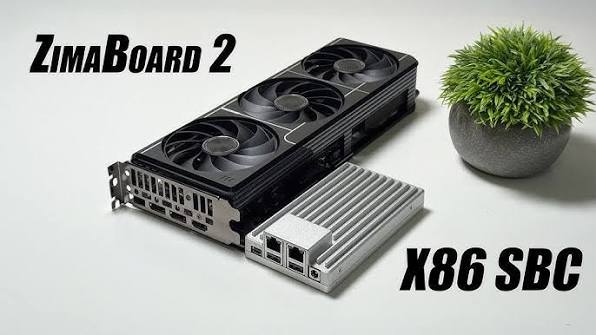
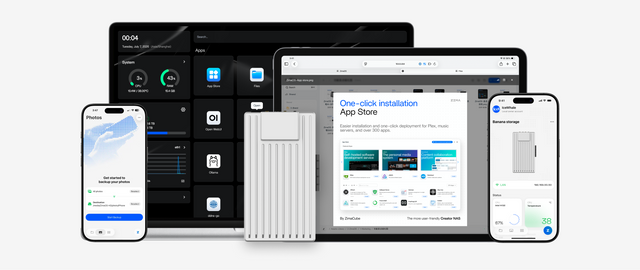
The ZimaSpace 3-2-1 backup guide for home NAS users provides the off-site planning step. A ZimaBoard 2 Mini Home Server fits a compact two-drive DIY path when the owner wants direct SATA attachment and an open x86 app layer. A ZimaCube 2 AI NAS should enter the decision only when integrated multi-bay capacity, longer retention, heavier concurrent services, or future storage growth have become explicit requirements.
A simple starter NAS succeeds by making backups routine and restores understandable. It does not need a rack, but it does need boundaries that survive one failed device, one mistaken deletion, and one future capacity decision.

Recommended products

NAS & Server Setup
More to Read
A Local RAG Setup for Research Papers, Notes, and Private Documents
Keep original documents authoritative, make indexing repeatable, require citations, and separate replaceable models from private source data.
Why Are Developers Using a Gateway Node for Private DNS, VPN, and Test Apps?
A gateway node gives private apps one controlled name and access path, while compute nodes stay unexposed and replaceable.
How to Build a Reproducible App Stack With Compose Files, Secrets, and Persistent Data Separated
Keep Compose definitions portable, secrets protected, and app data independently backed up so the stack can be rebuilt on a clean host.


