
How to Run Jellyfin Alongside Other Self-Hosted Apps Safely


Run Jellyfin beside other self-hosted apps by separating data roles, protecting playback resources, and testing the host under the busiest overlapping workload.
A shared home server can run media, backups, photo indexing, home automation, downloaders, dashboards, and databases reliably when no single workload owns every resource. Give Jellyfin a stable app-data path, keep bulk media and disposable transcode files distinct, reserve enough CPU, memory, storage I/O, and hardware-video access for playback, and constrain neighbors whose peaks could otherwise disrupt the household.
Make Jellyfin the Playback Role, Not the Owner of the Whole Host
Start by naming the jobs that must stay responsive. Jellyfin owns media indexing, client sessions, and any required transcoding; a backup tool owns recovery copies; a photo app owns imports and image analysis; a downloader owns ingest; and home automation may own always-on control. The host can be shared, but each service should have a clear role and an expected busy period.
Translate the app list into overlapping workloads instead of counting containers. A small dashboard that idles all day is not comparable to a photo re-index, a compressed backup, or a 4K video transcode. Record which heavy jobs can occur during evening viewing and which can be moved outside that window.
This role-first model also prevents consolidation from becoming dependency sprawl. ZimaSpace’s guide to consolidating several household services on one server uses the same principle: one box is successful only while each workflow remains usable and recoverable when the others are active.
Separate Persistent State, Bulk Media, and Disposable Working Data
Give Jellyfin persistent configuration, database, metadata, and plugin state an explicit storage location that survives container replacement. Keep the large media library on its own capacity-oriented path, and treat transcode output, caches, and temporary files as a separate working-data role that can be cleared without destroying server identity.
The same rule should apply to every stateful neighbor. A practical guide to persistent container storage explains why data that must survive container replacement belongs outside the disposable container layer. Document each app’s authoritative data path before several services accumulate hidden state under the system disk.
Do not point unrelated databases, caches, downloads, and transcode scratch at one small SSD merely because it is fast. Shared low-latency storage is useful until simultaneous writes create latency or fill-space pressure; once that happens, split the highest-write workload or move disposable scratch away from critical app state.
Reserve Headroom for Playback and Put Limits on Bursty Neighbors
Choose a playback floor that must remain available even when the host is busy. That floor might be one living-room Direct Play session plus a required hardware transcode, or the busiest normal combination your household actually uses. Measure CPU, memory, GPU/video-engine activity, and storage latency while that floor is active.
Containers do not become harmless simply because they are isolated by name. The container resource quotas guidance notes that CPU and memory quotas can be used to prevent one container from consuming host resources without bound. Apply limits first to bursty or experimental services whose slowdown is acceptable, not blindly to Jellyfin until you know its peak playback need.
Leave the operating system and storage services outside the competition as well. A configuration that lets app workloads drive the host into swapping, out-of-memory kills, or a full system volume is not safely consolidated even if Jellyfin itself has a nominal CPU reservation.

Keep Shared GPU, Network, and Storage Paths Explicit
Hardware acceleration is a shared device path, not an abstract setting. If another container also uses the GPU for local AI, image processing, or video work, test whether both workloads can coexist without queueing or driver contention. When they cannot, schedule the secondary workload or move it to another host instead of assuming more CPU cores will fix a media-engine bottleneck.
Treat network and storage the same way. Jellyfin may read a high-bitrate source while a backup writes large sequential data and a photo app performs many small metadata operations. If media lives on network storage, the path between compute and storage becomes part of the playback topology and must be tested during the competing transfer.
Avoid unnecessary sharing of write access. A downloader can deposit completed files into an ingest location that Jellyfin reads later; it does not need write access to Jellyfin configuration. A monitoring container can read metrics without owning application data. Narrow permissions reduce the number of services that can corrupt or delete another service’s state.
Schedule Heavy Background Work Around Household Use
Move flexible work away from the busiest playback period. Full-library scans, photo re-indexing, backup compression, integrity checks, AI indexing, and large downloads can often run overnight or after the main viewing window without changing the final result.
Scheduling is not a substitute for capacity, but it is a topology tool. If two legitimate heavy jobs never need to run together, separating them in time can preserve a small, efficient single-host design. If they must overlap every day, size or split the system for that overlap rather than depending on a fragile calendar.
Record restart and dependency behavior too. Jellyfin should not start against a missing remote media mount, and a failed experimental app should not block DNS, storage, or authentication paths that the household needs to reach the media server.
Validate the Shared Host With a Busy-Hour Reproduction
Before calling the setup safe, reproduce the worst normal overlap: play the most demanding representative media, run the backup or photo job that usually coincides with it, and keep the other always-on services running. Watch playback stability, memory pressure, storage latency, free space, temperatures, and the hardware-video path.
If the test passes with meaningful headroom, stop adding complexity. You do not need a second server merely because the first one hosts several apps. Continue measuring after major app changes, storage migrations, or a new GPU workload because the resource graph has changed.
Split roles only when the same measured conflict returns after scheduling and sensible limits: storage latency repeatedly disrupts playback, the GPU cannot serve two required workloads, memory pressure threatens core services, or one experimental stack needs a different maintenance window. At that point, another host has a named job rather than being expansion for its own sake.

Recommended products

NAS & Server Setup
More to Read
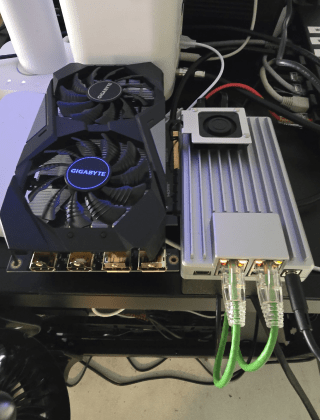
Can a Dorm Server Run Quietly Enough for Sleep, Study, and Video Calls?
Yes—a dorm server can stay unobtrusive when hardware is low-power, storage vibration is controlled, heavy jobs are scheduled, and noise is tested in the...
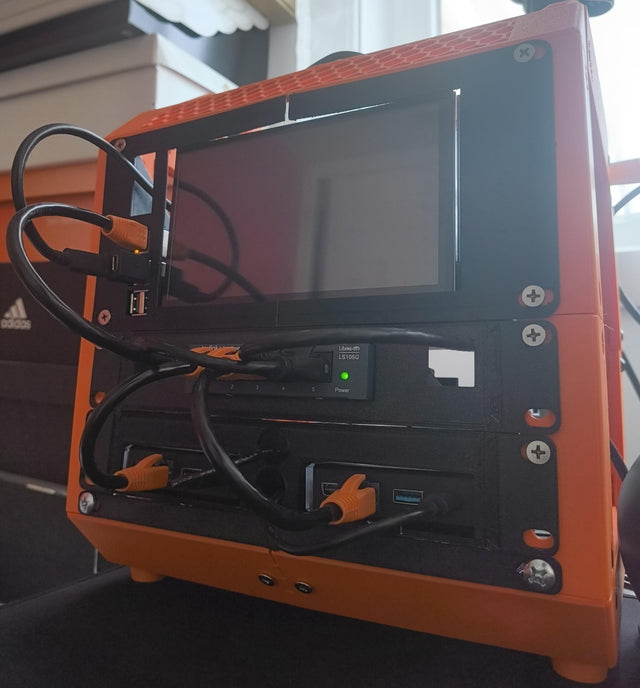
A Student Homelab That Can Move From Dorm Room to First Apartment
Keep a student homelab portable by separating services from room-specific networking, minimizing hardware, backing up state, and rehearsing a clean move.
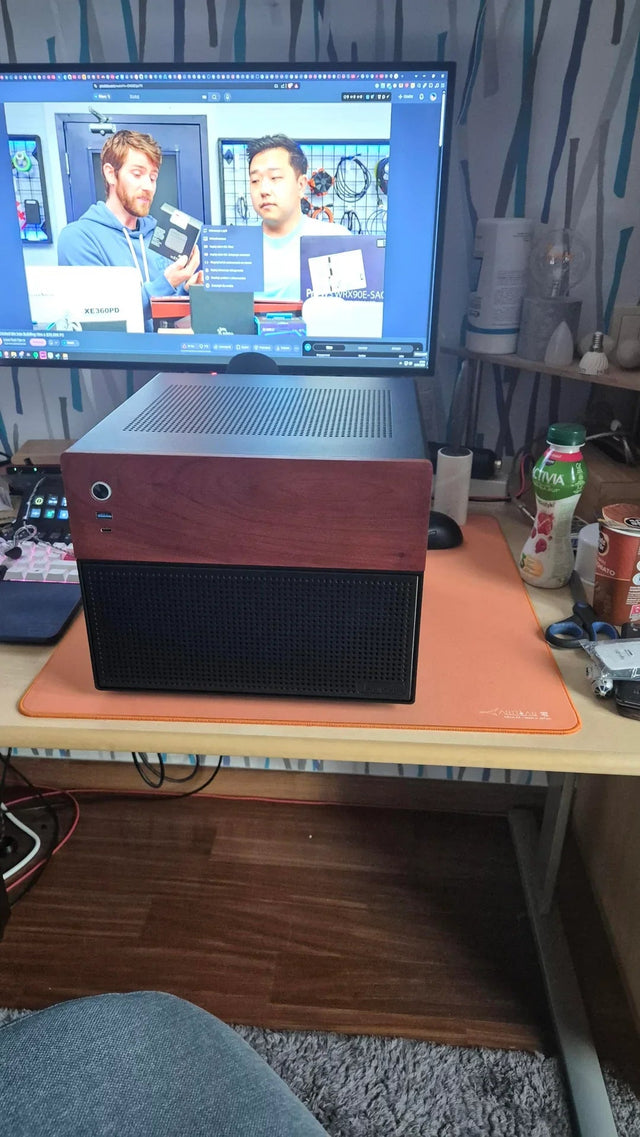
How to Share One Home Server With Roommates Without Sharing Accounts or Private Files
Give every roommate a named identity, private storage, and only the shared roles they need; keep administration, backups, and offboarding separate.


