
How Storage Placement Changes a Jellyfin Home-Server Design


Storage placement changes Jellyfin’s reliability because the database, cache, media, and backups have different latency, durability, and recovery needs.
Design the data path before choosing a NAS share or local disk. Jellyfin may read media over a mounted network filesystem, but application state and transcode work should not inherit every failure and latency characteristic of bulk storage. The correct layout is the one that keeps playback predictable and restoration explicit.
Put persistent application state on a dependable local path
Jellyfin’s database, configuration, logs, and metadata indexes are small compared with media but sensitive to latency and interrupted writes. Keep them on local SSD or another low-latency path that starts before the service. If the database depends on a network mount, a brief NAS outage can become an application outage or a library-maintenance risk.
Use a separate backup copy of this state and verify that it can be restored without the original server. Do not confuse fast storage with protected storage; both properties must be tested.
Put cache and transcode work where churn is cheap
Artwork, logs, thumbnails, and temporary transcode files can grow and be rebuilt. Place them on fast local storage with enough free space for the largest expected conversion set. Keeping high-churn files away from the media volume reduces fragmentation and prevents a cache cleanup from competing with source reads.
Measure source-read latency and temporary-output writes during a representative stream. The NFS cache case study shows why moving these roles requires a deliberate latency and restore trade-off.
Use network storage for capacity only when the path is stable
Place large media files on a NAS when capacity, drive expansion, or independent storage management matters. Mount the share at boot, use a stable path inside the service, and validate one file from every library. A network link that is fast on average can still fail on packet loss, mount timing, or a sleeping disk.
Keep the network path simple: one reliable wired route from Jellyfin to the storage tier, with a separate management or backup path only when the shared route degrades.

Close with a recovery and expansion boundary
Back up application state to a destination that does not disappear with the media pool. Expand by adding a storage tier or a dedicated compute node when capacity and transcoding grow at different rates. Stop the design if database persistence, boot-time mounts, or restore testing is unresolved; moving folders without those guarantees only hides the failure boundary.

Recommended products

NAS & Server Setup
More to Read
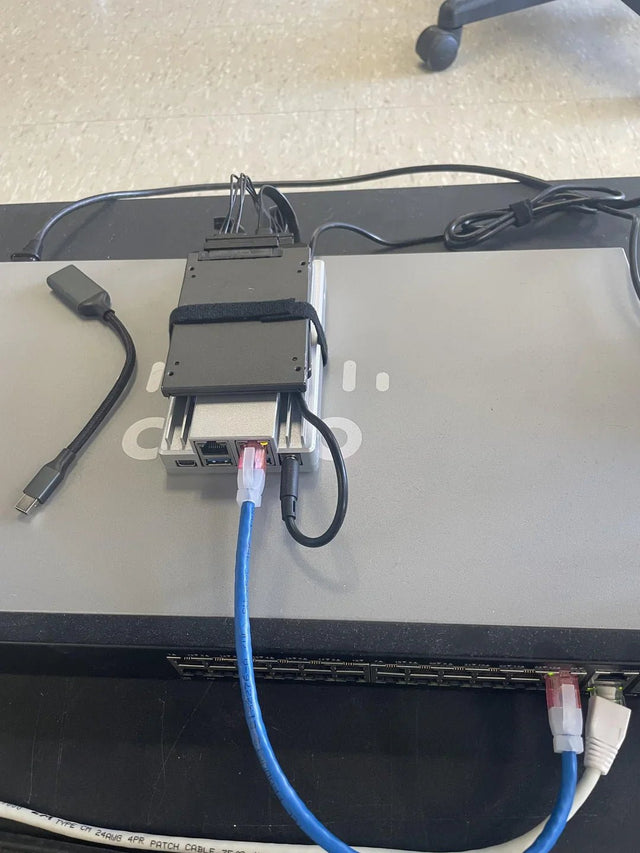
How AI-Like Analysis and Automation Change Jellyfin Storage and Compute Needs
Automation and adjacent AI analysis add scans, derived data, CPU/GPU work, cache, scratch space, and background scheduling beyond ordinary Jellyfin playback.
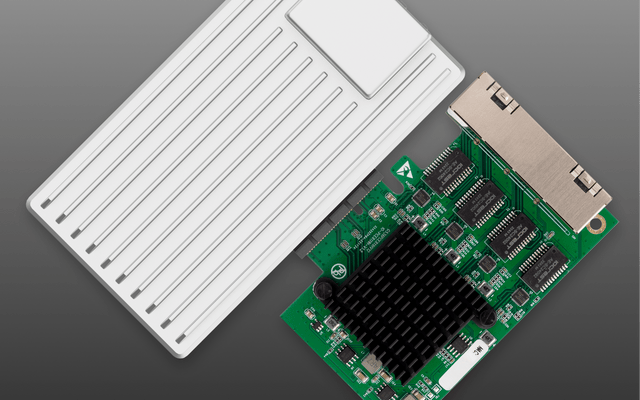
How to Integrate Jellyfin Into a Small Apartment or Rental Network
Build a rental-friendly Jellyfin network around stable local addressing, minimal wiring, quiet hardware, CGNAT-aware remote access, and reversible changes.
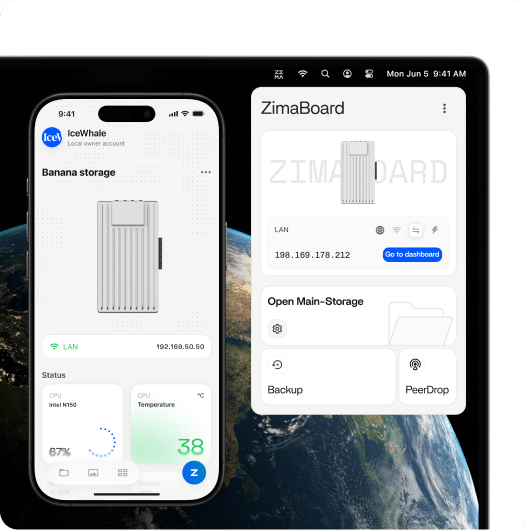
How Many Users and Background Jobs Should One Jellyfin Host Support?
Treat Jellyfin users and background jobs as one shared workload budget; capacity ends when playback latency, queues, or resource pressure becomes repeatable.


