
The Home AI Server Demand Forecast 2027: Why Private AI Workloads Are Moving Closer to Home


Executive Summary
Home AI server demand in 2027 will not be driven by one single product category or by the phrase “AI NAS” alone. It will be driven by a broader change in how people think about AI workloads: where the data lives, where the model runs, who controls the workflow, and whether private files need to leave the home network.
By 2027, more home users, creators, developers, and small teams will experiment with local AI servers because AI is becoming less like a single chatbot tab and more like a set of recurring workflows: document search, media organization, code assistance, automatic file sorting, local knowledge bases, home automation, transcription, summarization, and private assistant tasks.
This report forecasts that the strongest demand will come from hybrid setups rather than purely local AI. In that architecture, cloud models handle frontier reasoning and high-end tasks, while a home AI server handles private data, long-term storage, indexing, local inference, automation, and always-on services.
The key shift is simple: users will not only ask, “Which AI model should I use?” They will increasingly ask, “Where should this AI run?”
Forecast Methodology
This forecast uses a source-aware qualitative method rather than a single market-size estimate. The goal is not to claim an exact number of home AI servers that will be deployed in 2027. Instead, it identifies demand drivers that are already visible in public research, infrastructure reports, developer tools, local AI software ecosystems, and public community behavior.
The evidence base includes public AI infrastructure reports, AI adoption studies, local LLM research, local inference tooling, home server workload patterns, and a small-sample scan of public forum and community signals. Key references include the Energy and AI report, the Artificial Intelligence Index Report 2026, the Anthropic Economic Index report: Uneven geographic and enterprise AI adoption, and community-focused research on Open AI in the Wild: Adoption and Adaptation of Open Models on r/LocalLLaMA.
The community scan is intentionally small and directional. It reviewed 31 public records across Reddit-focused research, local AI tool communities, open-source project ecosystems, homelab-style hardware discussions, public security reports, media-server support content, and local AI usage case studies. Each record was counted once by its primary demand signal. The result should be read as an early-user signal map, not a representative survey of all home users.
The forecast is built around three assumptions:
- AI usage will keep expanding from one-off chat into repeated task workflows.
- Not every AI workload will remain in the cloud, especially when private files, local media, cost control, or latency matter.
- Home AI infrastructure will be hybrid: storage, compute, cloud, and user devices will each handle different parts of the workflow.
What We Mean by a Home AI Server in 2027
A home AI server is not necessarily a rack server, a high-end workstation, or a dedicated AI appliance. In 2027, the term will describe a local machine that stores, indexes, processes, or serves AI workflows inside a home or small office environment.
It may be a NAS, a mini PC, a workstation, an old desktop, a compact edge device, or a hybrid setup where a NAS stores the data and a separate compute node runs models. What matters is not the form factor. What matters is the role:
| Layer | Home AI Server Role | Example Workloads |
|---|---|---|
| Storage Layer | Keep private files, photos, videos, backups, and project data in one local place. | Documents, media libraries, personal archives, backups. |
| Indexing Layer | Make files searchable through OCR, metadata, embeddings, thumbnails, and tags. | Private RAG, media search, PDF search, file sorting. |
| Inference Layer | Run local models or route tasks to local/cloud models depending on the job. | Local LLM chat, summarization, classification, transcription. |
| Automation Layer | Trigger workflows when new files arrive, backups finish, media changes, or user requests appear. | Watch folders, home automation, notification agents, scheduled jobs. |
| Interface Layer | Expose the workflow through a browser, chat UI, app, API, or assistant interface. | Open WebUI, dashboards, private assistants, local APIs. |
The home AI server is therefore best understood as a private workflow hub, not just a machine that can run a model.
Demand Driver 1: Cloud AI Infrastructure Pressure Will Make “Where AI Runs” a User Question
Cloud AI is not going away. In fact, frontier AI will continue to depend on large-scale data centers, specialized chips, and massive power infrastructure. But that growth will also make infrastructure more visible to ordinary users.
The IEA estimates that data centers consumed around 415 TWh of electricity in 2024 and projects that data center electricity consumption will more than double to around 945 TWh by 2030, with AI as the most important growth driver alongside other digital services. The same report notes that data centers are still a small share of global electricity consumption, but their local grid impacts can be much more pronounced because capacity is geographically concentrated.
For the home AI server market, the implication is not that users will reject cloud AI. The more realistic forecast is that some users will become more aware of the tradeoff between cloud convenience and local control. When AI usage becomes daily and repetitive, the question “Does every task need to call a cloud model?” becomes more practical.
Source note: Based on the IEA Energy and AI report. IEA reports around 415 TWh of global data center electricity consumption in 2024 and projects around 945 TWh by 2030. Values for 2025–2029 are CAGR bridge estimates for visualization only, not separate IEA point forecasts.
Source note: Based on the IEA Energy and AI report. IEA reports around 415 TWh of global data center electricity consumption in 2024 and projects around 945 TWh by 2030. Intermediate years are CAGR bridge estimates for visualization only, not separate IEA point forecasts.
By 2027, this awareness may create demand for local processing in four areas:
- Private documents that users do not want to upload repeatedly.
- Media files that are too large or too personal for constant cloud processing.
- Recurring automations where cloud API cost can accumulate.
- Low-latency home workflows that benefit from running near the data.
This does not mean every user will build a local AI server. It means the cloud will no longer be the default answer for every AI task.
Demand Driver 2: Local LLMs Will Move From Hobby Experiments to Reusable Home Utilities
The local LLM ecosystem has already moved beyond pure experimentation. Tools such as llama.cpp, Ollama, LM Studio, Open WebUI, and model libraries built around open-weight models have made local inference more accessible to non-research users.
The important change is that local LLMs are becoming workflow components. A user may not need a local model to outperform the best cloud model. They may only need it to classify files, summarize local notes, extract fields from PDFs, rewrite a document draft, generate tags, or answer questions from a small private archive.
Research on a private LLM server for SMBs argues that carefully configured on-premises setups with quantized open-source models and consumer-grade hardware can offer a viable path for private inference without relying entirely on cloud services. That does not make home AI servers effortless, but it supports the idea that useful private inference is moving closer to ordinary hardware. See Viability and Performance of a Private LLM Server for SMBs.
The 2027 demand pattern will likely look like this:
| User Type | Likely Local LLM Use | Why a Home AI Server Helps |
|---|---|---|
| Home user | File search, summaries, photo tags, household document help. | Data stays closer to the home archive. |
| Creator | Media organization, transcript search, idea libraries, asset tagging. | Large media files can remain local. |
| Developer | Code search, local documentation, project assistant, test generation. | Repos and private notes can be indexed locally. |
| Small team | Internal knowledge base, meeting notes, SOP search, private assistant. | Costs and data boundaries become more predictable. |
Demand Driver 3: Private RAG Will Turn Personal Files Into Local Knowledge Bases
Private RAG may become one of the strongest home AI server use cases by 2027. Many users do not need a general chatbot for every question. They need an assistant that can answer from their own files: bills, contracts, PDFs, device manuals, research notes, school documents, receipts, code repositories, transcripts, and project folders.
The demand signal is not “I want RAG.” The user-facing demand is simpler:
- “Where is that document?”
- “What did this PDF say?”
- “Which warranty covers this device?”
- “Search my notes and summarize the answer.”
- “Find the invoice from last summer.”
A home AI server is useful because RAG is not only a model problem. It is a storage, indexing, embedding, retrieval, permission, and update problem. The system must know where files live, when they change, which folders are private, and how to refresh indexes without breaking the archive.
This is why private RAG is likely to become a home server workload rather than just a web app workflow. The files already live at home. The indexing process should often live near them.
Demand Driver 4: Media Libraries Will Become AI-Searchable Archives
Home media libraries are growing faster than manual organization habits. Phones capture photos, cameras create large video files, families collect shared albums, creators store footage, and media servers keep private entertainment libraries.
In 2027, more users will expect media search to feel semantic. They will not only browse by folder or date. They will want to search by people, objects, locations, events, spoken words, embedded text, captions, and context.
This does not require every media task to run a giant model. Many useful workflows can start with OCR, transcription, embeddings, thumbnails, metadata extraction, and lightweight classifiers. But the demand for searchable media will increase the value of a local machine that can process large files without sending every image or video to a cloud service.
Media workloads also connect home AI servers to traditional home server demand. Plex support notes that playback buffering is often tied to network limits or a server’s ability to transcode fast enough. See Why is my video stream buffering?. This illustrates a broader point: home servers already handle media performance problems, and AI will add new indexing and search workloads on top of them.
Demand Driver 5: Home Automation Will Need a Local Decision Layer
Home automation has traditionally been rule-based: if motion is detected, turn on a light; if a file appears, run a script; if a backup fails, send a notification. AI changes the nature of automation because it can interpret messy inputs and suggest actions.
By 2027, home AI automation will likely focus on practical, bounded tasks:
- Classify new downloads into folders.
- Summarize a document after it is scanned.
- Tag photos after a phone backup.
- Generate a weekly household document digest.
- Detect duplicate files or broken media metadata.
- Explain a device manual stored in the local archive.
The demand will be strongest when AI is used as a suggestion layer rather than an unchecked action layer. A safe home AI server should support preview, approval, logs, rollback, and permission boundaries.
That is also why local AI interfaces matter. The Open WebUI: An Open, Extensible, and Usable Interface for AI Interaction paper describes an open, extensible, and usable interface toolkit for AI interaction, including local and open-source usage patterns. Interfaces like this help turn local models from command-line experiments into usable workflows.
Demand Driver 6: Hybrid AI Architecture Will Become More Common Than All-Cloud or All-Local
The strongest 2027 forecast is not “everything goes local.” The stronger forecast is that home AI becomes hybrid.
In a hybrid home AI architecture:
- The home server stores files, media, backups, and indexes.
- A local model handles private, repetitive, low-latency, or offline tasks.
- A cloud model handles frontier reasoning, high-quality generation, or tasks that exceed local hardware.
- User devices act as clients, interfaces, capture tools, and approval points.
This architecture is practical because local and cloud AI have different strengths. Cloud AI usually wins on frontier capability and convenience. Local AI wins on data proximity, privacy boundaries, repeatable workflows, offline resilience, and predictable control.
The home AI server becomes the coordination layer between them. It does not need to replace the cloud. It needs to decide which tasks should stay local and which tasks deserve cloud escalation.
Public Forum and Community Signals: What Early Users Are Already Doing
Public communities are useful because they reveal what early adopters actually try before the category becomes mainstream. This section expands beyond Reddit alone. It looks at signals from r/LocalLLaMA research, self-hosted AI tool communities, open-source project ecosystems, homelab-style hardware discussions, media-server support topics, public security reports, and local AI usage case studies.
A 2026 study of r/LocalLLaMA found that community members understand openness pragmatically: in relation to reliability, local control, privacy, adaptation under compute constraints, licensing, and usability. See Open AI in the Wild: Adoption and Adaptation of Open Models on r/LocalLLaMA.
The same pattern appears across other public sources. Users are not only asking which model is best. They are experimenting with Jetson devices, used workstation hardware, GPU desktops, mini PCs, local model runners, memory-heavy builds, NAS-linked workflows, and browser-based or web-based local AI interfaces.
For this article, the community scan counted 31 public records by primary demand signal. A record may be a public community study, public forum-style discussion surfaced through research, a reported Reddit build, a public tool-community source, a project ecosystem record, or a public support/security case. This is a small-sample scan, not a representative market survey.
| Public Source Type | What Users Discuss | Why It Matters for Home AI Server Demand | Example Source |
|---|---|---|---|
| r/LocalLLaMA research | Open models, local control, privacy, compute limits, usability, experimentation. | Shows why early users adopt local AI even when cloud tools are easier. | Open AI in the Wild: Adoption and Adaptation of Open Models on r/LocalLLaMA |
| Open WebUI and self-hosted AI interface ecosystem | Local AI interfaces, plugin workflows, multiple models, usability, extensions. | Shows that local AI demand depends on usable interfaces, not only model quality. | Open WebUI: An Open, Extensible, and Usable Interface for AI Interaction |
| llama.cpp and local inference ecosystem | Quantization, CPU/GPU backends, memory limits, edge inference, local servers. | Shows that home AI servers are often shaped by memory, backend, and acceleration constraints. | llama.cpp |
| Ollama and local model runner ecosystem | Local model hosting, GPU support, REST APIs, Docker-style setup, local app integration. | Shows how local AI setup is becoming easier for non-research users. | Ollama GPU |
| Public hardware case reports | Used workstations, large memory builds, mini PCs, GPU limitations, local model speed. | Shows that early home AI server users often repurpose hardware rather than buying a single fixed appliance. | 768GB of cheap Intel Optane DIMM memory sticks used to run 1-trillion-parameter LLM on a system with a single GPU |
| Media-server support ecosystem | Plex buffering, transcoding, network limits, NAS performance, client compatibility. | Shows that home servers already handle performance-sensitive local workloads before AI is added. | Why is my video stream buffering? |
| Security reports on exposed local AI services | Publicly exposed Ollama servers, weak access control, residential IP risk, tool calling exposure. | Shows that local AI demand creates a parallel need for secure setup, not just compute hardware. | Over 175,000 publicly exposed Ollama AI servers discovered worldwide - so fix now |
Source note: Small-sample public-source scan of 31 records across r/LocalLLaMA research, Open WebUI research, Ollama and llama.cpp ecosystems, public local AI hardware cases, Plex support material, and local AI security reports. Each record was counted once by its primary signal theme. This is directional evidence for early-user behavior, not a representative market survey.
Source note: Small-sample public-source scan of 31 records across r/LocalLLaMA research, Open WebUI research, Ollama and llama.cpp ecosystems, public local AI hardware cases, Plex support material, and local AI security reports. Each record was counted once by its primary signal theme. This is directional evidence for early-user behavior, not a representative market survey.
These early users show six practical demand signals:
- Local control and privacy: users want more control over documents, prompts, outputs, and model behavior.
- Experimentation and customization: users want to try models, quantization, prompts, agents, and workflows freely.
- Hardware and acceleration constraints: users quickly run into RAM, VRAM, GPU, CPU, thermal, and storage limits.
- Cost and API avoidance: repetitive tasks make cloud API cost more visible.
- Usability and tooling: users need interfaces such as Open WebUI, local apps, and simpler model management.
- Security and remote access: local AI becomes risky when dashboards, APIs, or model runners are exposed without protection.
These signals do not mean every mainstream home user will behave like early local AI communities. They do suggest that the home AI server category will be pulled forward by a technically curious audience first, then simplified for broader users later.
2027 Demand Forecast: Three Adoption Scenarios
Because home AI server demand depends on model efficiency, hardware prices, software usability, cloud pricing, privacy concerns, and user education, a scenario forecast is more useful than a single number.
Scenario 1: Slow Adoption
In the slow scenario, home AI servers remain mostly a hobbyist and prosumer category. Local models improve, but setup remains too complex for average users. Cloud AI remains cheap enough and convenient enough that most people continue using web-based tools for AI tasks.
Demand still grows among developers, homelab users, creators, privacy-conscious households, and small teams, but mainstream adoption remains limited.
Scenario 2: Hybrid Normalization
In the base scenario, hybrid AI becomes normal among advanced home users. People continue using cloud AI, but they add local servers for private documents, media libraries, home automation, coding projects, and offline workflows.
This is the most likely 2027 path. The home AI server becomes similar to the home NAS or homelab: not universal, but increasingly understandable to users who already care about storage, privacy, and self-hosted tools.
Scenario 3: Accelerated Local AI
In the accelerated scenario, local AI demand grows faster because small models become easier to run, AI PCs become more common, open-weight models improve, cloud pricing becomes more visible, and privacy regulation pushes users and small teams toward local processing.
In this scenario, the home AI server becomes a recognized category for private RAG, personal data management, local media AI, and household automation.
| Scenario | Adoption Pattern | Most Important Trigger |
|---|---|---|
| Slow Adoption | Mostly hobbyists, developers, and privacy enthusiasts. | Software remains too complex for ordinary users. |
| Hybrid Normalization | Advanced home users add local AI to NAS, mini PC, or homelab setups. | Private RAG, media AI, and local automation become useful enough. |
| Accelerated Local AI | Home AI servers become a recognizable consumer/prosumer category. | Better small models, easier tools, and stronger privacy/cost pressure. |
Source note: Demand-driver mix based on the same 31-record public-source scan used for the community signal analysis. Shares are qualitative early-signal weights, not market share estimates.
Source note: Demand-driver mix based on the same 31-record public-source scan used for the community signal analysis. Shares are qualitative early-signal weights, not market share estimates.
What Could Slow Home AI Server Demand
Home AI server demand is real, but it is not guaranteed to grow smoothly. Several barriers could slow adoption.
Hardware Confusion
Users may not understand the difference between CPU, GPU, NPU, RAM, VRAM, storage, and networking requirements. A device that is excellent for storage may not be ideal for large local models. A gaming GPU may not have enough VRAM. A mini PC may have good compute but limited storage expansion.
Software Complexity
Local AI still requires setup: model downloads, runtime configuration, permissions, GPU drivers, Docker containers, web interfaces, reverse proxies, remote access, and backups. Each step creates friction for non-technical users.
Security Risk
A private AI server is only private if it is configured correctly. Exposed dashboards, open ports, weak passwords, insecure plugins, and misconfigured APIs can turn a local system into a remote risk.
Cloud Convenience
Cloud AI tools remain easy to use. If cloud services stay affordable, fast, and deeply integrated into daily software, many users will not bother setting up local infrastructure.
Unclear Everyday Value
Many users do not want infrastructure. They want outcomes. Home AI server demand will grow only when the outcome is clear: find files faster, search private documents, organize media, automate repetitive tasks, reduce cloud dependence, or keep sensitive workflows local.
What This Means for Home Users, Creators, and Developers
For Home Users
The home AI server will be most useful when it solves a real household problem: scattered photos, lost documents, messy downloads, repeated scanning, personal archives, or family media libraries. Users should start with a narrow workflow rather than trying to build a complete private AI assistant immediately.
For Creators
Creators will benefit from local media intelligence. A home AI server can help index footage, search transcripts, organize project assets, tag images, summarize research, and keep large media files close to fast local storage.
For Developers
Developers will use home AI servers as private coding and experimentation environments. Local code search, documentation RAG, test generation, small model evaluation, and agent workflow testing can all benefit from a local server that stores project context.
For Small Teams
Small teams may use home-office or small-office AI servers for internal knowledge bases, meeting notes, SOP search, private documents, and controlled automation. They will care less about the term “home AI server” and more about predictable cost, privacy, and maintainability.
Conclusion
The Home AI Server Demand Forecast 2027 is not a prediction that every household will run a powerful local LLM. It is a prediction that more AI workloads will move closer to where personal data already lives.
The clearest demand will come from private RAG, local document search, media library intelligence, home automation, developer workflows, and hybrid AI setups that combine local storage with cloud reasoning. The home AI server will not replace cloud AI. It will define the local layer that cloud AI alone cannot provide: data proximity, privacy boundaries, offline resilience, workflow control, and long-term personal context.
By 2027, the most important question for many AI users will no longer be only “Which model is best?” It will be “Which tasks should stay local, which tasks should use the cloud, and what local infrastructure do I need to make that choice safely?”
FAQ
What is a home AI server?
A home AI server is a local machine that stores, indexes, processes, or serves AI workflows inside a home or small office. It may be a NAS, mini PC, workstation, desktop, or hybrid setup that combines storage with local inference or automation.
Will home AI servers replace cloud AI in 2027?
No. The more likely path is hybrid AI. Cloud models will still handle many high-end tasks, while home AI servers handle private files, local indexing, automation, media search, and recurring workflows that benefit from staying near the data.
What will drive home AI server demand in 2027?
The strongest drivers are private document search, local LLM experimentation, AI-searchable media libraries, home automation, cloud cost awareness, privacy concerns, and the need to keep personal data under local control.
Do users need a GPU for a home AI server?
Not always. Basic indexing, OCR, small models, file automation, and lightweight search may run without a dedicated GPU. Larger local LLMs, vision models, and multi-user inference are more likely to need GPU, NPU, more RAM, or more VRAM.
Is a NAS the same as a home AI server?
Not exactly. A NAS is usually storage-first. A home AI server may include NAS-like storage, but it also needs indexing, inference, automation, and interfaces. In many homes, the NAS stores the data while another machine handles heavier AI compute.
What is the safest way to start with home AI?
Start with one narrow workflow, such as searching scanned documents or summarizing a local notes folder. Keep backups, avoid exposing local AI services directly to the public internet, and use review steps before allowing AI to rename, move, delete, or modify important files.
References
- Energy and AI
- Artificial Intelligence Index Report 2026
- Anthropic Economic Index report: Uneven geographic and enterprise AI adoption
- Open AI in the Wild: Adoption and Adaptation of Open Models on r/LocalLLaMA
- Open WebUI: An Open, Extensible, and Usable Interface for AI Interaction
- Viability and Performance of a Private LLM Server for SMBs
- EnronQA: Towards Personalized RAG over Private Documents
- Private-RAG: Answering Multiple Queries with LLMs while Keeping Your Data Private
- Forensic Implications of Localized AI: Artifact Analysis of Ollama, LM Studio, and llama.cpp
- Democratizing AI Development: Local LLM Deployment for India's Developer Ecosystem in the Era of Tokenized APIs
- rollama: An R package for using generative large language models through Ollama
- Ollama GPU
- llama.cpp
- Why is my video stream buffering?
- Over 175,000 publicly exposed Ollama AI servers discovered worldwide - so fix now
- Hundreds of LLM servers left exposed online - here's what we know
- How to install and use Ollama to run AI LLMs locally on your Windows 11 PC
- When it comes to running Ollama on your PC for local AI, one thing matters more than most - here's why
- Ollama's new app makes using local AI LLMs on your Windows 11 PC a breeze - no more need to chat in the terminal
- 768GB of cheap Intel Optane DIMM memory sticks used to run 1-trillion-parameter LLM on a system with a single GPU

Recommended products

AI HUB
More to Read
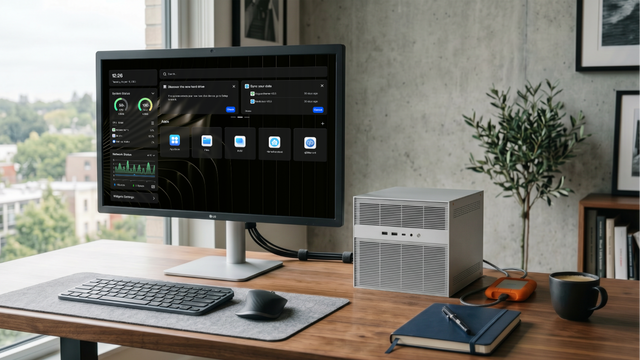
What GPT-5.6 Means for Local AI, Home Servers, and Private Data
A practical guide to GPT-5.6, local AI, home servers, private data, hybrid workflows, RAG, tool calling, and safe cloud model use.
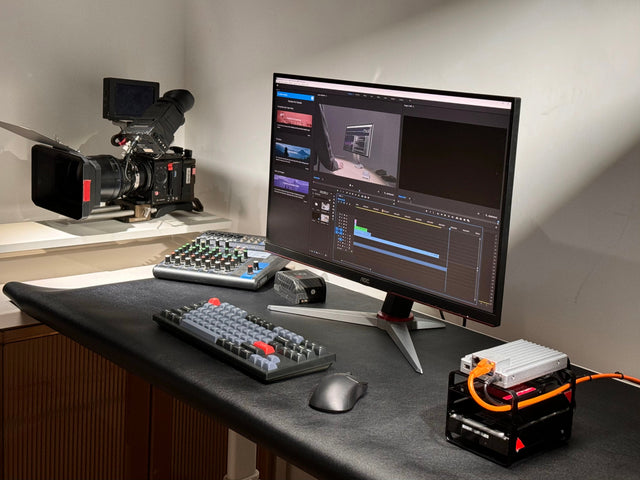
AI Agent at Home: What Can It Actually Automate?
A practical guide to home AI agents, covering smart-home control, local files, private RAG, server reports, approval gates, and safe automation.
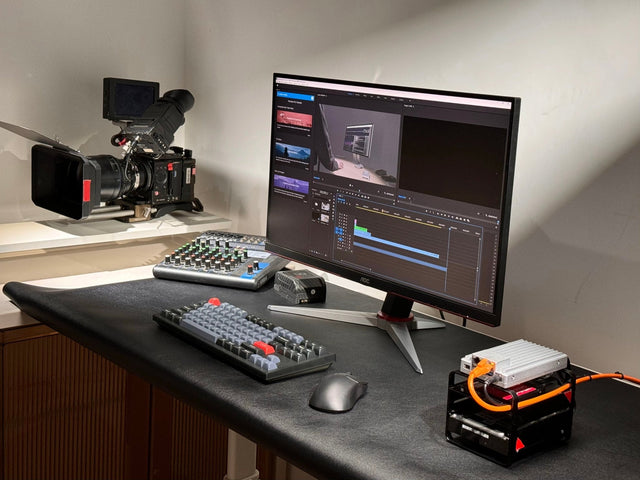
Mac + NAS for Local AI: A Better Private Workflow Than One Device Alone
Build a private Mac + NAS local AI workflow that separates Mac compute from NAS storage for RAG, models, outputs, backups, and agents.


