
Can a Private RAG System Search Encrypted Documents Without Decrypting Them at Rest?


Yes—if “without decrypting them at rest” means the documents stay encrypted on storage and are decrypted only inside a trusted process when they must be indexed or retrieved. That is a realistic design for a private home RAG system. Ordinary semantic search, however, cannot simply point an embedding model at opaque ciphertext and understand the document.
The practical architecture is therefore encrypted storage at rest, controlled decryption in memory, encrypted or access-controlled derived indexes, and strict key separation. Searching directly over ciphertext is possible only with specialized cryptographic techniques, and those techniques are not a drop-in replacement for a normal vector database.
“Encrypted at Rest” Does Not Mean “Never Decrypted”
At-rest encryption protects files while they are stored on a disk, SSD, backup target, or powered-off device. A process with the correct key can still decrypt data when legitimate work needs to happen.
Encrypted document on disk
          |
          | authorized read
          v
Trusted RAG process memory
  ├─ decrypt
  ├─ parse / chunk
  ├─ embed
  └─ retrieve
          |
          v
Encrypted index / protected database
This is similar to how many encrypted databases and filesystems work: storage media does not contain useful plaintext, but applications can see plaintext after authorization.
That design is compatible with a private AI assistant on a NAS. The key is to define where plaintext is allowed to exist and for how long.
Why Normal Vector Search Cannot Search Raw Ciphertext
An embedding model needs meaningful text, image, or audio features. Conventional encryption intentionally destroys visible patterns so ciphertext does not preserve the semantic relationships the model needs.
If two plaintext sentences are similar, their securely encrypted ciphertexts should not conveniently look similar. That would leak information about the originals.
A normal RAG ingestion path therefore does this:
- Authenticate the process.
- Decrypt the document into memory or a tightly controlled temporary area.
- Extract and normalize content.
- Create chunks and embeddings.
- Store the derived search data under its own protection policy.
- Discard transient plaintext when ingestion finishes.
The phrase “encrypted documents remain encrypted at rest” can still be true throughout this workflow because plaintext never needs to become a persistent file on disk.
Embeddings Are Not the Same as the Original Document—But They Are Still Sensitive
A common mistake is to encrypt PDFs while leaving embeddings, chunk text, filenames, metadata, and vector-database snapshots unprotected. That moves the privacy problem instead of solving it.
| Artifact | Can It Reveal Information? | Recommended Treatment |
|---|---|---|
| Original file | Yes, directly | Encrypt at rest |
| Extracted chunk text | Yes, directly | Encrypt or avoid persistent plaintext |
| Embedding vector | Potentially, as a semantic derivative | Protect as sensitive data |
| Filename / tags | Often | Minimize and access-control |
| Vector index | Can expose relationships and membership | Encrypt storage and restrict access |
| Backup / snapshot | Contains historical copies | Encrypt independently |
Qdrant's current security documentation emphasizes that a self-hosted deployment must be explicitly secured. Storage encryption is an infrastructure responsibility in self-managed environments, not something to assume because the database is local.
For a private search system, treat embeddings as part of the protected knowledge base, not harmless cache files.

Where Should Decryption Keys Live?
Do not store the decryption key beside the encrypted documents in a world-readable configuration file. The goal is to make stealing the disk or copying a backup insufficient to recover the data.
A stronger home-lab design separates:
- data volume: encrypted documents and database files;
- key material: OS keyring, hardware-backed key storage, or a separately protected secret store;
- service identity: the RAG process receives only the keys it needs;
- backup keys: kept outside the only copy of the encrypted backup.
Disk encryption alone cannot protect a fully unlocked running server from an administrator-level compromise. It protects a different threat: stolen drives, offline copies, retired hardware, and unauthorized access to backup media.
How Do You Avoid Plaintext Temp Files?
Many document parsers quietly create temporary files. OCR pipelines may unpack pages, office converters may write intermediate formats, and PDF tools may cache extracted assets.
Audit the ingestion path and choose one of three patterns:
- stream decrypted bytes directly into the parser;
- use a RAM-backed temporary filesystem for intermediate files;
- place temporary storage on an encrypted volume and delete it immediately after processing.
Also inspect logs. A “debug” log that prints document text, prompts, retrieved chunks, or tool arguments can become the largest unencrypted copy of the knowledge base.
Can Homomorphic Encryption Search the Documents Without Decryption?
Homomorphic encryption is the technology most people reach for when they want computation over encrypted data. Microsoft's SEAL documentation explains that homomorphic schemes can perform selected computations while values remain encrypted.
But it also states an important limitation: homomorphic encryption has substantial performance overhead and supports only certain operations efficiently. Microsoft SEAL supports arithmetic such as encrypted addition and multiplication; general comparisons, sorting, and regular expressions are typically not practical in the same way as plaintext computation.
Approximate distance calculations can be constructed with schemes such as CKKS, so privacy-preserving vector-search research is real. That does not make encrypted semantic search equivalent to installing Qdrant, pgvector, or Weaviate and switching on an “encrypted query” flag.
| Approach | Home RAG Practicality | Main Trade-off |
|---|---|---|
| Encrypted disk + in-memory decryption | High | Running process can access plaintext |
| Encrypted database volume | High | Protects storage, not compromised runtime |
| Searchable / homomorphic encryption | Specialized | Complexity, leakage models, performance |
| Upload ciphertext to ordinary vector DB | Not useful | No semantic structure remains |
A Safer Private RAG Design
For most homes and small teams, the best security-to-complexity ratio looks like this:
Encrypted NAS dataset
      |
      | service-scoped key
      v
RAG ingestion container
      |
      +-- plaintext only in memory / encrypted temp
      |
      +-- embeddings + metadata
      v
Encrypted vector DB volume
      |
      v
Local retrieval service
      |
      | minimum retrieved chunks
      v
Local model or approved cloud model
If a cloud model is involved, the storage may remain perfectly encrypted while the retrieved text still leaves the home in the prompt. Storage encryption and data-egress control are separate problems. The local AI trust-boundary guide is useful here: the component allowed to decrypt data should not automatically be the component allowed to transmit it.
Private RAG Encryption Checklist
- Encrypt the source document volume.
- Protect vector-database storage, snapshots, and backups too.
- Keep keys outside ordinary document directories.
- Give the RAG service only the minimum key and path access required.
- Avoid persistent plaintext extraction caches.
- Inspect OCR, conversion, and debug temp directories.
- Do not log retrieved private chunks by default.
- Separate local retrieval permission from cloud-egress permission.
- Test recovery before rotating or deleting encryption keys.
The document search and RAG guide can help map this security layer onto extraction, chunking, embedding, and retrieval.
FAQs
Can a vector database index an AES-encrypted PDF directly?
No. The content must be decrypted by an authorized process before a normal text or multimodal embedding model can extract semantics from it.
Does full-disk encryption protect a running RAG server?
Only partially. Once the volume is unlocked, privileged processes can read it. Full-disk encryption is strongest against offline access, stolen drives, and copied media.
Should embeddings be encrypted?
For sensitive private knowledge, yes: protect the storage that contains embeddings and indexes, restrict database access, and include those files in the same security review as source documents.
Final Verdict
A private RAG system can keep documents encrypted at rest without sacrificing ordinary semantic search. The realistic pattern is controlled, temporary decryption inside trusted memory—not magical search over opaque ciphertext. Protect the derived embeddings and indexes, separate keys from data, eliminate plaintext temp files, and treat homomorphic search as a specialized cryptographic design rather than a normal home-RAG feature.

Recommended products

Tech & AI HUB
More to Read
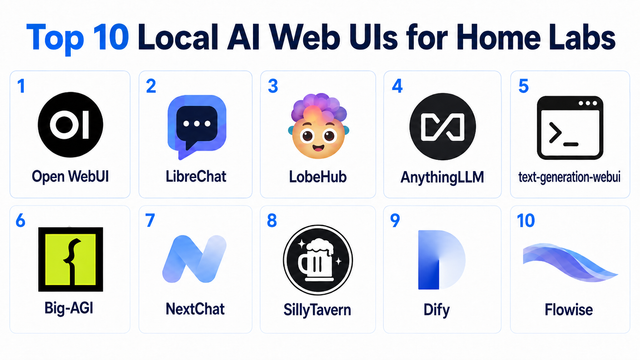
Top 10 Local AI Web UI for Home Labs In 2026
Compare 10 self-hosted local AI web UIs for home labs, covering Ollama support, RAG, agents, multi-user access, setup effort, and ideal use cases.
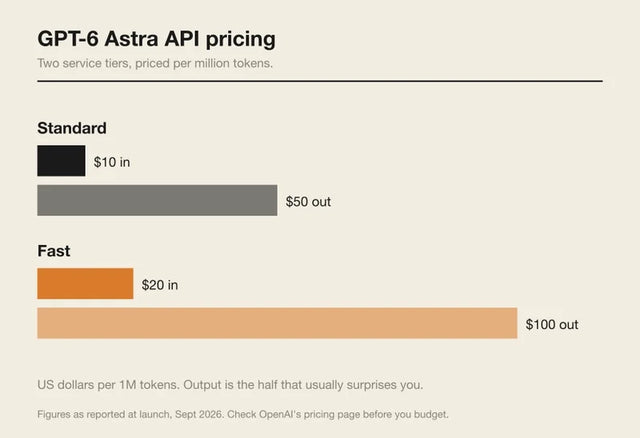
How Much Does GPT-6 Astra Cost Over Time? When Cloud AI Makes Sense vs Local AI
A practical GPT-6 Astra cost guide covering token usage, long-term AI workloads, cloud vs local tradeoffs, and why hybrid AI infrastructure matters.

GPT-6 Astra vs Local AI: Which Parts of an Agent Should Stay on Your Home Server?
GPT-6 Astra can stay in the cloud while your home server keeps files, memory, RAG, tools, permissions, and durable agent state local.


