
Meta’s Organizational Second Brain: Why AI Agent Memory Should Live in Files, Not Model Weights


Meta’s Organizational Second Brain makes a strong case for keeping fast-changing institutional knowledge in explicit files instead of trying to bake every correction, policy, and expert judgment into model weights. Meta distills expert knowledge into a structured file system that can be read by humans and agents, linked through dependencies, tested after changes, versioned, reviewed, and improved without retraining the underlying model. The model provides intelligence; the knowledge layer preserves what the organization has learned.
That does not mean every form of AI memory belongs in Markdown or that RAG is obsolete. Model weights still provide general knowledge, retrieval remains useful for sparse reference material, and live task state may belong in databases or agent runtimes. Meta is solving a narrower but increasingly important problem: how to preserve organizational knowledge that changes over time, needs provenance, and must survive whichever model happens to use it.
What Is Meta’s Organizational Second Brain?
Meta’s Organizational Second Brain is an internal AI-agent architecture designed to capture specialist knowledge that would otherwise remain scattered across documents or trapped in experts’ heads. Meta describes the system as a secondary expert for a domain rather than a general-purpose chatbot.
According to Meta’s official Organizational Second Brain architecture, the system combines four dependent layers:
| Layer | Role |
|---|---|
| Structured knowledge | Stores explicit organizational positions, terminology, routing rules, and distilled domain knowledge |
| Reasoning recipes | Defines how the agent should analyze a problem step by step |
| Evaluation | Tests whether proposed changes improve the system without breaking existing behavior |
| Self-improvement loop | Turns expert corrections into verified updates to knowledge or reasoning |
The important point is that Meta does not rely on model retraining every time an expert corrects the agent. Instead, corrections can become changes to external knowledge files or reasoning procedures.
That turns one expert interaction from a temporary chat correction into a potentially permanent organizational asset.
Why Are Thousands of Documents Not the Same as Agent Memory?
A folder full of documents is an archive. It becomes useful agent memory only when the system understands what matters, how the sources relate, and when particular rules or interpretations apply.
Large organizations already possess enormous amounts of written material: policies, specifications, historical decisions, checklists, reports, project notes, standards, and internal documentation. The problem is that the most valuable knowledge often sits between those documents.
An expert may know:
- which policy takes precedence when two rules conflict,
- which exception applies only under a specific condition,
- which historical decision is still relevant,
- which terminology the organization uses internally,
- when a case is ambiguous enough to require escalation,
- and why two apparently similar situations should be treated differently.
A conventional retrieval system can find the source documents, but the model may still have to reconstruct that interpretation from scratch every time.
Meta describes this as one of the weaknesses of treating raw documents themselves as organizational knowledge. An agent that retrieves chunks at inference time repeatedly has to infer the organization’s reasoning from those fragments, which can be slow and inconsistent.
Meta had already encountered a similar problem earlier in 2026. In its earlier work on compiling tribal knowledge into agent context files, more than 50 specialized agents analyzed over 4,100 files across four repositories and produced 59 concise context files. Meta reported preliminary tests with roughly 40% fewer agent tool calls per task.
The lesson is similar: more raw information does not automatically produce better agent behavior. Often the missing layer is distilled structure.
Why Does Meta Store Its Agent Knowledge in Structured Files?
Meta organizes more than 200 files into a strict taxonomy rather than maintaining one enormous instruction document. The files represent different kinds of institutional knowledge and different routing responsibilities.
| File Type | Purpose |
|---|---|
| Position files | Record authoritative organizational interpretations, constraints, boundaries, and conditions for applying them |
| Taxonomy and vocabulary files | Provide an authoritative glossary for domain terminology and classification systems |
| Routing indexes | Map characteristics of an input to the relevant positions and procedures |
| Gateway files | Define threshold tests that determine whether specialized domain logic should apply at all |
Meta also uses YAML frontmatter to declare relationships between files. A file can state what it depends_on and which other files it is referenced_by.
A simplified example might look like this:
---
type: position
topic: customer-data-retention
depends_on:
  - data-classification.md
referenced_by:
  - privacy-review-recipe.md
applies_when:
  - customer_pii = true
---

# Customer Data Retention

## Position
Define the current organizational position here.

## Boundaries
Document where the position applies and where it does not.

## Exceptions
List known exceptions.

## Escalate When
Describe cases that require expert review.
This is an illustrative example rather than a copy of Meta’s internal files, but it shows why plain structured files are attractive.
They are:
- human-readable,
- machine-readable,
- easy to diff,
- easy to cross-reference,
- easy to lint,
- versionable,
- and individually reversible.
The dependency graph also matters when an agent proposes a change. If one policy file changes, the system can identify which procedures, indexes, and downstream rules may be affected rather than assuming the edit exists in isolation.
Does Meta’s Second Brain Replace RAG?
No. Meta deliberately keeps both a curated knowledge layer and retrieval. The two solve different information problems.
Meta partitions information according to density and expected usage frequency.
| Knowledge Type | Best Layer in Meta’s Design |
|---|---|
| Frequently used organizational positions | Curated knowledge files |
| Decision frameworks | Curated knowledge files |
| Boundary examples | Curated knowledge files |
| Strategic interpretation | Curated knowledge files |
| Detailed product specifications | RAG / search |
| Historical decision records | RAG / search |
| Rare reference material | RAG / search |
| Niche external knowledge | RAG / search |
The curated layer stores information the agent is likely to need repeatedly and that represents the organization’s evolving interpretation of its domain. Sparse materials remain available through semantic or lexical retrieval when a specific case requires them.
This is consistent with the broader distinction established by the original Retrieval-Augmented Generation research, which separates knowledge stored parametrically in a model from explicit external non-parametric memory that can be retrieved when needed.
Meta is effectively adding another layer between those two extremes.
MODEL WEIGHTS
General intelligence
        |
        v
CURATED KNOWLEDGE
Positions
Rules
Interpretation
Decision frameworks
        |
        v
RAG / SEARCH
Detailed evidence
Historical records
Rare references
        |
        v
RAW SOURCES
A useful way to describe the division is:
RAG helps the agent find evidence. A curated knowledge layer prevents it from rediscovering the organization’s interpretation from scratch every time.
Why Should an AI Agent Separate What It Knows From How It Reasons?
One of Meta’s most important design decisions is separating declarative knowledge from procedural reasoning.
The knowledge files describe what the organization knows or believes. Meta’s “recipes” describe how the agent should work through a problem.
| Knowledge | Recipe |
|---|---|
| “This is the current policy.” | “Check whether this policy applies.” |
| “This term means X.” | “Classify the input using the approved taxonomy.” |
| “Exception Y applies under these conditions.” | “If Y is detected, load the exception procedure.” |
| “This boundary requires human judgment.” | “Escalate instead of forcing a conclusion.” |
This separation makes failures easier to diagnose.
If the agent reaches the wrong conclusion, the maintainers can ask:
- Did the correct knowledge exist?
- Was the correct file loaded?
- Was the organizational position itself wrong or outdated?
- Or did the reasoning procedure misuse otherwise correct knowledge?
Meta says that adding a new organizational position can mean adding a knowledge file and updating a routing index without changing the reasoning recipe. Conversely, a methodology problem can be fixed by changing the recipe without rewriting the underlying domain facts.
That modularity becomes increasingly valuable as the knowledge base grows.
How Did Progressive Disclosure Cut Meta’s Token Use by Around 80%?
Large context windows do not eliminate the need for information architecture. A model may technically accept hundreds of thousands or even millions of tokens, but that does not mean every policy, reference, and instruction should be loaded into every task.
Meta’s earlier implementation used a relatively flat instruction structure and semantic search that could pull a large volume of mixed-relevance material into the context window.
The recipe system changed the pattern to progressive disclosure.
OLD APPROACH

Task
  |
  v
Large instruction set
+ many retrieved sources
+ broad domain context
  |
  v
Model


PROGRESSIVE DISCLOSURE

Task
  |
  v
Step 1
Load only Step 1 instructions + knowledge
  |
  v
Step 2
Load only Step 2 instructions + knowledge
  |
  v
Step 3
Retrieve evidence only if needed
After moving to recipe-driven stages, Meta reports that each query touched only a small targeted subset of the knowledge system and that tokens consumed per turn fell by around 80%.
That is not the same as saying the Second Brain reduced total AI cost by 80%. The result specifically concerns per-turn token consumption after restructuring the context-loading strategy.
The more general lesson is important:
The better question is not “How much context can the model hold?” but “How little context does this step need to solve the problem correctly?”
How Does Meta Turn Expert Feedback Into Permanent Agent Memory?
The self-improvement loop is arguably the most important part of Meta’s architecture because storing knowledge is easy compared with keeping it correct over time.
Meta treats maintenance as a compilation problem. Expert corrections move through four stages:
- Diagnose the feedback and identify its root cause.
- Compile the issue into minimal verified edits.
- Validate that the change fixes the problem without introducing regressions.
- Review the proposed change with a domain expert.
The diagnosis phase attempts to determine whether an error came from missing knowledge, a flawed reasoning procedure, or genuine ambiguity.
If the correct answer was already present in the source material but the agent still failed, Meta treats that as a methodology problem. If the necessary information was absent, it is a knowledge gap. If experts themselves disagree, the case can be escalated rather than forcing the system to encode a false certainty.
The compilation stage then proposes minimal edits. Meta says separate agents examine issues such as cross-reference impact, conflicts with existing positions, duplication, token-budget effects, and test coverage.
A fresh adversarial reviewer receives the proposed changes without the original improvement rationale and attempts to find contradictions or edge cases. Deterministic structural validation then checks problems such as broken references, dependency cycles, identifier collisions, and file-size constraints.
The process can be summarized as:
EXPERT CORRECTION
        |
        v
DIAGNOSE ROOT CAUSE
        |
        v
PROPOSE MINIMAL EDIT
        |
        v
ADVERSARIAL REVIEW
        |
        v
STRUCTURAL VALIDATION
        |
        v
REPLAY + REGRESSION TESTS
        |
        v
HUMAN REVIEW
        |
        v
LAND CHANGE
        |
        v
ADD FAILURE TO TEST SUITE
Once a fix lands, the original failing scenario becomes part of the regression suite. Future changes therefore have to preserve that newly corrected behavior.
Meta reports zero regressions across its improvement cycles during the six-week development period described in the release, while individual assessments that previously took days were reduced to minutes. Those results are Meta’s own internal deployment results, not an independent benchmark.
Why Are Files Easier to Update Than Model Weights?
For fast-changing institutional knowledge, files make change visible. That is the strongest argument behind the headline.
| Structured Knowledge Files | Knowledge Stored in Model Weights |
|---|---|
| Human-readable | Internal representation is opaque |
| Easy to diff | Changes are difficult to inspect directly |
| One rule can be rolled back | Behavioral effects can be less isolated |
| Sources and citations can be attached | Provenance is less direct |
| Can be updated without replacing the model | Editing changes the model artifact itself |
| Can move between model providers | Knowledge remains coupled to that model version |
| Fits Git-style review workflows | Requires model-evaluation workflows |
This does not mean model editing is unnecessary or impossible. Research such as MEMIT model-editing research explores how factual associations can be changed directly inside Transformer models.
Meta is asking a different architectural question:
If organizational knowledge changes frequently and humans need to inspect every important update, why put that knowledge inside the model in the first place?
Meta says the final output of its improvement pipeline is a diff that a domain expert can review quickly. Its broader design principle is to keep this complexity in text that remains version-controlled, diffable, and reversible.
That makes knowledge maintenance much closer to software configuration management than model retraining.
Are Markdown and YAML Becoming a Portable Memory Layer for AI Agents?
Meta’s design is part of a broader movement toward knowledge representations that both humans and agents can inspect directly.
In April 2026, Andrej Karpathy published the LLM Wiki pattern. The idea is to have an LLM incrementally maintain a persistent structured wiki instead of reconstructing cross-document knowledge from raw RAG results on every query.
The important property is accumulation.
Source A
   |
   v
Structured Wiki

Source B
   |
   v
Update existing pages
Add relationships
Flag contradictions

Source C
   |
   v
Knowledge becomes richer
without restarting from zero
Google’s Open Knowledge Format specification pushes the same idea toward interoperability. OKF v0.2 defines a deliberately minimal format built around directories of Markdown files with YAML frontmatter that can be read by people and agents without requiring a central schema registry or proprietary runtime.
This suggests a potentially important direction:
Plain-text agent knowledge may become an interoperability layer.
If an organization’s important knowledge exists as explicit files rather than hidden inside one provider’s proprietary memory system, the same knowledge layer can theoretically be consumed by different agents and different models.
              KNOWLEDGE
            Markdown / YAML
                 |
       +---------+---------+
       |         |         |
       v         v         v
    Claude     Gemini     Qwen
       |         |         |
       +---------+---------+
                 |
              AGENTS
The model becomes replaceable. The accumulated knowledge does not have to be.
If AI Agent Memory Becomes Files, Where Should Those Files Live?
Once agent knowledge becomes a durable set of files, a new infrastructure question appears: those files need the same protections as any other valuable organizational data.
A serious knowledge layer may contain:
- curated positions,
- expert decisions,
- taxonomies,
- reasoning recipes,
- routing logic,
- evaluation cases,
- source documents,
- citations,
- agent-generated improvements,
- and historical versions.
That creates requirements that have little to do with the size of the LLM:
| Requirement | Why It Matters |
|---|---|
| Availability | Agents need consistent access to the current knowledge state |
| Permissions | Not every agent or user should edit authoritative knowledge |
| Version history | Every important change should be inspectable |
| Snapshots | Bad automated edits should be quickly reversible |
| Backup | Institutional memory should survive storage or system failure |
| Search | Large source collections still need retrieval |
| Shared access | Multiple agents or users may need the same knowledge base |
Those requirements can be implemented on a workstation, private server, NAS for long-lived agent knowledge, Git repository, or controlled cloud environment. Meta’s architecture does not require any particular storage product.
The larger point is that agent knowledge is starting to look less like ephemeral prompt context and more like a long-lived data asset.
Why Is Version Control Not Enough for AI Memory?
Git-style version control is extremely useful for structured agent knowledge because it provides diffs, history, review, branches, and logical rollback. But it is not a complete data-protection strategy.
Version control primarily answers:
What changed?
Filesystem snapshots for fast recovery answer a different question:
Can I rapidly restore the complete working state from before a bad change?
Backup answers another:
Can I recover if the original storage system itself is lost or corrupted?
| Protection Layer | Primary Role |
|---|---|
| Git / version control | Logical change history, diffs, review, rollback |
| Filesystem snapshots | Fast recovery of files and working state |
| Backup | Recovery from storage failure, deletion, corruption, or disaster |
This distinction becomes more important when agents are allowed to update their own knowledge layer.
An incorrect edit may be easy to revert in Git. A corrupted repository, missing attachment collection, damaged vector index, accidentally deleted raw source archive, or failed storage device is a different class of problem.
If the knowledge base becomes part of how an organization operates, protecting that knowledge should be treated as data infrastructure rather than merely prompt engineering.
What Does a Durable Local Agent Knowledge Stack Look Like?
A practical agent-memory architecture can separate intelligence, curated knowledge, retrieval, source data, and protection instead of forcing them into one layer.
AI MODEL
Claude / Gemini / Qwen / other
        |
        v
AGENT RUNTIME
Tools / routing / sessions
        |
        v
CURATED KNOWLEDGE
Positions
Taxonomy
Recipes
Rules
        |
        v
RAG / SEARCH
Indexes
Embeddings
Lexical search
        |
        v
RAW SOURCES
PDFs
Docs
Code
Historical records
        |
        v
DATA PROTECTION
Version control
Snapshots
Backup
The advantage of this architecture is independence.
The model can change without rewriting the knowledge base. The retrieval engine can change without deleting the raw sources. The agent framework can be replaced without losing expert decisions. The storage hardware can be upgraded without changing the logical structure of the knowledge itself.
This is a much more durable definition of AI memory than “whatever context the current chatbot happens to remember.”
Does Meta’s Second Brain Show Where AI Agent Memory Is Going?
Meta’s architecture suggests that the long-term asset in an AI agent system may increasingly be the knowledge layer rather than the model.
Models will continue to improve rapidly. Organizations may move between proprietary frontier models, local open-weight models, specialized agents, or combinations of all three.
Institutional knowledge changes on a different timescale.
A company may spend years discovering:
- which procedures actually work,
- which exceptions matter,
- which terminology avoids ambiguity,
- which historical decisions remain relevant,
- and which expert corrections should never need to be rediscovered.
That knowledge should not become disposable merely because the reasoning model changes.
Meta’s design also makes clear that file-based memory is not a replacement for every other memory technique. The stronger architecture is layered:
model weights for general intelligence, structured files for maintained institutional knowledge, RAG for sparse evidence, recipes for methodology, runtime state for active tasks, and versioning plus backup for durability.
The result changes how we should think about an AI “second brain.”
It is not simply a larger context window.
It is not a folder full of PDFs.
It is not a vector database by itself.
And it is not knowledge permanently trapped inside one model.
A durable second brain is a maintained knowledge system that can be inspected, corrected, tested, recovered, and handed to the next model.
The model can be replaced next month. The knowledge an organization spent years building should survive it.
FAQ: Meta’s Organizational Second Brain and AI Agent Memory
What is Meta’s Organizational Second Brain?
It is an internal AI-agent architecture Meta built to preserve specialist organizational knowledge. It combines structured knowledge files, composable reasoning recipes, evaluation, and a self-improvement loop that converts expert corrections into tested updates without retraining the underlying model.
Does Meta store all of its AI agent memory in Markdown files?
No. The system uses a structured file-based knowledge layer for high-value institutional knowledge while retaining semantic and lexical retrieval for sparse reference material. The model itself still provides general intelligence, and other runtime state may live outside the knowledge files.
Does Meta’s Second Brain replace RAG?
No. Meta deliberately combines curated knowledge with RAG. Frequently used positions, decision frameworks, and interpretations are distilled into structured files, while detailed specifications, historical records, and rarely needed evidence remain accessible through retrieval.
Why not just use a one-million-token context window?
A large context window does not make irrelevant context free or useful. Meta found that staged progressive disclosure allowed each reasoning step to load only the instructions and knowledge it needed, reducing tokens consumed per turn by around 80% compared with its earlier broader-loading approach.
Why keep organizational knowledge outside model weights?
External files are easier for humans to inspect, edit, cite, version, diff, test, and roll back. They also allow the organization to keep the same knowledge when it changes model providers or upgrades the underlying LLM.
What are Meta’s reasoning recipes?
Recipes are procedural instructions that define how the agent should analyze a task. They are deliberately separated from knowledge files: knowledge files describe organizational facts and positions, while recipes describe the reasoning process used to apply them.
How does Meta’s Second Brain learn from experts?
Expert corrections are diagnosed into root causes, translated into minimal edits, checked by adversarial and structural validation, tested against replay and regression suites, and then reviewed by a human expert. Successful fixes are added to the regression suite so future updates must preserve them.
Is file-based agent memory the same as a vector database?
No. A vector database is primarily a retrieval mechanism. Structured knowledge files can preserve curated interpretations, rules, dependencies, reasoning boundaries, citations, and human-reviewed changes. The two can be used together.
Can the same knowledge files work with different AI models?
Potentially, yes. Model-independent formats such as Markdown and YAML can be consumed by different agent runtimes as long as the surrounding tools understand the schema and routing rules. This is one reason portable knowledge formats are receiving more attention.
Does agent memory need a NAS or home server?
Not necessarily. The knowledge can live on any reliable, permissioned storage system. A local server or NAS for shared, persistent AI knowledge becomes useful when the knowledge base also needs snapshots, large source archives, and independent backups.

Recommended products

Tech & AI HUB
More to Read
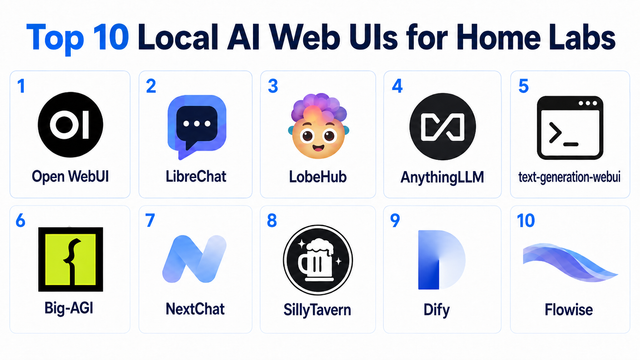
Top 10 Local AI Web UI for Home Labs In 2026
Compare 10 self-hosted local AI web UIs for home labs, covering Ollama support, RAG, agents, multi-user access, setup effort, and ideal use cases.
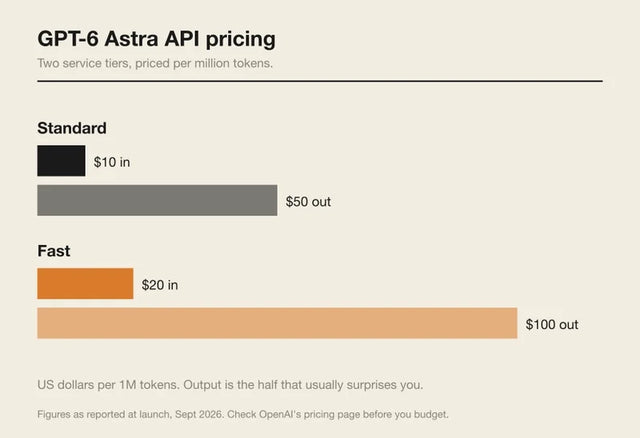
How Much Does GPT-6 Astra Cost Over Time? When Cloud AI Makes Sense vs Local AI
A practical GPT-6 Astra cost guide covering token usage, long-term AI workloads, cloud vs local tradeoffs, and why hybrid AI infrastructure matters.

GPT-6 Astra vs Local AI: Which Parts of an Agent Should Stay on Your Home Server?
GPT-6 Astra can stay in the cloud while your home server keeps files, memory, RAG, tools, permissions, and durable agent state local.


