
VPN vs Reverse Proxy vs Port Forwarding: How Should You Access Your Home Server?


For a family-only service, start by considering a private authenticated access path. For a public website, consider a reverse proxy with deliberate access rules and a maintained backend. Direct port forwarding can suit a narrowly defined requirement, but every forwarded service needs an owner and a clear update process.
Use a VPN when access can be limited to trusted clients, a properly maintained reverse proxy when a service must be published, and direct forwarding only when its exposure is understood. Every choice still needs patched applications, authentication, and an explicit access policy.
Compare the operating trade-offs
| Question | Private VPN access | Public reverse proxy | Direct port forwarding |
|---|---|---|---|
| Who reaches the app? | Authorized peers under routing and access rules | Internet users unless additional controls intervene | Anyone allowed by the exposed route and firewall |
| Client setup | Usually requires a client or managed device | Often an ordinary browser | Depends on the forwarded protocol |
| Main operating work | Peer access, routes, keys, and gateway updates | TLS, routing, policy, and backend updates | Firewall rules and each exposed service |
| Useful fit | Private administration and household tools | Web services intended for broad access | A specific service requiring direct connectivity |
| Fixes vulnerable PHP? | No | No | No |
Private access needs limited routes
A VPN can reduce a service's public reachability when only authorized devices can reach it. Still decide which clients may access which addresses and ports. An unrestricted route to the entire home network grants more reach than access to one application.
Tailscale's subnet-router documentation illustrates why routing matters: a gateway can provide access to devices that do not run the client themselves. Review those advertised routes and their policy rather than assuming only the VPN host is reachable. Protect enrollment and remove access for retired devices.
A reverse proxy centralizes the front door
A proxy can concentrate domain routing, certificates, and optional access checks. That can simplify a web-service setup, but passing a request to a vulnerable PHP backend still lets the backend process it. TLS protects transport; it does not patch the runtime.
Check for alternate direct paths that bypass the proxy. If you rely on an identity gateway, test that the backend is not independently reachable. Webhooks, sync clients, and sharing links may need different treatment from a browser login.
Direct forwarding requires an exposure inventory
Record the external port, internal address, protocol, service owner, and reason for each rule. Include IPv6 firewall exposure and automated router mappings in the review. A small number of forwarding rules is easier to audit than years of forgotten experiments.
During the PHP incident, the practical issue is whether untrusted requests can reach affected PHP. Removing one forwarding rule is incomplete if a tunnel or another address still provides a route.
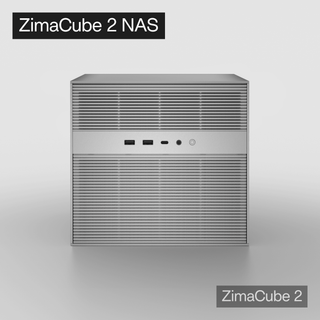
A practical choice for ZimaCube 2 users
Separate private management from public application access. For a household file workflow, test whether private access meets everyone's device needs. For a public site, plan the proxy, backend restrictions, updates, and recovery as one service.
Run an outside-network access test after changes. Confirm both intended access and intended denial. Then maintain the PHP runtime independently of the chosen route. The access method reduces or organizes exposure; patch evidence closes the software issue.
Explore ZimaCube 2 Personal Cloud Home NAS for your private storage and self-hosted application setup. Software security depends on the installed services, their configuration, and verified updates.
Continue the PHP security series
Sources and scope
Checked October 22, 2026. Deployment advice must be matched to your application and vendor documentation; these articles do not establish product-specific exposure.

Recommended products
Product Comparisons
More to Read
LFM2.5-24B-A2B vs DeepSeek API: Which Fits Your Home Server Agent Workflow?
Compare LFM2.5-24B-A2B local inference with the DeepSeek API for home-server agents: privacy boundaries, hardware, maintenance, quality, and costs.

Granite Speech 5.0 vs Cloud Transcription: Privacy, Hardware, and Accuracy Compared
Compare local Granite Speech 5.0 with cloud transcription for audio privacy, setup, hardware, accuracy, maintenance, and NAS archive workflows.

Claude Duet vs ChatGPT Dots: Ongoing Work, File Access, and Approvals Compared
Compare Claude Duet and ChatGPT Dots for ongoing tasks, connected apps, computer access, file boundaries, and review controls in personal-cloud workflows.


