
How Network Topology Changes Plex Reliability


A reliable Plex topology gives local playback, remote access, storage traffic, and management explicit network paths instead of relying on accidental routing.
LAN users should not need the WAN path to reach local media, while remote users should have one intentional reachability method. If storage is remote, its traffic adds another dependency that should not share a fragile route without reason. The topology is easier to recover when each path has a known address, owner, and validation test before an outage occurs.
Keep Local Playback Independent of the WAN
Local clients should reach the server through the LAN even when the public route, proxy, or ISP is unavailable. This prevents an internet-side issue from becoming a household outage.
Local playback should be tested as its own path because Plex clients can require explicit local connections to remain usable during an internet outage. That makes LAN validation a real operating test rather than an architectural assumption.
Validate a local client while the public path is intentionally unavailable. If LAN playback breaks, simplify local DNS and routing before adding more remote complexity.
Choose One Primary Remote Path
Port forwarding, reverse proxying, and VPN access create different operational dependencies. Multiple half-working paths make failures difficult to classify.
A healthy server can still fail remotely when reply traffic follows the wrong route, so remote access needs an explicit network path and failure owner.
Document one primary WAN path and one fallback, if needed, with separate tests. The remote Plex streaming path should have a clear external validation step from outside the home network.
Treat Remote Storage as a Network Service
When Plex media or app data lives on another host, storage availability becomes part of the playback or state path. A switch, VLAN, DNS, or mount failure can now affect the server even if its CPU is healthy.
When media is mounted from another host, a network-share failure can make Plex media unavailable while the server itself remains online. Storage reachability therefore belongs in the same topology test as user traffic.
Measure storage traffic and user traffic together on the links they share. If one backup or transfer can starve playback, isolate or schedule that path before upgrading compute.

Build Validation Into Each Network Boundary
Every added network hop should have a simple test: server endpoint, storage reachability, DNS resolution, external access, or tunnel health. That turns topology into something operable.
Each remote boundary should have an outside-in check. A working Plex remote-access test from an external network verifies the public path instead of assuming that a green local service state proves end-to-end reachability.
Write one pass/fail check for each boundary and practice a failure. Keep only topology that can be diagnosed without guessing which layer owns the outage.

Recommended products

NAS & Server Setup
More to Read
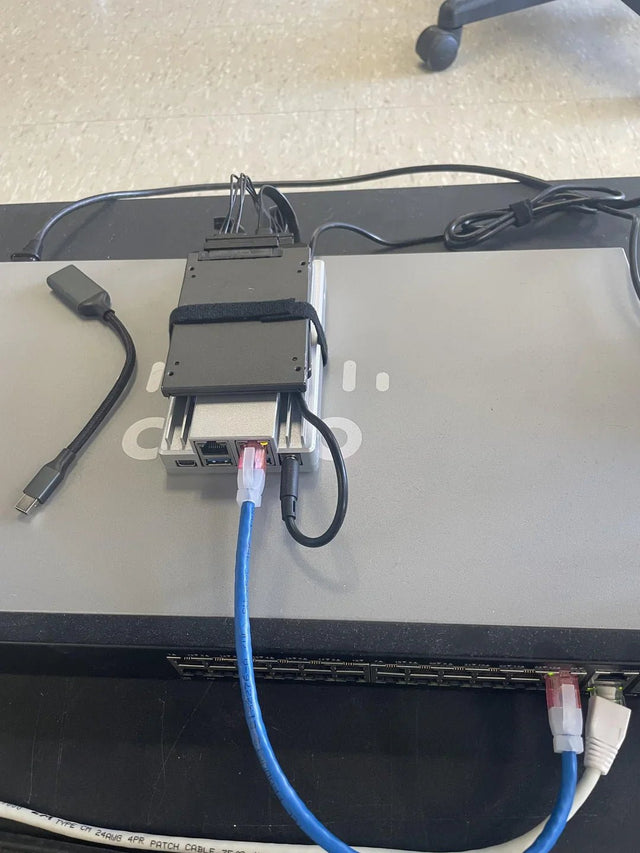
How AI-Like Analysis and Automation Change Jellyfin Storage and Compute Needs
Automation and adjacent AI analysis add scans, derived data, CPU/GPU work, cache, scratch space, and background scheduling beyond ordinary Jellyfin playback.
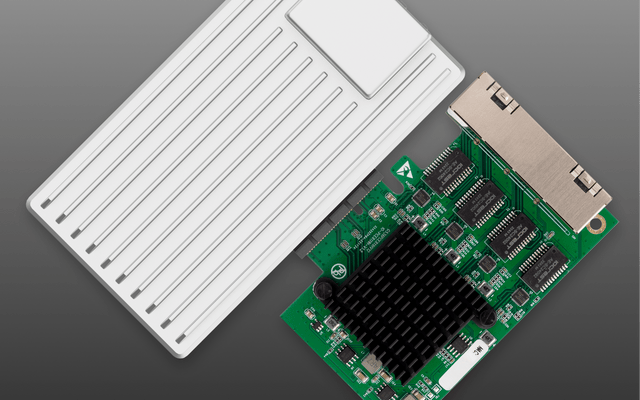
How to Integrate Jellyfin Into a Small Apartment or Rental Network
Build a rental-friendly Jellyfin network around stable local addressing, minimal wiring, quiet hardware, CGNAT-aware remote access, and reversible changes.
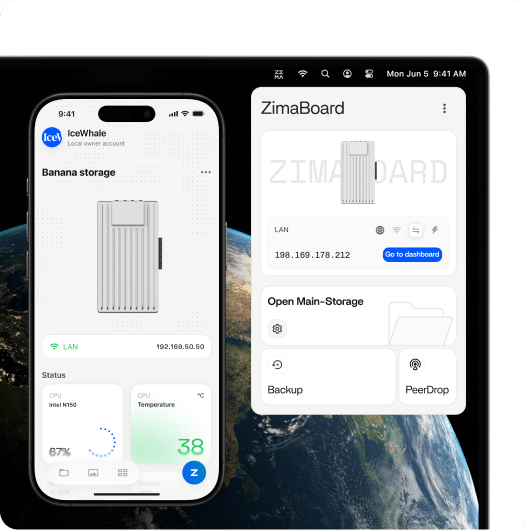
How Many Users and Background Jobs Should One Jellyfin Host Support?
Treat Jellyfin users and background jobs as one shared workload budget; capacity ends when playback latency, queues, or resource pressure becomes repeatable.


