
How Much Capacity Should You Buy for Five Years of Photos?


Buy five-year photo capacity from the family’s verified library and measured annual growth, then add app overhead, usable-space losses, reserve, and backup separately.
The correct number cannot be derived from phone count or advertised drive capacity alone. Video habits, RAW files, scans, edits, duplicate imports, photo-app databases, thumbnails, version history, and redundancy all change the result. A useful plan measures real growth, calculates usable primary storage, funds an independent copy, and defines an expansion warning before the forecast becomes wrong.
Measure the Current Authoritative Photo and Video Library
Begin with originals that the family intends to keep, not every duplicate download, thumbnail, cache, exported copy, or cloud placeholder. Include phone photos, videos, camera files, scanned prints, edited masters, and any external drives that contain the only version of an event. Record the size by year and by owner.
WIRED’s phone-photo backup guide warns against leaving irreplaceable images only on a mobile device and recommends moving them to another platform. That authoritative-originals inventory makes the current verified library the first capacity input.
Keep a staging total separate from the authoritative archive. Files awaiting duplicate review, cloud exports, and old drive imports can temporarily increase migration capacity without belonging in the long-term five-year estimate. The final inventory should identify which copy is considered the original.
Measure Growth From Real Devices for at Least Ninety Days
A universal photos-per-year estimate is weak because households differ in phone count, video habits, camera formats, travel, children’s activities, and messaging downloads. Measure the actual growth of representative phones and cameras for ninety days, then separate original media from screenshots, memes, app caches, and disposable downloads.
TechRadar’s photo-backup guidance compares local and cloud methods around library size, automation, access, and protection. That measured-library planning approach supports sizing from the household’s real capture workflow rather than a generic device specification.
Calculate annual growth for each active user and add known step changes such as a new phone, 4K video, RAW photography, or a child beginning sports. Use a conservative high month rather than the quietest quarter. Recheck the estimate after one full year.
Separate Originals, App State, and Generated Previews
The photo originals are not the only storage requirement. A self-hosted photo service also stores a database, account records, albums, face or object indexes, thumbnails, transcoded video, logs, and temporary uploads. Some of this state is essential for a complete service restore, while previews and caches may be rebuildable.
Digital Camera World’s storage guidance for photographers emphasizes separating active files, backup media, and capacity planning instead of treating one drive as the entire workflow. That originals-plus-working-storage distinction helps prevent app overhead from consuming the reserve silently.
Measure app state after the first full index and after several weeks of normal use. Place database and metadata on suitable storage, keep generated previews bounded where possible, and document which paths must be backed up. Do not multiply the originals blindly to estimate application overhead; observe it.

Add Five Years of Growth and an Operating Reserve
The core estimate is current authoritative data plus five years of measured annual growth. Then add migration headroom, app state, and free-space reserve. The reserve matters because filesystems, snapshots, updates, imports, and drive replacement need working room before the pool reaches a hard limit.
Backblaze’s NAS buying guide recommends adding current protected data, shared storage, projected growth, and the redundancy layout before choosing drives. That current-data-plus-growth formula provides the structure for a five-year photo estimate.
| Capacity component | How to estimate | Do not confuse with |
|---|---|---|
| Current originals | Verified photos, videos, edits, and scans | Cloud placeholders or duplicate exports |
| Five-year growth | Measured annual growth by active user × five | Phone advertised capacity |
| Application state | Observed database, thumbnails, and index growth | The original files themselves |
| Operating reserve | Free space for imports, snapshots, updates, and migration | An independent backup copy |
A practical worksheet is: current originals + five-year growth + observed app overhead + planned version history + operating reserve. Round to realistic drive sizes only after calculating usable capacity under the chosen storage layout.
Calculate Usable Capacity After Mirroring or Parity
Raw drive labels are not the capacity available to the photo library. A two-drive mirror provides roughly one drive of usable space; parity layouts reserve capacity for protection; filesystem formatting and system data reduce it further. The five-year target must fit inside usable capacity, not the sum printed on the boxes.
TechTarget’s RAID comparison explains that RAID 1 uses approximately half the raw capacity for a two-disk mirror, while RAID 5 uses the equivalent of one drive for parity. That raw-versus-usable capacity trade-off changes the drive purchase directly.
Check the storage platform’s actual capacity calculator and expansion rules before purchase. Leave enough space to reach the planned warning threshold without immediately replacing every drive. Redundancy helps availability after a drive failure; it is not part of the independent backup capacity.
Fund Versions and an Off-Site Copy Separately
A five-year photo archive should not consume the entire budget in one primary pool. Versions, deleted-file retention, external rotation, a second NAS, or cloud backup all require additional capacity. The off-site copy may protect only irreplaceable originals and essential app state, but its scope must be written and tested.
Cloudwards distinguishes active cloud storage from online backup designed for recovery. That active-storage-versus-recovery distinction prevents a synchronized photo library from being counted automatically as an independent protected copy.
Calculate primary usable capacity and backup capacity as separate purchases. If budget is limited, preserve originals, edited masters, family videos, scans, and the database needed to interpret them before protecting rebuildable previews or replaceable downloads. Test a restore before deleting source devices or cloud exports.
Buy for a Warning Threshold, Not a Perfect Five-Year Prediction
No five-year forecast is exact. The safer design defines when action begins: for example, when the pool reaches a selected percentage, when annual growth exceeds the model, or when adding another user changes the workload. The family should have time to buy drives, copy data, and verify recovery before space becomes urgent.
Puget Systems’ NAS guide recommends evaluating capacity, performance, network use, and backup together. That capacity-with-workflow check keeps the five-year estimate connected to how the archive will actually be used.
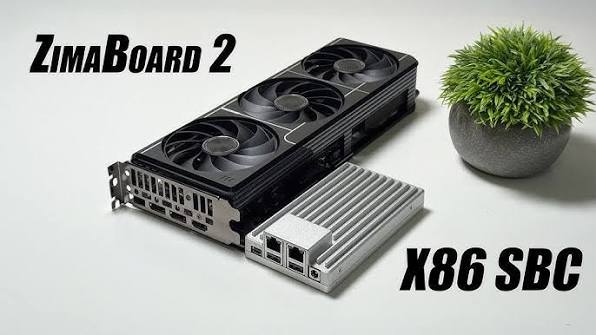
The ZimaSpace home NAS capacity planning guide covers mixed household data. A ZimaBoard 2 Mini Home Server fits a compact compute-first route with direct storage expansion. A ZimaCube 2 AI NAS becomes the clearer platform when multi-drive capacity, heavier concurrency, longer retention, or storage-first recovery are explicit requirements. Buy the smallest usable pool that covers the measured five-year range, maintains reserve, and has a documented expansion and backup path.
Keep the worksheet beside the archive and update it every six or twelve months. Record actual annual growth, the share caused by video, app-state expansion, backup size, and the date when the primary pool is expected to cross its warning threshold. If the estimate changes, revise the expansion date rather than immediately buying the largest available drives. This keeps the five-year plan useful as phones, cameras, and family habits change. The purchase is correct when it provides enough usable space and recovery capacity for the measured range while leaving time to migrate before the archive becomes full. Recheck the calculation after any major camera, phone, or family-workflow change so the warning date stays realistic.

Recommended products

NAS & Server Setup
More to Read
A Local RAG Setup for Research Papers, Notes, and Private Documents
Keep original documents authoritative, make indexing repeatable, require citations, and separate replaceable models from private source data.
Why Are Developers Using a Gateway Node for Private DNS, VPN, and Test Apps?
A gateway node gives private apps one controlled name and access path, while compute nodes stay unexposed and replaceable.
How to Build a Reproducible App Stack With Compose Files, Secrets, and Persistent Data Separated
Keep Compose definitions portable, secrets protected, and app data independently backed up so the stack can be rebuilt on a clean host.


